What Are London's Red Routes? A Beginner's Guide to the Red Lines on London Roads
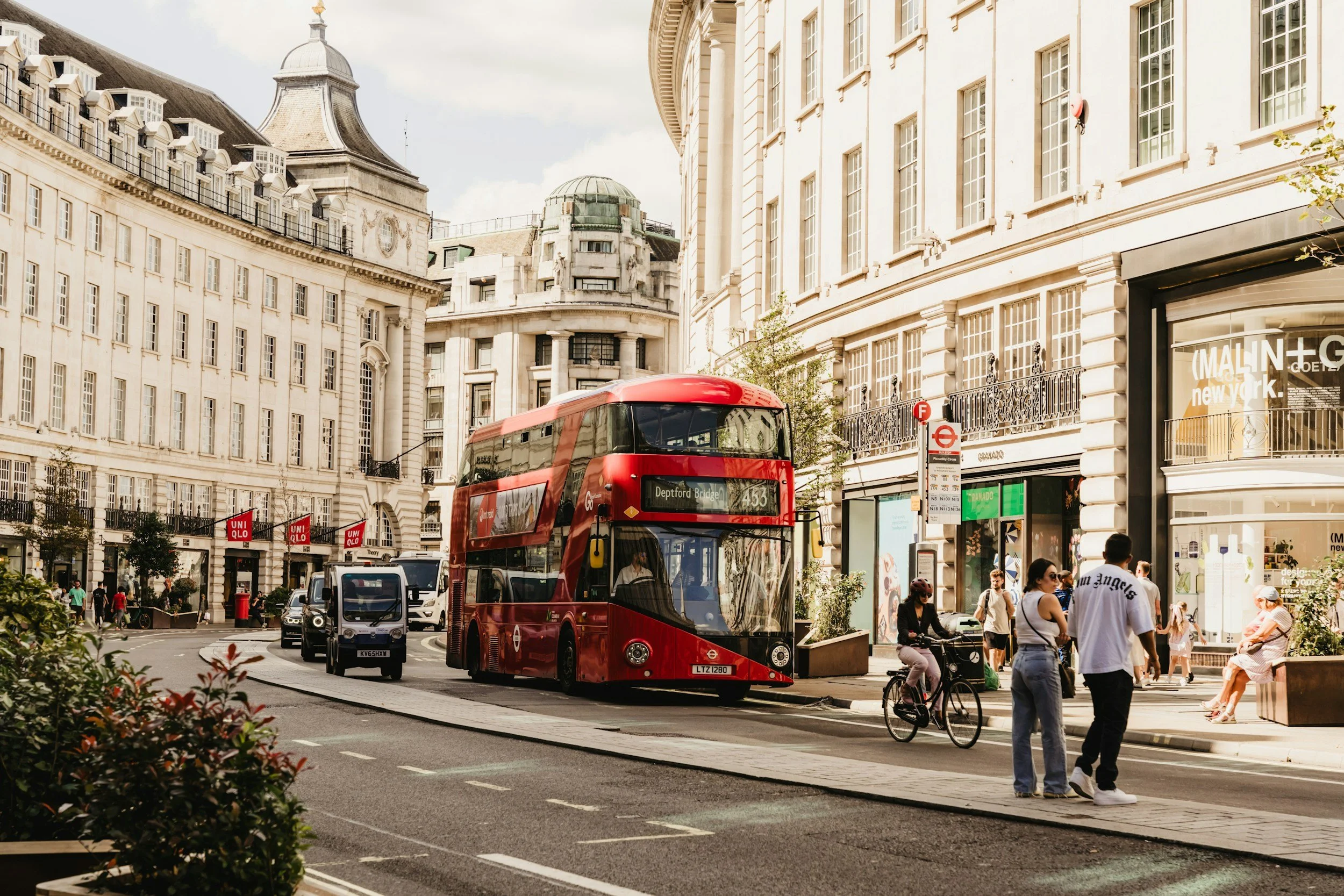
If you've spent even a few hours in London, you've probably noticed them.
Red lines running along the edge of the road.
You may have wondered:
Can I park here?
Can a taxi stop here?
Can I drop someone off?
Why are there red lines instead of yellow ones?
And perhaps most importantly:
What happens if I stop on one?
London's red routes can be confusing if you're visiting from another city or country because the rules are different from ordinary London streets.
They are not simply another version of a yellow line.
Red routes are part of a network of important roads designed to keep traffic moving, and the restrictions can be enforced using cameras and on-street enforcement. TfL says its red routes make up around 5% of London's roads but carry up to 30% of the city's traffic.
So, if you're driving in London, taking a taxi, hiring a car or simply trying to understand why a vehicle suddenly stops somewhere else rather than at the kerb, here's what you need to know.
What Exactly Is a Red Route?
A red route is a major road or strategically important section of road where special stopping, parking and loading restrictions apply.
Most of London's red routes are managed by Transport for London (TfL) as part of the Transport for London Road Network, or TLRN.
TfL describes the network as London's key roads, including major routes such as the A40 and A406 North Circular. Some London boroughs also use red routes on roads under their own management.
The easiest way to recognise one is to look at the road markings beside the kerb.
Instead of yellow lines, you'll see:
red lines.
And those red lines tell you that you need to pay particular attention to the signs and markings before stopping.
Why Does London Have Red Routes?
The basic idea is fairly simple.
London needs some roads to keep moving because they carry large amounts of traffic, buses and other important journeys.
If vehicles constantly stopped to park, load, unload or wait for passengers on these roads, traffic could quickly build up.
TfL says the red-route network is intended to help keep London moving, reduce congestion and allow important deliveries to take place safely.
Think of a red route as a road where stopping is more tightly controlled than you might expect on an ordinary street.
This is particularly important on roads used heavily by buses.
How Do You Know You're on a Red Route?
Look for the red lines.
You'll normally see either:
A single red line
or
Double red lines
You'll also find signs beside the road explaining the restrictions.
And this is extremely important:
Don't rely on the red line alone.
The signs and road markings work together.
A single red line may have restrictions that apply only during certain hours.
A double red line means no stopping at any time.
But there can also be specific bays and exceptions, so you should always read the nearby signs rather than assuming every red line works exactly the same way.
What Does a Single Red Line Mean?
A single red line means you cannot stop during the times shown on the nearby sign.
For example, a sign might say:
No stopping Monday–Saturday, 7am–7pm
Outside those specified times, the particular red-route restriction may not apply.
But don't simply assume that means:
“It's after 7pm, so I can park here.”
There may be other restrictions, bays or signs that apply.
The important rule is:
Check the sign next to the red line before stopping.
TfL's current guidance specifically says single red-line restrictions apply according to the day and times shown on the sign.
What Do Double Red Lines Mean?
This one is much easier.
Double red lines mean no stopping at any time.
That means you cannot simply pull over and wait because you're:
picking someone up
waiting for a friend
checking your phone
waiting for a delivery
looking for an address
waiting outside a shop
The restriction applies all day.
TfL's guidance states clearly that vehicles must not stop on double red lines at any time.
Can You Park on a Red Route?
This is where many visitors get caught out.
Generally, you cannot simply park at the side of a red route.
But some red routes have designated parking bays where parking is permitted during specified times.
The important thing is that the bay and the sign tell you the rules.
You might see a marked bay with signs explaining:
when parking is allowed
how long you can stay
whether you need to pay
whether loading is allowed
whether there are other restrictions
So:
Red route does not automatically mean every inch of the road is permanently unavailable.
But it does mean you should never assume that stopping at the kerb is permitted.
Can You Load or Unload on a Red Route?
Sometimes.
But again, you need to look at the signs and markings.
TfL's guidance says red routes restrict parking, loading and unloading, except where the relevant rules allow it, such as in a designated loading bay or at permitted times on a single red line.
Some loading bays have specific operating hours.
For example, you might see a sign indicating that loading is allowed during particular hours and for a maximum period.
So if you're delivering something, don't assume:
“I'm only going to be here for two minutes.”
A short stop can still be a contravention if the relevant restriction doesn't permit it.
TfL has specifically explained that there is no general minimum waiting period before a red-route loading contravention can be enforced.
What About Dropping Someone Off?
This is one of the most confusing parts for visitors.
The rules around picking up and setting down passengers can depend on the specific restriction and type of vehicle.
You therefore shouldn't use a blanket rule such as:
“You can never drop someone off on a red route.”
That isn't accurate in every situation.
Likewise, you shouldn't assume:
“I'm only dropping someone off, so I can stop anywhere.”
That can also be wrong.
The safest beginner rule is:
Look for a permitted stopping place, bus/taxi area or other location where the signs allow the manoeuvre.
If the location is marked no stopping, don't stop there simply because your passenger is getting out quickly.
What About London's Black Cabs?
Black cabs have specific rules and some exemptions that don't necessarily apply to ordinary motorists.
TfL's taxi-driver guidance says licensed taxis can pick up and set down passengers on red routes in permitted circumstances, but they must not wait for passengers where restrictions apply. There are also particular restrictions around bus stops and pedestrian clearways.
This is one reason you might see a black cab doing something that you shouldn't assume you can copy in a private car.
If you're a visitor in a normal car:
Don't assume a taxi's stopping behaviour means you're allowed to do the same thing.
What About Uber and Other Private-Hire Cars?
This is another area where beginners can get confused.
A private-hire vehicle is not automatically entitled to ignore red-route restrictions simply because it is picking up a passenger.
If you're booking a private-hire vehicle, follow the driver's instructions about the designated pickup location.
If you're driving yourself, follow the signs and road markings that apply to your vehicle.
And never assume:
“I'm only waiting for one minute.”
If stopping isn't permitted, the short duration doesn't automatically make it legal.
Why Do You See Cameras on Red Routes?
Because red routes are enforced.
TfL uses CCTV and enforcement officers to enforce red-route restrictions. TfL's current information says its enforcement cameras can be used for parking, bus-lane and other traffic contraventions.
That means you shouldn't expect someone to physically stand beside the road waiting to issue a ticket.
A camera can record a contravention.
TfL has also confirmed in current 2026 information that it uses CCTV rather than ANPR specifically for red-route enforcement.
So if you're driving in London, don't assume you are safe simply because you don't see a traffic officer nearby.
Can You Get a Fine for Breaking Red-Route Rules?
Yes.
If you don't follow the applicable red-route signs and markings, TfL may issue a Penalty Charge Notice (PCN).
TfL's current red-route page states that the PCN for relevant TfL red-route traffic offences is currently £160, reduced to £80 if paid within 14 days.
That is a fairly expensive mistake for something that could have been avoided by checking the sign.
And if you're driving a hire car, there can also be separate administration arrangements from the rental company if a penalty is passed on to them.
What If the Red Route Is Managed by a London Borough?
This is a useful detail that many guides leave out.
Not every red route you see is necessarily managed directly by TfL.
Some London boroughs have introduced red routes on their own roads.
TfL's current red-route guidance specifically notes that some boroughs now use red routes to improve traffic flow and reduce congestion.
That means if you receive a PCN on a borough-managed red route, you may need to deal with the relevant London borough rather than TfL.
So don't automatically assume:
red line = TfL-issued PCN.
Check who manages the road and the information on the PCN.
Red Routes vs Yellow Lines
If you're new to London, this is probably the easiest comparison.
Road markingGeneral meaningSingle red lineNo stopping during the times shown on the signDouble red lineNo stopping at any timeSingle yellow lineWaiting restricted during times shown on signsDouble yellow lineNo waiting at any time
But there's an important distinction.
Red routes are particularly focused on stopping.
A red line is not simply a colourful version of a yellow line.
The restrictions can affect stopping, parking and loading, and you need to pay close attention to the signs and marked bays.
TfL's current parking guidance provides the specific red-route distinctions.
What Are Red Route Clearways?
You may occasionally see signs indicating a red route clearway.
This means stopping is restricted except in specifically permitted or designated areas.
TfL's guidance describes red-route clearways as roads where vehicles should only stop in designated bays.
If you're driving somewhere unfamiliar, treat a clearway sign as a strong warning:
Don't pull over just because you see an empty stretch of kerb.
Find a permitted stopping location instead.
What About Bus Stops on Red Routes?
Be especially careful here.
A bus stop may have additional markings and restrictions that apply specifically to buses and other road users.
TfL's taxi guidance notes that some bus stops have particularly strict restrictions, including locations marked by a wide red line where normal taxi exemptions do not apply.
So don't see an empty bus stop and think:
“I'll only wait here for a minute.”
You could be obstructing a bus service and breaking the applicable restriction.
What If You're Just Waiting for Someone?
This is one of the most common mistakes.
Imagine you're collecting a friend from central London.
You arrive five minutes early.
You see a red route.
You pull over.
You put the car in park.
And you wait.
That can be exactly what you shouldn't do.
If the restriction prohibits stopping, sitting in the car with the engine running doesn't magically make it legal.
Instead, find:
a legal parking space
a designated pickup area
a car park
or another place where you can wait legally.
What If You're Lost?
This is another very real situation for visitors.
You're driving around central London.
Your sat-nav says to turn.
You realise you've missed the turning.
You want to stop for a moment to figure out where you are.
Don't stop on a red route simply because you're confused.
Continue to a safe and legal place to pull over.
Use your phone or navigation there.
This is especially important because red routes can be busy and stopping unexpectedly can affect buses, cyclists and other traffic.
Are Red Routes Only in Central London?
No.
This is another common misconception.
Red routes cover important roads throughout London.
You can find them in central London, but also on major roads elsewhere in the capital.
TfL's network includes major routes such as the A40 and A406 North Circular, illustrating that red routes aren't simply a central-London tourist feature.
So if you're driving from Heathrow towards central London, travelling across North London or heading into outer London, you may encounter them.
Can You Find a Map of Red Routes?
Yes.
TfL provides an interactive red-route map showing the network.
This is useful if you're planning a journey by car and want to understand where red-route restrictions are likely to apply.
However, don't use the map as a replacement for checking the road signs.
The map tells you where the network is.
The signs tell you what you can and cannot do at that particular location.
Do Pedestrians Need to Worry About Red Routes?
Not in the same way drivers do.
If you're simply walking around London, you don't need to understand every red-route parking rule.
But knowing what red lines mean can still be useful.
For example, if you're standing beside a busy road waiting for a taxi or someone collecting you, don't assume a red-lined kerb is an appropriate place for a car to pull over.
If you're cycling, driving or riding in a vehicle, the rules become much more relevant.
A Simple Example for a First-Time Visitor
Imagine you've hired a car and you're driving through London.
You see:
two red lines beside the kerb.
There is a shop you want to visit.
You think:
“I'll stop here for two minutes.”
Don't.
Double red lines mean no stopping at any time.
Instead, find a permitted parking bay or car park.
Now imagine you see:
one red line
and a sign says:
No stopping Monday–Saturday 7am–7pm.
It's Sunday afternoon.
The specific red-route restriction shown on that sign does not apply at that time.
But you should still check whether another restriction, parking bay condition or local rule applies before leaving the vehicle.
That's the important lesson:
The red line is only part of the information.
Five Red-Route Rules Worth Remembering
If you're a beginner, you don't need to memorise an entire traffic manual.
Remember these five things.
1. Red lines mean special restrictions
Don't treat them like ordinary kerb markings.
2. Double red = no stopping at any time
This is the easiest one to remember.
3. Single red = check the times
The sign beside the road tells you when the restriction applies.
4. Look for designated bays
Parking or loading may be permitted in marked areas under specific conditions.
5. Don't assume a quick stop is automatically allowed
Picking someone up, checking your phone or waiting for a delivery doesn't automatically make stopping legal.
What Should Tourists Do If They're Hiring a Car?
Honestly, if you're visiting London for a short holiday, don't hire a car just to get around central London unless you have a specific reason.
London has extensive public transport, and driving in central London means dealing with:
red routes
bus lanes
parking restrictions
congestion
traffic
one-way streets
road closures
cycling infrastructure
possible road-user charges
If you do need a car, learn the basic road markings before setting off.
And when you're unsure:
Don't stop.
Find somewhere legal to pull over and check.
Why Red Routes Matter to London's Buses
There is a reason these restrictions can be so strict.
A car stopped in the wrong place doesn't just affect that one driver.
It can delay:
a bus
which then delays:
dozens of passengers
which can create further congestion behind it.
TfL says red routes are designed to keep traffic moving and support important journeys across London's strategic road network. They account for about 5% of London's roads while carrying up to 30% of the city's traffic.
So when you see a red route, think:
“This is a road where keeping traffic moving is particularly important.”
The Biggest Red-Route Mistake
The biggest mistake is assuming:
“I'm only going to stop for a minute.”
That isn't the rule.
The question is:
Are you allowed to stop here under the restriction shown by the signs and markings?
If yes, follow the conditions.
If no, keep moving.
It really can be that simple.
So, What Are London's Red Routes?
London's red routes are the capital's network of important roads where stopping, parking and loading are more tightly controlled to help keep traffic moving.
You'll recognise them by the red lines beside the road.
Remember:
Single red line → check the sign for the restricted times.
Double red line → no stopping at any time.
Marked bays → check exactly what the bay allows.
Loading → check the loading restrictions and times.
Cameras → don't assume nobody is watching.
PCN → breaking the rules can be expensive.
And if you're visiting London for the first time, you don't need to become an expert in every road regulation.
Just remember one thing:
When you see a red line, stop and read the sign before you stop the car.
That few seconds could save you from a very expensive mistake.
Planning your next London day out? Discover more neighbourhood guides, hidden gems, food spots and things to do on LondonYaar.com.
Follow @rohan.londonyaar for more London places, stories and things worth knowing before you visit.