When you think about Elche, the palm trees are probably the first thing that comes to mind. But those palms are more than just part of the city's landscape. They are connected to a long-standing agricultural tradition that has helped shape the food, sweets and drinks you'll find across Elche and its surrounding countryside.
And if you're visiting, it is worth looking beyond the usual restaurant menu. Elche has its own collection of traditional dishes, seasonal fruits, desserts and regional drinks that many travellers may not know about before arriving. Some are rooted in the agricultural history of Camp d'Elx, while others are recipes that have been passed down through generations and continue to appear at family gatherings and local celebrations.
You might find dates sold fresh during the harvest season, pomegranates grown in the surrounding countryside, almond-based cakes in local bakeries or traditional rice dishes that are quite different from what you might expect.
So, if you want to discover a little more of Elche through its food, here are 12 local foods, treats and drinks worth looking out for.
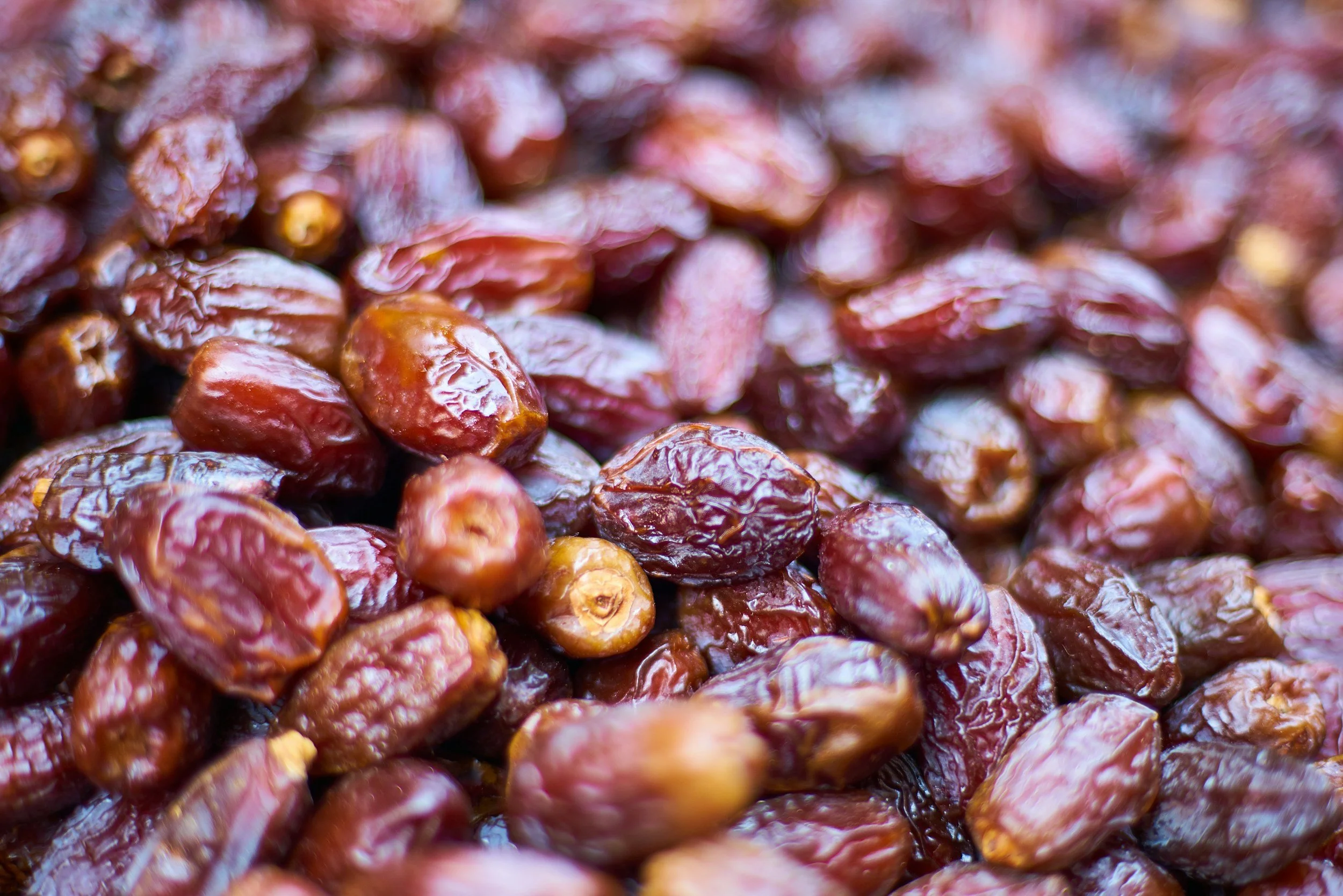
1. Dates – the fruit that defines Elche
It is difficult to talk about Elche's food without starting with dates. The city's historic palm groves are one of its most recognisable features, and dates have been closely connected to the agricultural traditions of the surrounding countryside for generations.
The date harvest generally takes place between autumn and winter, with the season commonly running from around October to January, although the timing varies depending on the variety and conditions.
During this period, you may find fresh dates sold in local shops, markets and establishments connected to the families who cultivate and care for the palm groves.
Fresh dates can be quite different from the dried dates most people are familiar with. Their texture and flavour vary according to ripeness, but they can be softer, more moist and particularly enjoyable when eaten fresh.
Dates are also used in sweets, savoury dishes and regional drinks, which is one reason they appear so frequently in Elche's gastronomy.
If you're visiting during the harvest season, try buying some fresh dates rather than simply picking up a packaged product. It is one of the easiest ways to taste something closely connected to the city's identity.
2. Delicias de Elche – dates, almonds and bacon
If dates are the ingredient that defines Elche, Delicias de Elche is one of the city's most recognisable appetisers.
The traditional preparation combines a date, often with an almond inside, wrapped in a slice of bacon. It is then cooked until the bacon becomes crisp and the date softens, creating a combination of sweet, salty and savoury flavours.
The almond adds another layer of texture, while the date gives the dish its sweetness. It may sound like an unusual combination if you've never tried it before, but the contrast between the ingredients is what makes it work.
Delicias de Elche is commonly served as an appetiser, making it a good dish to order when you're having tapas or sitting down for a traditional meal.
It's also a particularly good example of how an ingredient grown locally has become part of the city's culinary identity. Rather than using dates only in desserts, this preparation brings them into the savoury side of the menu.
If you see Delicias de Elche on a restaurant menu, it's worth ordering.
3. Granada Mollar de Elche – the local pomegranate
Dates aren't the only fruit associated with Elche. The Granada Mollar de Elche, a variety of pomegranate, is another important agricultural product of the surrounding countryside.
The Mollar pomegranate is known for its juicy, sweet flavour and relatively soft seeds, making it particularly enjoyable to eat fresh. The fruit grown in the area is protected under a Protected Designation of Origin, recognising its geographical identity and production area.
The harvest takes place during autumn, so October and November can be particularly interesting months for discovering pomegranates in the region.
You'll find them sold fresh, but the fruit is also used in juices, desserts and other products. Pomegranate juice is particularly worth looking for if you want to try the fruit in a different form.
Elche's food culture is closely connected to Camp d'Elx, the agricultural countryside surrounding the city, and pomegranates are a good example of the products that help define this region.
If you're visiting during the harvest, don't miss the chance to try a fresh Mollar pomegranate.
4. Pan de Higo – traditional fig bread
Pan de Higo, or fig bread, is one of the traditional sweets worth looking for in Elche.
Despite the name, it isn't bread in the usual sense. It is a dense preparation made primarily from dried figs, often combined with almonds and other ingredients, depending on the recipe.
The figs are pressed or prepared into a compact mixture that can be shaped into a loaf or block and sliced. It has a naturally sweet flavour and a dense texture, making it something you can enjoy in small portions.
Fig bread is part of the traditional food culture of the Camp d'Elx area and is particularly interesting if you're looking for something that reflects the region's agricultural produce.
It is also a good product to take home, as it is often sold in a form that can be packaged and transported more easily than fresh fruit or cakes.
If you're browsing shops selling local products, keep an eye out for Pan de Higo. It may not be as immediately recognisable as dates, but it is a traditional sweet worth discovering.
5. Tortada de Elche – an almond cake with a local tradition
If you're looking for something sweet after a meal, Tortada de Elche is one of the traditional desserts to try.
This cake is made using ground almonds, giving it a different texture and flavour from a conventional flour-based sponge. The traditional version is also associated with syrup and a meringue topping, although recipes and presentation can vary.
It is a dessert with a connection to celebrations and special occasions, including weddings, and forms part of Elche's traditional confectionery.
Almonds are widely used in desserts across the Spanish Mediterranean, but Tortada de Elche is one of the local sweets you should specifically look for when visiting the city.
Rather than assuming every bakery will have it, it may be worth asking local bakeries or restaurants whether they prepare the traditional Tortada de Elche.
It is one of those desserts that tells you a little more about the local food culture than simply ordering a familiar cake.
6. Arroz con Costra – Elche's signature rice dish
No food guide to Elche would be complete without Arroz con Costra.
This is one of the most recognisable traditional dishes in the city and is quite different from the rice dishes most visitors may already know from Spain.
Arroz con Costra is prepared with rice, meats such as rabbit and chicken, and local sausages. Towards the end of the cooking process, beaten eggs are added over the rice. The dish is then finished in the oven, where the eggs cook into a golden, fluffy crust.
That crust is the defining feature of the dish, and it is what gives Arroz con Costra its name.
Traditionally, some preparations use a special lid known as a costrera, with embers placed on top to help finish cooking the egg layer. The method varies between restaurants and households, but the egg crust is what makes this dish distinctive.
It is a substantial meal and is often associated with family gatherings and special occasions.
If you're visiting Elche, this is one dish I'd make a priority. It's probably the most recognisable traditional food associated with the city's gastronomy, and trying it gives you a taste of something genuinely local.
7. Putxero amb Tarongetes – a traditional stew with meatballs
Another traditional dish to look out for is Putxero amb Tarongetes.
This is a traditional stew associated with Elche, prepared with meatballs and served as part of a hearty meal. It belongs to the wider tradition of Spanish cocidos and regional stews, but the meatballs give it its own character.
The dish is particularly associated with home cooking and traditional meals, making it a good example of the kind of food that goes beyond the more widely known restaurant specialities.
The name may appear differently depending on the language used on the menu, including Valencian or Spanish variations.
If you're visiting Elche and see Putxero amb Tarongetes on a traditional restaurant menu, it is worth trying, particularly if you enjoy slow-cooked dishes and hearty food.
It may not be as famous as Arroz con Costra, but it is one of the traditional preparations specifically highlighted in Elche's gastronomy guides.
8. Pipes i Carasses – a traditional dish with ñoras
Pipes i Carasses is another traditional preparation associated with Elche, and it is one that may not be familiar to many visitors.
The dish is associated with roasted or prepared dried salted fish, commonly capellanes, together with ñoras, garlic and olive oil, depending on the traditional recipe.
Ñoras are small, round dried red peppers widely used in the cuisine of the Spanish Mediterranean. They bring a distinctive flavour to the preparation, and their use is closely connected to many traditional regional recipes.
Pipes i Carasses is a dish rooted in Elche's local food traditions rather than something you'll necessarily find on every tourist restaurant menu.
Traditional recipes can differ, and some versions may use different fish preparations, so it is worth asking about the restaurant's version when ordering.
If you're interested in exploring Elche's more traditional dishes, this is one to look for alongside Arroz con Costra and Delicias de Elche.
9. Arroz con Conejo y Caracoles – rice with rabbit and snails
Elche's rice traditions go beyond Arroz con Costra.
Arroz con Conejo y Caracoles, rice prepared with rabbit and snails, is another traditional dish associated with the wider cuisine of the region.
Rabbit is a familiar ingredient in many traditional rice dishes across the Valencian region, and the addition of snails gives this preparation a distinctive character.
Rice dishes in the region are often prepared with a combination of ingredients that reflect local traditions, including meats, seafood, vegetables and other produce. Rather than being limited to one recipe, the region has a wide variety of rice preparations that differ from one town and restaurant to another.
If you enjoy rice dishes and want to explore something other than the city's most famous Arroz con Costra, this is worth looking out for.
It is another reason to spend time exploring the menus of traditional restaurants in Elche rather than limiting yourself to the familiar dishes.
10. Date liqueur – a drink made with Elche's signature fruit
Dates aren't just eaten in Elche. They are also used in traditional drinks.
Date liqueur is one of the beverages associated with the region, made using dates to create a sweet alcoholic drink. Recipes and production methods can vary between producers.
Some traditional homemade preparations use dates infused in spirits, with other ingredients sometimes added to flavour the drink.
Given how closely dates are connected to Elche's agricultural identity, it is unsurprising that they have also found their way into the city's drinks traditions.
If you're browsing local shops selling regional products, look out for date liqueur. It may also appear in restaurant menus as a digestive after a meal.
It's an interesting product to discover if you're looking for something a little different from the usual wine or spirits.
11. Cantueso – a traditional herbal liqueur
Cantueso is a traditional herbal liqueur associated with Alicante and the wider region around Elche.
It is made using cantueso, an aromatic plant from the lavender family, which is used in the production of the liqueur. The drink has a distinctive herbal character and is traditionally enjoyed as a digestive.
Cantueso is not exclusive to Elche, but it forms part of the regional drinks culture, making it worth trying while exploring local food and drink.
If you enjoy regional spirits, it is one to look for in restaurants, bars and shops selling traditional products.
The flavour can be quite different from the sweet fruit-based drinks you may expect, making it an interesting addition to a local food experience.
12. Paloma or Nugol – a traditional anisette drink
Another traditional beverage associated with Elche is Paloma, also referred to as Nugol in regional tourism material.
It is a traditional anisette-based drink prepared by combining anisette with water, lemon and sugar.
The combination creates a drink that is quite different from drinking anisette on its own, with the added ingredients changing its flavour and character.
Paloma or Nugol forms part of the traditional drinks associated with Elche and the wider Alicante area, and is worth looking out for if you want to explore regional beverages beyond wine.
It may not be the first drink that visitors think of when travelling to Spain, but it is one of the local traditions that makes exploring a region's food culture interesting.
Where to discover Elche's local food
The best way to discover these products isn't necessarily to plan a separate food tour for every item.
While walking around Elche, look out for local markets, bakeries, shops selling regional products and restaurants that focus on traditional dishes. During the autumn and winter harvest season, fresh dates and pomegranates may be particularly easy to find.
If you want to take something home, fig bread, packaged date products, traditional sweets and locally produced liqueurs are among the things worth looking for.
For a proper sit-down meal, try to include Arroz con Costra or some of the city's traditional appetisers. And if you're visiting during the date or pomegranate season, don't miss the chance to try the fruit fresh rather than only buying packaged products.
Elche's food is closely connected to the landscape around it. Its palm groves, agricultural fields and proximity to the Mediterranean have helped shape a cuisine that goes beyond a handful of famous dishes.
And sometimes, discovering a place through what it grows, cooks and produces is one of the best ways to understand it.
Planning your next trip? Discover more travel guides, experiences, places to visit and stories on LondonYaar.com.
Follow @rohan.londonyaar for more places, stories and things worth knowing before you visit.