When you think of Spain, it's easy to picture Barcelona's streets, Madrid's museums, Seville's architecture or the beaches along the Costa del Sol. But Spain has plenty of places that don't always make it onto the first page of travel plans, and Elche is one of them.
And that's precisely what makes a visit here interesting.
Imagine walking through a city where hundreds of palm trees line pathways and gardens, discovering a medieval performance that has survived for centuries, seeing an ancient sculpture that has puzzled historians for generations, and sitting down to a traditional rice dish that is prepared using a technique you probably won't see everywhere else in Spain.
That's Elche.
Located in the province of Alicante, Elche offers a very different experience from the usual beach holiday along the Costa Blanca. There is plenty to explore, but the city doesn't feel like a destination where you need to spend the entire day rushing from one attraction to another. Its palm groves, historic streets, local traditions, food and surrounding natural landscapes make it a place worth slowing down for.
During our visit, we discovered some of the experiences that make Elche special, from watching the traditions surrounding its palm trees to learning about its historic theatrical performance and trying dishes that are closely connected with the city's identity.
If you're planning a trip to Alicante or the Costa Blanca and want somewhere a little different to explore, here's what makes Elche worth adding to your itinerary.
The extraordinary performance that has survived for centuries
There are attractions you visit, and then there are experiences that stay with you because you genuinely can't imagine seeing them anywhere else. The Misteri d'Elx is very much the latter.
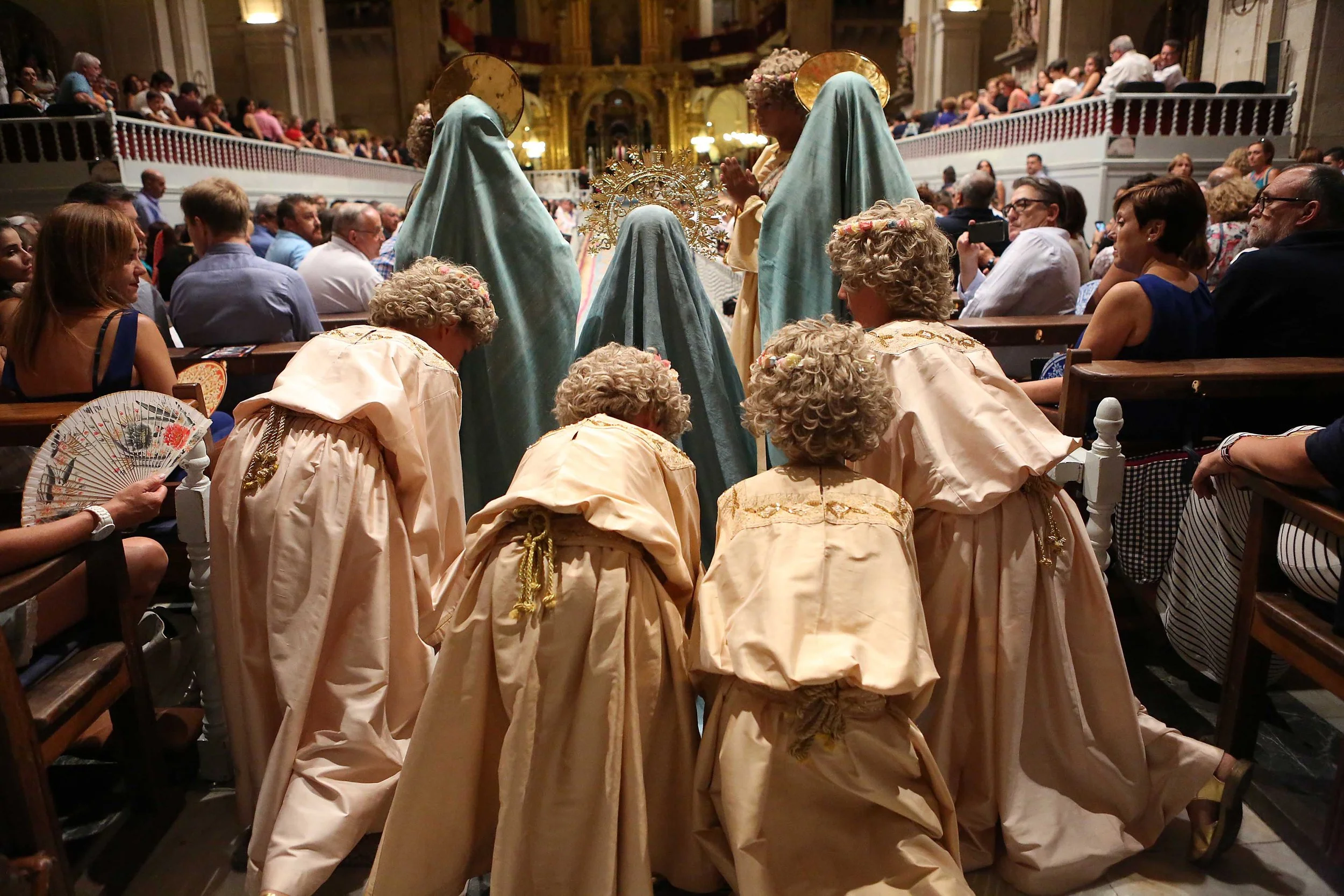
Performed inside the Basilica of Santa María, the Misteri d'Elx is a medieval sacred drama telling the story of the death, assumption and coronation of the Virgin Mary. It has been performed for centuries and is one of the city's most important cultural traditions.
The performance is traditionally held on 14 and 15 August, with special performances also taking place in even-numbered years during the autumn.
What makes it so unusual is the setting and the way the performance unfolds. This isn't a conventional theatre with a stage, lighting and microphones. The basilica itself becomes the setting, with singers, actors, theatrical machinery, organ music and bells creating an extraordinary atmosphere.
The story follows Mary and her companions, the arrival of the Apostles and the events surrounding her death. It also includes scenes involving those who initially oppose the Apostles, their conversion and the final heavenly sequence.
One of the most memorable moments comes when a large mechanism descends from the basilica's dome. A red sphere opens to reveal an angel dressed in blue and white, accompanied by a shower of gold paper. The combination of the machinery, the singing and the atmosphere inside the church makes this a particularly striking moment of the performance.
The Misteri is also remarkable because of its musical tradition. Much of the singing is performed without microphones, relying on the basilica's acoustics. Historically, the cast has been all male, with boys performing roles that would traditionally have been played by women.
The tradition has survived despite restrictions on religious theatre in earlier centuries and has become closely tied to the identity of Elche. It received UNESCO recognition as Intangible Cultural Heritage in 2001, with the inscription subsequently included in UNESCO's Representative List in 2008.
The main August performances are free to attend, although access, seating arrangements and queues can vary. Special autumn performances in even-numbered years may have different ticket arrangements.
If you're visiting Elche around the dates of the Misteri, plan ahead and check the official programme. It isn't something we'd recommend leaving until the last minute.
The mysterious Dama de Elche
Elche has a fascinating history that goes far beyond its palm trees, and one of the best ways to get a glimpse of that history is through the Dama de Elche.
The Dama de Elche, or Lady of Elche, is a limestone bust dating to the Iberian period, generally associated with the fourth or fifth century BC. It was discovered in 1897 and is now one of the most famous archaeological sculptures in Spain.
It's the kind of object that immediately catches your attention. The elaborate headdress, large circular ornaments on either side of the face and detailed jewellery give the sculpture a distinctive appearance that feels remarkably sophisticated.
But what makes it even more interesting is how little is definitively known about the figure.
Was it a representation of a woman? A goddess? Was it created for a religious purpose or connected with burial rituals? Historians and archaeologists have explored different interpretations, but its precise identity and original purpose remain debated.
The cavity at the back of the sculpture has also contributed to theories about its possible funerary use.
The original Dama de Elche is held in Madrid, but visitors to Elche can see a replica at the Museo Arqueológico y de Historia de Elche, known as MAHE, housed in the historic Altamira Palace.
And if the sculpture looks familiar, its distinctive headdress has sometimes been compared with Princess Leia's iconic hairstyle. It's a fun comparison, although there isn't established evidence that the sculpture directly inspired the character's hairstyle.
It's a fascinating stop for anyone interested in archaeology, ancient history or simply discovering the stories behind the places they're visiting.
Walking through a city surrounded by palm trees
One of the things that makes Elche immediately different is the landscape. You don't have to travel outside the city to find palm trees. They're everywhere, forming a part of the urban landscape that feels almost impossible to separate from Elche itself.
The Palmeral of Elche is a historic network of palm gardens, agricultural plots and groves, with more than 200,000 palms across the wider landscape. The UNESCO-inscribed area is more specific, comprising 67 orchards with around 45,000 palms across 144 hectares.
It's a landscape with a history stretching back centuries. The palm groves were developed alongside historic irrigation systems, particularly during the Islamic period, when agricultural techniques helped transform the surrounding area into a productive oasis.
And when you walk through the Palmeral, you're not simply walking through a park filled with palm trees. You're walking through a landscape that was created for a purpose.
The palms were cultivated for dates and other agricultural uses, while irrigation channels helped sustain the land. The layout of the groves and the way the palms are arranged reflect a system that was carefully developed over time.
Today, the palm groves have become one of Elche's most recognisable features. They can be found around parks, gardens, neighbourhoods and historic areas, making them an enjoyable part of simply exploring the city.
Some routes also highlight palms with unusual shapes or interesting histories. You might come across specimens that resemble a cobra, a candelabra or other recognisable forms.
It's worth taking your time here rather than treating the palm grove as a quick sightseeing stop. Walk through the paths, look at the irrigation channels and notice how the landscape blends into the city.
The Palmeral was inscribed on the UNESCO World Heritage List in 2000, and it's easy to understand why once you appreciate not just the trees themselves, but the agricultural system and cultural history behind them.
The palm tree with seven branches
While exploring Elche's palm gardens, one place that deserves a visit is Huerto del Cura.
It's a botanical garden within the Palmeral, offering a quieter setting filled with palms, Mediterranean plants and other botanical features. But the reason many people visit is the Imperial Palm, an unusual specimen that has become one of the garden's most famous attractions.
The Imperial Palm has seven stems growing from a single main trunk, creating a shape that looks almost like a giant candelabra.
It's an unusual sight, particularly when you see the structure of the tree up close. Instead of the familiar single trunk and crown of a palm, its branches create a much more distinctive form.
The palm also has a story associated with Empress Elisabeth of Austria, known as Sisi. According to the garden's traditional account, she admired the palm during her visit to Elche, and the tree subsequently became associated with her and the imperial connection.
Huerto del Cura is worth visiting even beyond the Imperial Palm. The garden offers a more relaxed way to experience the Palmeral and provides a chance to enjoy the different plants and landscape without constantly moving between attractions.
If you enjoy gardens, photography or simply want somewhere peaceful to spend part of the day, this is a lovely addition to your Elche itinerary.
Watching a palm gardener climb the trees
The palm trees in Elche are beautiful to look at, but there is also a fascinating amount of work involved in maintaining and harvesting them.
During our visit, we had the opportunity to watch a palm gardener, known locally as a palmerero, demonstrate how he climbs and harvests palm trees.
It immediately gives you a different perspective on the palm grove.
Climbing a tall palm isn't something that can be done casually. The height, the trunk and the equipment involved require experience, skill and a good understanding of the tree.
Watching a professional climb one of the palms makes it easier to appreciate the work that goes into maintaining the landscape. It's not simply a matter of cutting branches. Palm cultivation involves years of knowledge, techniques and experience.
The harvesting process is particularly important when it comes to date palms. Date palms have male and female flowers, and the female trees produce fruit following pollination. The dates are harvested at different stages depending on the variety and intended use.
The demonstration was one of those experiences that adds something to a trip that you wouldn't necessarily get from visiting a museum or walking around a garden.
You see the palms differently afterwards. They're no longer simply beautiful trees lining the city. They're part of an agricultural tradition that has been maintained by people whose work is closely connected with Elche's history.
How Elche creates its famous white palms
Another tradition connected with Elche's palm trees is the production of white palms, particularly those associated with Palm Sunday.
The white palms are a familiar part of Palm Sunday celebrations in Spain, but the process behind their appearance is particularly interesting.
The palm leaves are prepared while they are still growing. They are covered or wrapped to limit exposure to sunlight, which reduces the development of chlorophyll and helps produce the characteristic pale colour.
Once the leaves are harvested, artisans use them to create decorative designs. The weaving can be remarkably intricate, with some finished palms featuring elaborate patterns and shapes.
The process requires patience, skill and an understanding of how the palm leaves behave. It's a tradition that combines agriculture with craftsmanship, turning the palm tree into something that is not only part of the landscape but also part of local cultural celebrations.
The finished white palms are used in Palm Sunday traditions and are closely associated with Elche's identity.
It's fascinating to discover how much work goes into something that might otherwise seem like a simple decorative branch. Seeing the process, or visiting a workshop where the palms are prepared, can make this tradition much more meaningful.
Elche's food is a reason to visit in itself
After exploring the palm groves and discovering the city's traditions, it's time to talk about something that deserves just as much attention: the food.
Elche has a food culture closely connected with its agricultural landscape and the wider Alicante region. Rice, meat, seafood, dates, vegetables and regional ingredients all feature in local cooking.
And while you can certainly find familiar Spanish dishes here, there are also preparations that are particularly associated with Elche and its surroundings.
Dates, almonds and bacon
Dates are one of the foods most closely associated with Elche, thanks in part to the city's palm cultivation tradition.
They aren't just eaten as dried fruit. Dates appear in cakes, biscuits, breads, other sweet preparations and even drinks and liqueurs.
One combination worth trying is dates stuffed with almonds and wrapped in bacon before being fried or cooked.
The sweet flavour of the dates, the crunch of the almonds and the salty bacon create an interesting combination. It's a simple preparation, but one that demonstrates how local ingredients can be used in different ways.
If you're visiting Elche, try dates in more than one form. You'll find that they are much more closely connected with the local food culture than you might expect.
Arroz con costra – the dish you shouldn't leave without trying
If there is one dish that deserves a place on your Elche food list, it's arroz con costra.
This traditional rice dish is one of the most distinctive preparations associated with Elche. It combines rice with meats and regional sausages, with the defining feature being the egg layer that forms a crust over the top.
The rice is traditionally prepared with ingredients such as chicken, rabbit and local sausages. Towards the end of cooking, beaten egg is added, creating the layer that gives the dish its name.
Traditionally, the final stage is completed using a special metal lid known as a costrera. The lid is heated with embers and placed over the cooking vessel, allowing the heat to cook the egg and form the characteristic crust.
It's a dish that has been passed down through generations and is often associated with family gatherings, celebrations and traditional meals.
Arroz con costra is more than just another rice dish. It's one of those recipes that tells you something about the region and its food culture.
A visit to Cachito
During our visit, we had the opportunity to experience arroz con costra at Cachito, a family restaurant with a long history in Elche.
The experience included a demonstration of the preparation of arroz con costra, which made the meal much more interesting than simply ordering the dish and eating it.
Watching the preparation, understanding the ingredients and seeing the traditional cooking technique gave us a better appreciation of what goes into it.
Cachito is associated with the Pasqual family, and Noelia Pasqual represents the fourth generation of women in the family involved in running the restaurant, according to the experience shared during our visit.
There's something particularly enjoyable about learning about a dish while watching it being prepared. You get a better sense of why certain ingredients are used, how the recipe has evolved and why the traditional cooking method remains important.
If you're visiting Elche and want to experience local food beyond the usual restaurant menu, this is the kind of experience worth looking for.
Ñora and pipes i carasses
Another ingredient you'll come across in the region is ñora, a dried red pepper used in Mediterranean cooking, particularly in the Alicante area.
It adds flavour and depth to dishes, including rice preparations and sauces, without necessarily making them particularly spicy.
During our visit, we also learned about pipes i carasses, a traditional local preparation associated with ingredients including cod, garlic, oil and ñora.
It's the sort of dish that might not be familiar to visitors, which makes trying it all the more interesting.
When travelling, some of the best food experiences come from trying something you wouldn't normally order at home. Local dishes like these give you a better understanding of the ingredients and traditions that shape a destination's cuisine.
Boquerones between crisps
We also came across a rather fun way of eating boquerones, or marinated anchovies, in Elche.
Instead of simply serving them as a plate of fish, the anchovies can be eaten between large potato crisps.
It's a simple combination, but it works. The salty anchovies and the crunch of the crisps make for a snack that is easy to enjoy.
And honestly, these are the sorts of little food discoveries that make a trip memorable. You don't always need a complicated dish or a fine-dining experience. Sometimes it's a local way of eating something familiar that you remember long afterwards.
Seafood and rice
Elche is also part of the wider Alicante food landscape, where seafood and rice dishes are an important part of regional cuisine.
You'll find dishes featuring seafood, fish, rice and Mediterranean ingredients, with different restaurants offering their own variations.
If you're spending more than a day in Elche, make time for more than one meal out. Try a traditional rice dish, seafood, local snacks and desserts, and don't rush through the food experiences.
The city's cuisine is another reason to stay a little longer rather than treating Elche as a quick stop.
A museum that preserves the everyday life of Elche
Not every museum visit has to be about ancient artefacts or famous historical figures.
The Pusol School Museum offers a different kind of experience, focusing on traditional life, local history, crafts, professions, agriculture and everyday culture.
The museum grew from an educational project that aimed to preserve local heritage and pass traditional knowledge on to future generations.
Its collections include objects connected with farming, shops, clothing, crafts, tools, traditional professions and everyday life. Many of the objects were donated by local people, giving the museum a particularly personal connection with the community.
The idea is to preserve the memory of a way of life that has gradually changed as technology, industry and modern living have transformed the region.
This is what makes the Pusol School Museum particularly interesting. It isn't simply showing you what Elche looked like in the past. It is helping preserve the stories, objects and traditions of the people who lived there.
The project has received UNESCO recognition as a safeguarding initiative for intangible cultural heritage.
If you're interested in local history and culture, it's worth including in your itinerary. Check the museum's official website before visiting for current opening hours and access information.
The beaches and nature that are waiting outside the city
If you're visiting Elche and think the palm groves and historic centre are all there is to see, you're missing another part of the destination.
The wider municipal area includes beaches, dunes, pine forests and wetlands, creating a landscape that is quite different from the city itself.
Some of the beaches associated with Elche include Arenales del Sol, El Carabassí, El Pinet, La Marina, L'Altet and Les Pesqueres-El Rebollo.
The coastal areas offer a mixture of sandy beaches, dunes and natural surroundings. Depending on where you go, you can spend time walking along the coast, enjoying the beach or exploring the surrounding landscapes.
There are also important natural areas around Elche.
El Hondo
El Hondo is a protected wetland area with lagoons, marshes, reed beds and wildlife.
It's particularly interesting for birdwatching, with a variety of bird species using the wetlands as habitat. Trails and observation points provide opportunities to explore parts of the landscape while keeping disturbance to wildlife to a minimum.
Clot de Galvany
Clot de Galvany is another natural area worth exploring. It combines dunes, coastal wetlands, pinewoods and other habitats.
The reserve has trails and observation areas, making it an interesting place for walking, photography and nature observation.
These landscapes give Elche a different dimension. You can spend time exploring the city, discovering its traditions and enjoying its food, then head towards the coast or wetlands for a completely different experience.
If you have extra time and access to transport, these natural areas are worth considering.
Elche is also a city of shoes
There is another part of Elche's identity that may surprise visitors: its footwear industry.
Elche has a long-established footwear manufacturing tradition, with shoe production and related businesses playing an important role in the city's economy.
The footwear industry is part of the city's wider story, alongside agriculture, palm cultivation and its cultural heritage.
If you're interested in shopping, you can look into footwear outlets and local manufacturers. Depending on what you're looking for, this can be an interesting way to discover a different side of the city.
Elche isn't only a destination built around historic attractions. It's also a city with an industrial history and a modern economy that continues to shape its identity.
Where we stayed: Hotel Huerto del Cura
During our visit, we stayed at Hotel Huerto del Cura, located within the Palmeral area.
The hotel's setting makes it particularly appealing if you want to stay somewhere surrounded by greenery while remaining close to the city.
The garden-style surroundings offer a more relaxed atmosphere, and the location is convenient for exploring the palm groves and visiting Huerto del Cura.
Our stay included breakfast, and the price we encountered was approximately £125 for the room and breakfast. This reflects the price during our visit, rather than a current rate, as hotel prices can vary considerably depending on the dates, room type and availability.
If you're planning to spend a couple of days in Elche, staying somewhere that allows you to enjoy the palm landscape can make the trip feel more relaxed.
Where we ate: El Graniano
El Graniano was another restaurant experience during our visit to Elche.
The meal came to approximately £44, including wine, during our trip. As with the other prices mentioned in this article, this is a reference to what was paid at the time rather than a current price.
Food is one of the things that can make a destination feel more personal, and spending time at restaurants rather than simply rushing between attractions gives you a chance to enjoy the city at a different pace.
Elche has enough local dishes and regional ingredients to make eating out a part of the itinerary rather than something squeezed between sightseeing stops.
Planning a trip to Elche
If you're considering visiting Elche, the good news is that you don't necessarily need a long holiday to experience the city.
How long should you stay?
One day is enough to explore some of the main attractions, particularly if you're visiting from Alicante. You can walk through the palm groves, visit MAHE, explore the historic centre and enjoy a traditional meal.
However, we'd recommend spending one or two nights if you can.
Two days allow you to explore the city at a more relaxed pace, visit Huerto del Cura, spend more time with the palm groves and museums, and perhaps explore the wider natural areas.
If you're planning to visit beaches, wetlands or other attractions outside the city, additional time is helpful.
How to get to Elche
Elche is located in the province of Alicante, in southeastern Spain.
The Alicante-Elche Miguel Hernández Airport serves the wider region and is a major arrival point for visitors travelling to the Costa Blanca.
From the airport, onward travel options may include road transport, taxis and public transport connections, depending on your destination and arrival time.
If you're mainly exploring Elche's historic centre and palm groves, you may not need a car. However, if you want to explore beaches, wetlands and the wider surrounding area, a car can offer greater flexibility.
Check current transport routes and schedules before travelling, particularly if you're arriving late or planning to visit places outside the city centre.
When should you visit?
Spring is a lovely time to explore Elche, particularly if you're planning to walk through the palm groves, gardens and historic streets.
Summer is ideal if you're interested in beaches and the Misteri d'Elx, although temperatures can be high, so plan outdoor activities accordingly.
Autumn can be a comfortable time for sightseeing and exploring the surrounding natural landscapes. In even-numbered years, special autumn performances of the Misteri d'Elx may also take place.
Winter offers a quieter experience, although opening hours and seasonal services can vary.
If your trip is planned around a particular event, museum or experience, check the dates and arrangements before booking.
How we'd spend two days in Elche
If you're planning a two-day visit, we'd avoid trying to squeeze everything into one day. Elche is much more enjoyable when you give yourself time to explore.
Day 1: Discover the city
Start your morning with a walk through the Palmeral, taking time to explore the palm groves and historic landscape.
Visit MAHE to discover the Dama de Elche and learn more about the city's archaeological history.
Spend some time exploring the historic centre, then enjoy lunch at a restaurant serving arroz con costra or other traditional dishes.
In the afternoon, visit Huerto del Cura and see the Imperial Palm.
Finish the day with dinner and a relaxed walk through the city.
Day 2: Traditions and nature
Spend the morning visiting the Pusol School Museum, checking its opening hours before you go.
If available, arrange a palm-related experience or demonstration to learn more about the traditions surrounding the trees.
Enjoy lunch at a local restaurant, then spend the afternoon exploring Elche's wider natural landscape.
You could visit El Hondo, Clot de Galvany or one of the beaches, depending on your interests and transport.
If you're visiting during the Misteri d'Elx, plan your itinerary around the performance and make it the main highlight of the trip.
Elche is the kind of place you don't expect to enjoy quite so much
Some destinations are easy to plan because you already know what you're going for. Others are more interesting because the experiences keep surprising you.
Elche is one of those places.
We came across a city with a landscape unlike most others in the region, traditions that have survived for centuries, an extraordinary archaeological story, food that deserves more attention and natural surroundings that extend well beyond the historic centre.
The palm trees may be the first thing you notice, but they aren't the only reason to visit. The Misteri d'Elx, the Dama de Elche, the white palm traditions, arroz con costra, the museums and the beaches all give the city a character that is difficult to reduce to a single attraction.
If you're travelling around Alicante or the Costa Blanca, consider giving Elche more than just a few hours. It's a destination that rewards taking your time, trying the local food and discovering the stories that make it what it is.
And that's often what makes a trip memorable in the first place.
Planning your next trip? Discover more travel guides, experiences, places to visit and stories on LondonYaar.com.
Follow @rohan.londonyaar for more places, stories and things worth knowing before you visit.