Why You Hear “Mind the Gap” in London The Real Story Behind the Underground Announcement
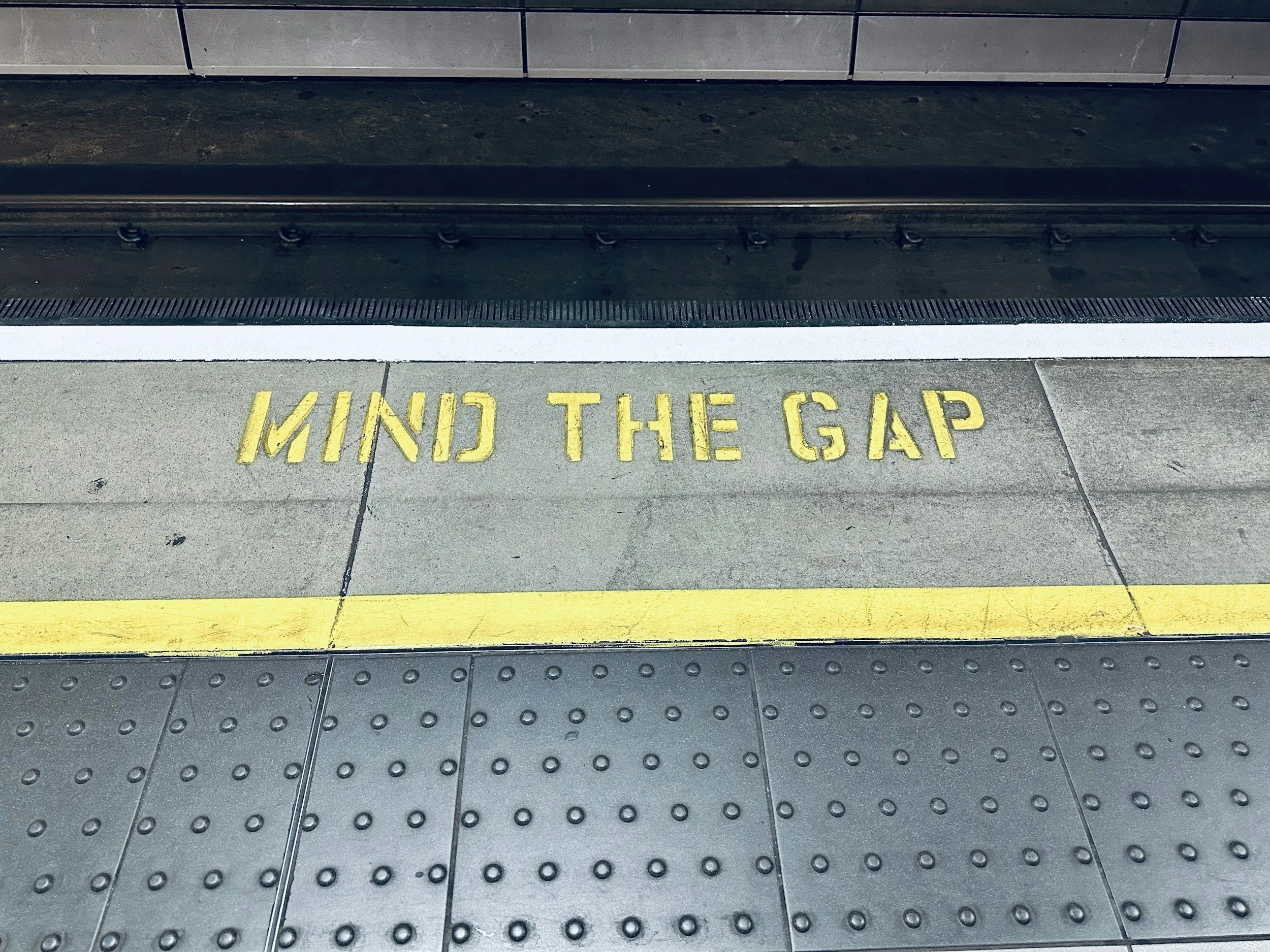
If you’ve ever used the London Underground, there’s one phrase you’ll hear again and again:
“Mind the gap.”
It plays as trains arrive.
It’s printed on platforms.
It’s repeated across stations.
It’s simple. Almost routine.
But once you think about it, a question naturally comes up:
👉 Why this phrase?
👉 Why is it so specific to London?
👉 And why has it stayed unchanged for so long?
The answer isn’t just about safety it’s about history, design, and how London’s transport system evolved over time.
What “Mind the Gap” Actually Refers To
At its core, “Mind the gap” is a safety warning.
It tells passengers to be careful of the space between the train and the platform edge when boarding or exiting.
This gap exists because:
trains don’t always align perfectly with platforms
platforms are not uniform across the network
tracks and station layouts vary significantly
In some stations, the gap is barely noticeable.
In others, especially on curved platforms, it can be quite wide enough to cause trips or accidents if people aren’t paying attention.
So the phrase exists for a very practical reason.
The Real Reason the Gap Exists
To understand why the gap exists at all, you need to look at how the Underground was built.
The London Underground opened in 1863, making it the oldest underground railway system in the world.
But here’s the key detail:
👉 It wasn’t built all at once.
Different lines were constructed at different times, by different companies, using different engineering methods.
This resulted in:
inconsistent platform heights
varying train sizes over time
curved platforms in tight spaces
Unlike modern metro systems, which are designed with standardisation in mind, London’s Underground evolved gradually.
And that evolution created the gap.
Why It Was Never Fully Fixed
You might wonder:
👉 Why not just remove the gap completely?
The answer is complexity.
Fixing the gap across the entire network would require:
rebuilding platforms
redesigning tracks
shutting down parts of the system
Given how busy the Underground is, this isn’t practical.
Instead, the system relies on:
👉 clear warnings
👉 visual signs
👉 repeated announcements
And that’s where “Mind the gap” becomes essential.
How the Announcement Became Standard
In the early days of the Underground, warnings were:
given by staff
displayed on signs
But as passenger numbers increased, consistency became important.
Recorded announcements were introduced to:
standardise safety messages
ensure clarity
reduce reliance on staff
“Mind the gap” was chosen because it is:
short
direct
easy to understand
And once introduced, it quickly became the standard phrase across the network.
The Voices Behind the Announcement
Over the years, different recorded voices have been used across stations.
One of the most well-known versions is often associated with Oswald Laurence, whose announcement was used at stations like Embankment Station.
There is also a widely shared story that after his passing, his original recording was reinstated at Embankment following a request from his widow.
While this story is often mentioned, it is best understood as a well-known and widely circulated account rather than a formally documented historical event.
Regardless, it added a human connection to what is otherwise a functional announcement.
Why This Phrase Became Iconic
“Mind the gap” is now far more than a safety instruction.
It became iconic for a few key reasons:
1️⃣ Constant Repetition
Millions of passengers hear it every day.
2️⃣ Simplicity
It’s short and easy to remember.
3️⃣ Distinctiveness
While other cities have similar warnings, few use a phrase as concise and recognisable.
4️⃣ Cultural Exposure
It appears on:
souvenirs
posters
clothing
It has become part of London’s identity.
Why Other Cities Don’t Use the Same Phrase
Most metro systems around the world do warn passengers about platform gaps.
But they usually use:
longer announcements
more formal language
multiple instructions at once
Cities like New York, Paris, or Tokyo tend to prioritise detailed messaging over memorability.
London took a different approach.
By using a short, direct phrase, it created something that works across:
languages
age groups
different levels of familiarity
This simplicity is a big reason why it became so recognisable.
Where the Gap Is Most Noticeable
Not all stations have the same gap.
In fact, it varies significantly across the network.
Stations with:
curved platforms
older layouts
tighter tunnels
tend to have larger gaps.
For example:
Bank Station has complex layouts
Waterloo Station has varied platform spacing
This is why the announcement is still relevant today.
A Small Detail That Defines the Experience
What’s interesting about “Mind the gap” is how something so small becomes so memorable.
It’s not:
a landmark
a tourist attraction
a major feature
It’s just a phrase.
But because it’s repeated so often, it becomes part of how people experience London.
What Visitors Notice First
For many visitors, this is one of the first things they notice on the Underground.
It stands out because:
it’s repeated frequently
it sounds different
it feels uniquely London
And once they leave, it’s often one of the things they remember.
How “Mind the Gap” Became Part of London’s Identity
Over time, “Mind the gap” has gone beyond being just a safety announcement.
It has become one of the most recognisable phrases associated with London.
You’ll see it printed on:
T-shirts
mugs
posters
souvenirs
It’s often used in media and films to instantly signal that a scene is set in London.
What makes this interesting is that it wasn’t designed to be iconic it became iconic simply through repetition and association with daily life.
For many people, hearing “Mind the gap” is one of the first moments that makes London feel real.
It’s a small detail, but it carries a strong sense of place.
Final Thought
“Mind the gap” started as a simple safety instruction.
But over time, it became something more.
It reflects:
the history of the Underground
the complexity of the system
the daily rhythm of the city
It’s practical, but also symbolic.
And that’s why it has lasted.
London is full of small details like this — things you hear every day without thinking about them.
But once you understand the story behind them, they start to feel different.
For more London insights, guides, and stories, keep checking Londonyaar.com
👉 And next time you hear “Mind the gap,” you’ll know exactly why it’s there.