The History of Borough Market: 1,000 Years of London’s Oldest Food Market (2026 Guide)
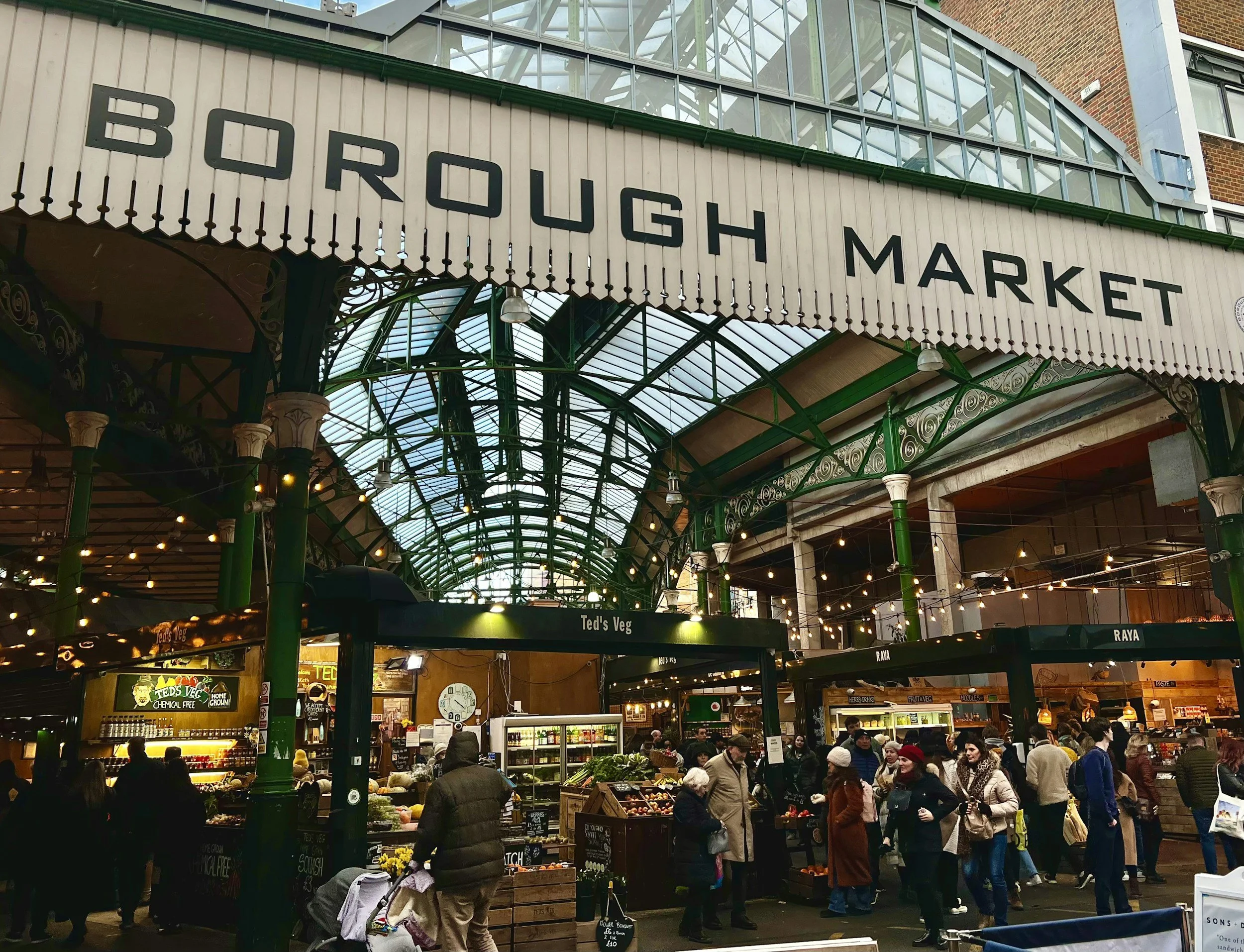
There are plenty of food markets in London.
But Borough Market isn’t just another place to grab a quick bite.
It’s one of the oldest food markets in London, with roots that go back nearly 1,000 years.
And when you walk through it today past the bread stalls, cheese counters, and street food vendors you’re not just eating.
You’re stepping into a place that has quietly evolved alongside London itself.
It Started as a Simple Trading Spot
Borough Market’s story begins long before it became what it is today.
As early as the 11th century, traders were already gathering near London Bridge to sell food.
This location wasn’t random.
London Bridge was one of the busiest points in the city a natural place for:
farmers
merchants
travellers
to meet and trade.
Back then, it wasn’t an organised market.
It was simply a place where food was exchanged practical, noisy, and essential.
The London Bridge Connection
London Bridge
The market’s early success is closely tied to London Bridge.
At the time:
London Bridge was the main crossing over the River Thames
goods moving into the city passed through this area
This meant Borough Market became a key supply point for:
fresh produce
meat
grains
It wasn’t a destination it was part of London’s daily survival.
It Was Shut Down Then Rebuilt
By the 18th century, the original market had become overcrowded and chaotic.
In 1756, Parliament passed an Act to close the existing market.
But instead of disappearing, it was relocated and rebuilt nearby.
This moment is important.
Because it marks the transition from:
👉 an informal trading area
to
👉 a structured, organised market
The Borough Market we know today started to take shape from this point.
The Victorian Market You See Today
Much of what you see at Borough Market today comes from the 19th century.
During the Victorian era, the market was redesigned with:
iron structures
covered halls
permanent stalls
These changes made it:
more organised
more durable
better suited for large-scale trading
And interestingly many of these structures still exist today.
That’s why the market feels historic without trying too hard.
From Wholesale Market to Public Destination
For a long time, Borough Market wasn’t designed for casual visitors.
It was a wholesale market.
This means:
restaurants and businesses bought food in bulk
early mornings were the busiest times
it was focused on supply, not experience
But by the late 20th century, things began to change.
Supermarkets and modern supply chains reduced the need for traditional wholesale markets.
And Borough Market had to adapt.
Reinventing Itself in the 1990s
In the 1990s, Borough Market went through one of its biggest transformations.
Instead of competing with supermarkets, it repositioned itself as:
👉 a speciality food market
This meant focusing on:
high-quality produce
artisan food
small independent traders
This shift completely changed how people interacted with the market.
It became a place to:
explore
taste
experience food not just buy it.
The Rise of Artisan Food Culture
Today, Borough Market is known for its:
handmade cheeses
fresh bread
speciality ingredients
global street food
This reflects a broader shift in London’s food culture.
People are no longer just looking for convenience.
They’re looking for:
quality
authenticity
variety
And Borough Market became one of the first places in London to fully embrace that.
A Global Food Hub in the Heart of London
Walk through Borough Market today, and you’ll notice something immediately.
It’s not just British food.
You’ll find:
Italian produce
Spanish meats
Middle Eastern dishes
Asian street food
This reflects London itself a city shaped by global influences.
The market has evolved from a local supply point to an international food destination.
It’s Now as Much About Experience as Food
What makes Borough Market different today isn’t just the food.
It’s the atmosphere.
People don’t just go there to buy ingredients.
They go to:
try new dishes
walk around
spend time
It’s part market, part social space.
And that’s a big reason why it remains so popular.
Why It Still Matters Today
Borough Market isn’t just surviving it’s relevant.
Because it represents something important:
👉 the evolution of London’s food culture
From:
medieval trade
toVictorian structure
tomodern food experiences
It shows how the city has changed and how food has changed with it.
What You Notice When You Visit
If you visit Borough Market today, you’ll notice small details that reflect its history:
the layout still feels slightly irregular
old structures blend with new stalls
traditional produce sits next to modern street food
It’s not perfectly polished and that’s what makes it feel real.
How Borough Market Became a Must-Visit Spot for Tourists
While Borough Market started as a place for locals to buy food, today it has become one of London’s most visited food destinations.
Its location near London Bridge makes it easy to access, and its reputation has grown through travel guides, social media, and word of mouth. Visitors often come not just to eat, but to experience a part of London that feels both historic and modern at the same time.
What makes it stand out is that it hasn’t lost its original purpose. Even with tourists, it still functions as a real market where traders sell high-quality ingredients and freshly prepared food.
This balance between authenticity and popularity is what makes Borough Market unique compared to many other food markets around the world.
Final Thought
Borough Market isn’t just about food.
It’s about time.
A place where:
centuries-old traditions
modern tastes
global influences
all exist in one space.
And that’s what makes it different.
You’re not just visiting a market.
You’re experiencing a small part of London’s history still active, still evolving, and still relevant.
London is full of places like this where history and everyday life overlap in unexpected ways.
For more London guides, stories, and local insights, keep checking Londonyaar.com
👉 And next time you’re at Borough Market, take a moment you’re standing in a place that has fed London for nearly a thousand years.