Why London Has So Many Chimneys Even on Modern Homes
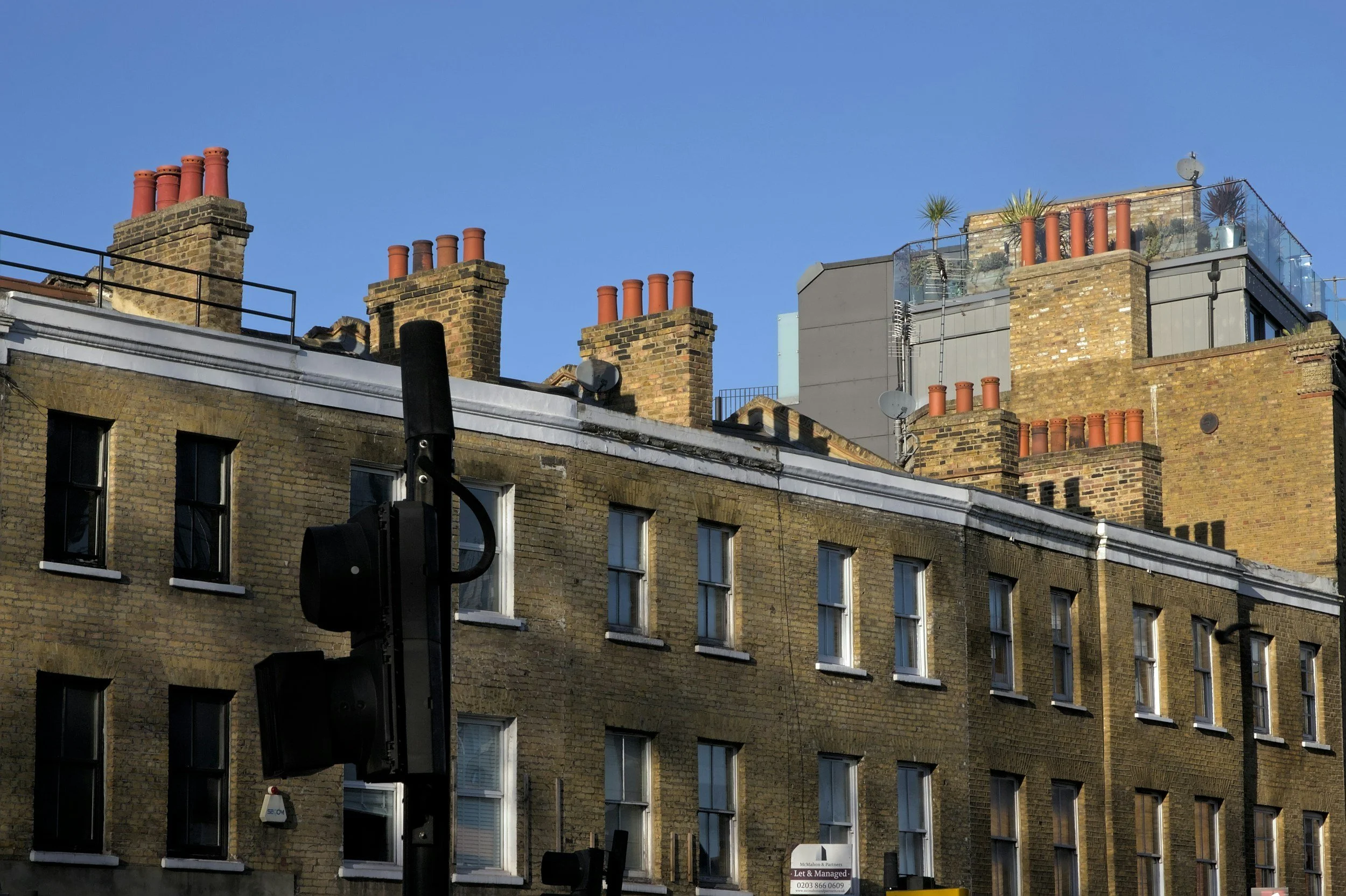
Look across almost any London skyline and you'll notice something unusual.
Not skyscrapers.
Not church towers.
Chimneys.
Rows and rows of chimneys.
Some sit above grand Victorian townhouses. Others appear on Georgian terraces, Edwardian streets and even relatively modern homes. In certain neighbourhoods, the rooftops seem almost completely defined by chimney stacks and chimney pots.
For many visitors, it raises an obvious question:
Why does London still have so many chimneys?
After all, most homes today have central heating. Many fireplaces are no longer used. And modern buildings don't technically need huge chimney stacks the way houses once did.
Yet somehow, London's chimneys remain everywhere.
The answer lies in a mix of history, architecture, coal fires, planning regulations and the city's determination to preserve its character.
And once you understand the story behind them, you start seeing London's rooftops very differently.
London Was Built Around Fireplaces
The simplest explanation is also the most important:
For centuries, fireplaces were the primary way people heated their homes.
Before central heating existed, nearly every main room needed its own fire.
That meant:
Living rooms had fireplaces
Bedrooms had fireplaces
Dining rooms had fireplaces
Studies had fireplaces
Kitchens often had fireplaces
And every fireplace needed a flue to carry smoke safely out of the building.
The result?
A huge number of chimneys.
In larger Georgian and Victorian houses, there could easily be eight, ten or even more fireplaces spread throughout the building. Each one contributed to the chimney stack visible above the roof.
That's why older London homes often have surprisingly large chimney clusters.
They weren't decorative.
They were essential.
Every Room Needed Heat
One thing many people forget is that central heating is relatively modern.
For much of London's history, if you wanted a warm bedroom, you needed a fireplace inside that bedroom.
A large townhouse might contain:
Four fireplaces downstairs
Four upstairs
Additional servant fireplaces
Kitchen hearths
All of these required chimney flues.
That's why historic London houses often have multiple chimney pots grouped together at roof level.
Each pot may represent a separate fireplace below.
When viewed from the street today, those clusters create one of London's most recognisable architectural features.
Coal Changed London's Skyline
For centuries, coal became the dominant heating fuel in London.
Coal fires produced huge amounts of smoke, meaning efficient chimney systems became increasingly important.
As London expanded rapidly during the Georgian and Victorian eras, entire streets were built around chimney-based heating systems.
The city essentially grew upward with chimneys attached.
This is one reason older London neighbourhoods have such distinctive rooflines compared with many newer cities.
The chimneys weren't optional extras.
They were part of the infrastructure of everyday life.
Chimneys Became Status Symbols
Surprisingly, chimneys weren't just practical.
They became symbols of wealth.
Historically, more fireplaces usually meant a larger and more expensive house. Multiple chimney pots suggested multiple heated rooms, servants and greater comfort.
In Tudor and later periods, wealthy homeowners often invested in elaborate decorative chimney stacks that showcased their status. Some were built with intricate brickwork patterns and ornamental designs.
In some cases, buildings even featured decorative chimney elements designed partly for appearance.
The chimney became a visible statement.
Almost like displaying wealth on the roof.
So Why Are They Still There?
This is where things get interesting.
Most London homes no longer rely on fireplaces as their main heat source.
Yet the chimneys remain.
Why?
Because removing them is often far more complicated than people expect.
Many chimney stacks form part of the structure of older buildings. In Victorian and Edwardian homes especially, chimney breasts and stacks are often integrated into the property's construction.
Removing them can involve:
Structural work
Engineering assessments
Planning considerations
Party wall agreements
Significant costs
For many homeowners, it's simply easier to leave them in place.
London's Conservation Rules Help Protect Them
Another major reason is preservation.
Large parts of London fall within Conservation Areas where maintaining historic architectural character is strongly encouraged.
In neighbourhoods like:
Notting Hill
Kensington
Chelsea
Hampstead
Greenwich
Islington
rooflines are considered an important part of the area's historic appearance.
Removing visible chimney stacks can sometimes require permissions or attract planning scrutiny depending on the property and location.
As a result, many homeowners keep chimneys even if the fireplaces themselves are no longer active.
Modern Homes Sometimes Keep Chimneys on Purpose
One of the most surprising things is that even newer houses sometimes include chimney-like features.
Why?
Because people associate chimneys with traditional British homes.
Developers often recognise that buyers like the familiar appearance of classic London architecture.
Even when a chimney no longer serves a major heating purpose, retaining one can help a house feel more "complete" or visually in keeping with neighbouring properties.
In certain developments, chimney forms are included partly to preserve the character of surrounding streets.
Chimneys Help Define London's Identity
Think about some of London's most famous residential neighbourhoods.
Part of their charm comes from the roofscape.
The rows of chimney pots stretching across terraces create a silhouette that immediately feels British.
In fact, many architects and conservation groups consider chimney stacks an important element of historic streetscapes.
Without them, many neighbourhoods would look noticeably different.
The skyline would lose some of its texture and character.
Some London Fireplaces Still Work
Although central heating dominates today, fireplaces haven't disappeared completely.
Many London homes still contain:
Working fireplaces
Gas fires
Wood-burning stoves
Decorative hearths
Recent increases in energy costs have even encouraged some homeowners to restore older fireplaces. London's chimney industry has experienced renewed interest in recent years partly because of this trend.
So while chimneys may no longer heat the entire city, many still serve practical purposes.
Why You Notice Them More in London Than Other Cities
Not every city preserved its historic housing stock in the same way.
Large parts of London remain filled with Georgian, Victorian and Edwardian homes that survived redevelopment.
The city's extensive conservation policies also helped preserve traditional streetscapes.
As a result, London retained many architectural features that disappeared elsewhere.
Chimneys are one of the most visible examples.
They're a reminder that beneath the modern city lies a much older one built around fireplaces, coal fires and centuries of domestic life.
Final Thoughts
London's chimneys exist because the city was built in a completely different era.
An era when every room needed a fire, coal powered daily life and rooftops became crowded with chimney pots carrying smoke into the sky.
Today, most are no longer essential for heating.
But they remain because they're woven into the structure, history and appearance of the city itself.
And once you start noticing them, it's hard not to see them everywhere.
From grand Victorian terraces to modern developments inspired by historic design, London's chimneys continue to shape one of the most distinctive skylines in the world.