Where to Go Stargazing Near London
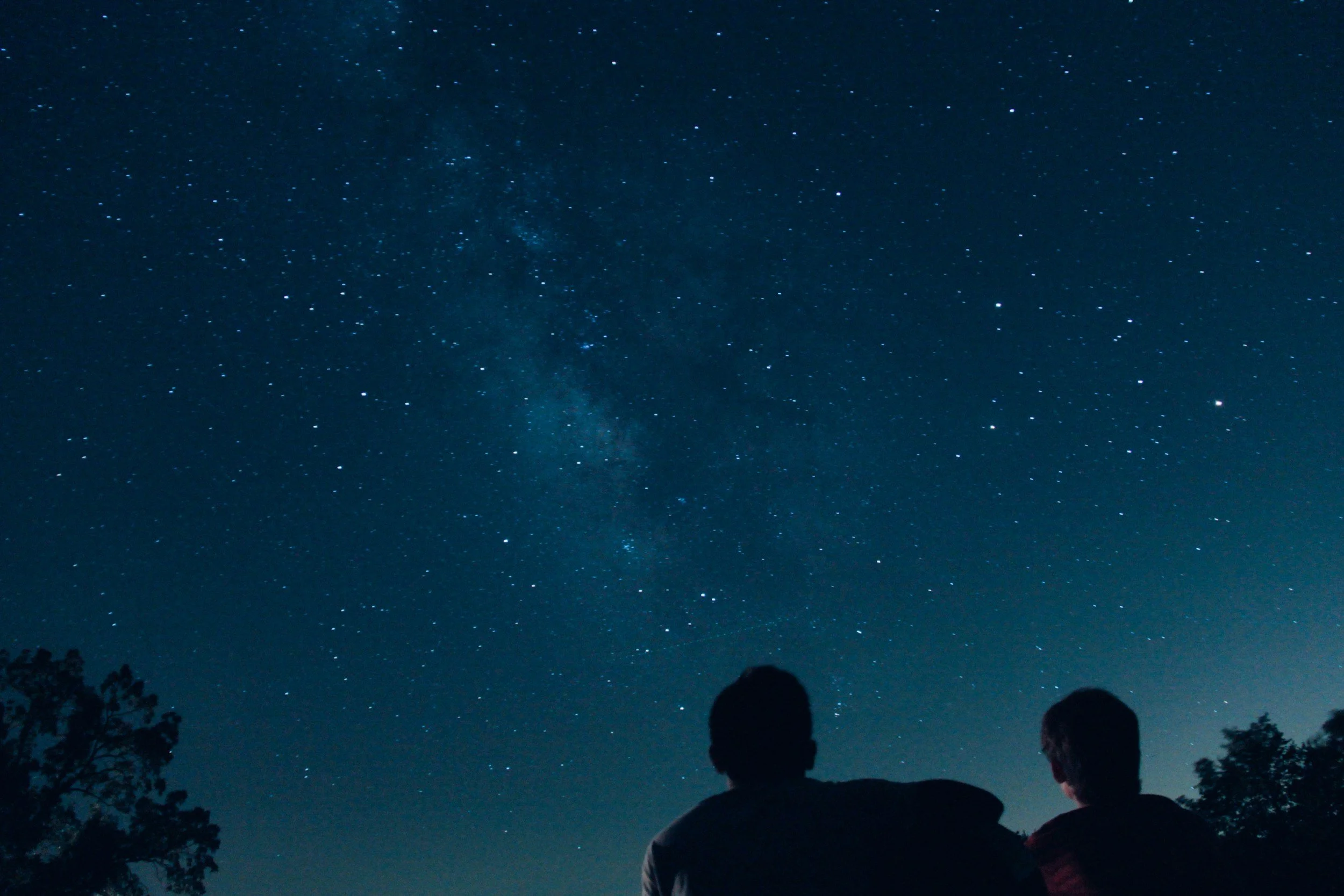
London may not be the first place you think of when you imagine lying under a sky full of stars. The city is bright, busy and surrounded by streetlights, buildings and roads that make it difficult to see much beyond the brightest stars.
But you don't have to travel halfway across the country to find a darker sky.
There are quiet parks and open spaces within London where you can start spotting stars, planets and the Moon. And if you're willing to travel a little further, the South Downs offers something completely different: genuinely dark skies, wide open horizons and some of the best stargazing in southeast England.
In fact, the South Downs National Park became an International Dark Sky Reserve in 2016 and has ten official Dark Sky Discovery Sites. In 2026, the park is celebrating ten years of its dark-sky designation.
So whether you want a quick evening under the stars or a proper night away from London's glow, here are some of the best places to go stargazing near London.
1. Morden Hall Park
If you don't want to leave London, Morden Hall Park is one of the more accessible places to start.
This National Trust park in south London feels surprisingly rural once you're away from the surrounding roads and buildings. There are meadows, wetlands, wooded areas and the River Wandle running through the park, giving it a very different atmosphere from central London.
It isn't going to compete with the darkest countryside in southeast England, but that's not really the point.
Morden Hall Park is useful if you're simply looking for somewhere greener and darker than the centre of London. On a clear evening, you can get away from direct lights and spend some time looking upwards.
The biggest advantage is convenience. You can get there without planning an entire overnight trip, making it a good option for someone trying stargazing for the first time.
Just remember that park access and facilities are different things. The National Trust lists the parkland as open all day, but car-park and café hours are separate, so don't assume everything remains open late into the night.
Best for: A simple London evening without travelling far.
2. Hampstead Heath
Hampstead Heath is another good option if you want to stay within London.
Its open landscape and elevated areas make it one of the more interesting places in the capital for looking at the night sky. You won't get the darkness of the countryside, but moving away from dense streets and direct lighting can make a noticeable difference.
The heath is also home to the Hampstead Scientific Society Observatory, making the area particularly interesting for anyone who wants astronomy to be more than simply looking at stars.
For casual stargazing, the experience is less about seeing thousands of stars and more about finding a darker patch of London, allowing your eyes to adjust and seeing what you can pick out.
And that last part matters.
Give your eyes time to adapt. Constantly checking your phone or shining a bright torch around you will make it harder to see fainter objects.
Best for: Londoners who want an easy astronomy night without leaving the city.
3. Epping Forest
Head east and London's urban landscape starts to feel much less intense.
Epping Forest is one of the places suggested by CPRE London for stargazing in the capital, alongside locations such as Richmond Park, Hampstead Heath, Blythe Hill Fields and Walthamstow Wetlands.
The forest won't suddenly give you a completely dark rural sky, but getting away from the concentration of central London lighting can improve your chances of seeing more stars.
The trick is to find an appropriate open area rather than simply standing underneath a canopy of trees. Stargazing needs a clear view of the sky, so an open clearing or suitable open space is much more useful than being surrounded by woodland.
This is also one where you should think about safety. Forests that feel familiar during the day can feel very different after dark.
Best for: An east London escape where the surroundings feel more rural.
4. Richmond Park
Richmond Park gives you another chance to escape the intensity of central London without actually leaving the capital.
The park's huge open landscapes are particularly useful for getting away from buildings and direct street lighting. CPRE London includes Richmond Park among its recommended London stargazing locations.
There's also something special about the atmosphere here after dark: open grassland, trees on the horizon and the possibility of seeing wildlife while you're waiting for the sky to darken.
However, don't confuse a good London stargazing location with a dark-sky reserve. The city's light pollution is still present, and your view will be affected by the glow from the wider metropolitan area.
Think of Richmond Park as a convenient introduction rather than the final destination for serious stargazing.
Best for: Combining a night outdoors with a more peaceful London setting.
5. Ditchling Beacon
If you want to see a dramatically better night sky, start looking beyond London.
Ditchling Beacon in East Sussex is one of the official Dark Sky Discovery Sites within the South Downs National Park. It is also the highest point in East Sussex, at 248 metres above sea level, with panoramic views across the surrounding landscape.
This is where stargazing starts to feel very different.
Instead of trying to find a gap between London's buildings and lights, you're standing on an open hill with a huge view of the sky.
The South Downs National Park specifically highlights Ditchling Beacon for its panoramic 360-degree views.
It is also relatively easy to combine with a trip to Brighton, although you'll need to plan your return journey carefully if you're staying after dark.
Best for: A proper dark-sky experience without travelling extremely far from London.
6. Devil's Dyke
Just north of Brighton, Devil's Dyke is another official Dark Sky Discovery Site.
The location combines one of the most dramatic landscapes in the South Downs with excellent open views of the sky. The South Downs National Park describes Devil's Dyke as a major stargazing location and highlights its panoramic views.
During the day, people come here for the huge views across the Downs.
At night, the reason to come is above you.
Because there are fewer direct artificial lights than in London, you'll have a much better chance of seeing fainter stars and celestial objects. On a clear night, the landscape almost disappears into darkness and the sky becomes the main event.
Devil's Dyke is also one of the easier places to pair with a Brighton day trip. You could spend the afternoon in Brighton, head up towards the Downs for sunset and stay into the evening for stargazing.
Just plan your transport home before you go. Public transport options can be much more limited late at night than during the day.
Best for: A stargazing trip combined with a Brighton day out.
7. Bignor Hill
If your priority is the sky rather than convenience, Bignor Hill is one of the places to consider.
It sits within the core of the South Downs International Dark Sky Reserve, and the National Park specifically identifies it as one of the darkest locations in the reserve.
The difference here is the distance from major sources of artificial light.
On clear nights, the South Downs National Park says Bignor Hill offers extensive views of the night sky in all directions and can provide views of the Milky Way on moonless nights, particularly in late summer and mid-winter.
That makes this much closer to what people imagine when they hear the words "stargazing trip."
You're not simply finding a dark corner of a city park. You're deliberately travelling into an area where protecting the darkness itself has become part of the landscape.
Best for: Serious stargazing and seeing far more stars than you can from London.
8. Seven Sisters and Birling Gap
Few places make stargazing feel quite as dramatic as the Sussex coast.
Birling Gap is one of the official Dark Sky Discovery Sites within the South Downs National Park, offering big coastal skies around the Seven Sisters cliffs.
The Seven Sisters Country Park also highlights the area for stargazing and notes that, on clear nights between October and March, it can be possible to catch glimpses of the Milky Way above the famous chalk cliffs.
This is one of those places where the journey becomes part of the experience.
You have the sea, the cliffs and a completely different horizon from London. Once the lights around you fade and your eyes adjust, the scale of the sky becomes much more obvious.
Winter can be particularly rewarding because the nights are longer, although you'll need to dress properly. Coastal wind can make an already cold evening feel considerably colder.
And remember that this is a coastal cliff environment. Stay on safe paths, be cautious around edges and don't wander onto dangerous areas simply to find a darker viewpoint.
Best for: A memorable night combining the coast, cliffs and stars.
What Is the Best Time to Go Stargazing Near London?
You don't necessarily need a special astronomical event to go stargazing.
A clear, dark night can be enough.
But some conditions make a huge difference.
Choose a clear night
Cloud is the obvious enemy.
Check the weather before travelling rather than making a long journey and discovering that the entire sky is covered.
Look at the Moon
A bright full Moon can be beautiful, but it also makes the sky brighter and can hide fainter stars.
If your goal is to see as many stars as possible, a darker period around the new Moon is generally more favourable.
The Seven Sisters guidance similarly recommends checking the Moon's phase and notes that stargazing is best before a full Moon.
Give your eyes time
This is one of the simplest things beginners overlook.
When you arrive, your eyes need time to adjust to darkness. Seven Sisters recommends allowing around 20 minutes and avoiding bright lights and phone screens while your eyes adapt.
So don't arrive, immediately look at your phone for ten minutes and then wonder why you can't see anything.
Put the phone away.
Let the darkness do its job.
Winter can be excellent
Winter isn't necessarily the most comfortable season, but long nights can make it particularly good for stargazing.
You can go out earlier in the evening and still have plenty of darkness ahead of you.
The National Trust also notes that cold winter nights can be good for stargazing, provided you're dressed warmly.
What Should You Take Stargazing?
You don't need an expensive telescope to start.
For your first trip, take:
Warm layers
A blanket or camping mat
A small torch
Red-light mode on your phone or torch if available
Water and a hot drink
Binoculars if you have them
A stargazing app or star chart
A tripod if you're interested in photography
Binoculars can actually be a great starting point before buying a telescope.
And don't forget that your phone can work against you. Use it to identify stars or constellations, then turn the screen brightness down and put it away.
If you're photographing the sky, a tripod becomes much more useful because you'll be working with longer exposures.
So, Where Should You Actually Go?
It depends on what you want from the night.
If you want the easiest option inside London, try Morden Hall Park, Hampstead Heath, Epping Forest or Richmond Park.
If you want a proper dark-sky experience, head towards the South Downs.
For big views and easy planning, Ditchling Beacon and Devil's Dyke are excellent choices.
For the darkest skies, Bignor Hill is one of the strongest options in the South Downs.
And for the most dramatic setting, Seven Sisters and Birling Gap are difficult to beat.
The important thing is not to expect London itself to suddenly look like a remote countryside observatory. London's light pollution is real. Even the best spots inside the city are compromises.
But that is also what makes a trip out to the South Downs so rewarding.
One minute you're surrounded by London's lights. A little later, you're standing on a hill in the darkness, looking up and realising just how much of the night sky you normally miss.
Planning your next London day out? Discover more neighbourhood guides, hidden gems, food spots and things to do on LondonYaar.com.
Follow @rohan.londonyaar for more London inspiration, recommendations and things to discover around the city.