Where to Find Vintage Clothes in London: 8 Places to Start
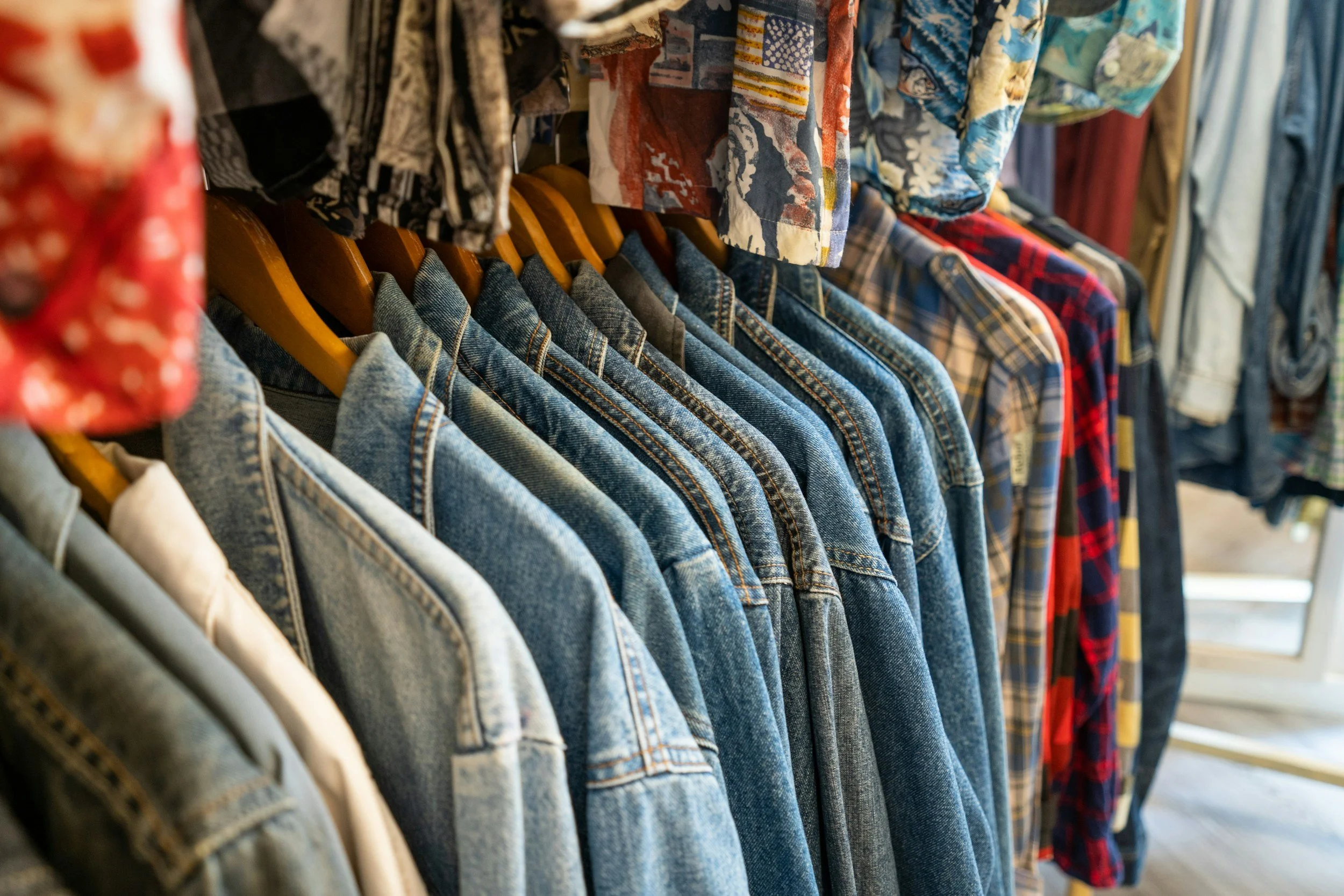
There is a particular feeling you get when you find a piece of clothing that nobody else in the room is wearing.
Maybe it's a 1970s jacket.
A pair of jeans that somehow fits better than anything you've tried in a high-street shop.
A leather bag with a little history behind it.
Or a ridiculous shirt that you absolutely did not come to London looking for but now somehow cannot leave without.
That's the fun of vintage shopping in London.
The city has everything from huge vintage warehouses and market stalls to carefully curated designer archives, independent shops and second-hand stores where you have to dig through the rails to find something special.
And the best part is that there isn't one single place to go.
If you're looking for vintage clothes in London, you can spend an afternoon around Brick Lane, explore the markets of Camden, browse Portobello Road, look for designer pieces in Notting Hill or head towards Dalston and Hackney for something a little less touristy.
So, where should you actually start?
Here are 8 of the best places to find vintage clothes in London.
1. Brick Lane The Classic Vintage Shopping Starting Point
If someone tells you to go vintage shopping in London and you have no idea where to begin, Brick Lane is probably the safest answer.
The area has become one of London's best-known destinations for vintage and second-hand fashion, with independent shops, indoor markets and stalls concentrated around Brick Lane and the surrounding streets.
You can spend an entire afternoon here without needing a strict shopping plan.
Start on Brick Lane itself and then explore the side streets around Hanbury Street, Cheshire Street and the Old Truman Brewery.
You'll find everything from vintage denim and sportswear to Y2K pieces, jackets, dresses and accessories.
Brick Lane Vintage is one of the established vintage shops directly on the street, while Rokit also has two Brick Lane locations, including its main store at 101 Brick Lane and an accessories shop nearby. Rokit currently lists both stores as operating seven days a week.
For something more market-like, the Brick Lane Vintage Market brings together rotating stalls selling clothing, accessories and other finds. The current Brick Lane directory also lists Backyard Market and other independent fashion and vintage traders around the area.
What makes Brick Lane good?
Variety.
You can walk into one shop looking for a vintage leather jacket and leave another with 1990s sportswear.
It is also one of the better places to visit if you don't know exactly what era or style you're after.
Best for:
First-time vintage shoppers
Y2K
Denim
Sportswear
Affordable-to-mid-range vintage
Rummaging through rails
Best approach: Give yourself a few hours rather than visiting one shop and leaving.
2. Camden Market For Vintage With a More Alternative Feel
If Brick Lane is one side of London's vintage scene, Camden is another.
Camden Market has had a connection with alternative and vintage fashion for decades, and today you can find several vintage and second-hand stores within the market area.
The advantage here is that vintage shopping is only part of the experience.
You can browse clothing, then stop for food, look around the independent shops, explore the market and continue towards Camden High Street.
Camden Market itself currently highlights several vintage stops, including The Vintage Collection, Time Tunnel Vintage, Camden Vintage, A Dandy in Aspic and Min's Retro Vintage.
The Vintage Collection is particularly useful if you're looking for pieces spanning different decades. Camden Market describes its collection as covering clothing from the 1930s through to the 1990s.
Meanwhile, Camden Vintage focuses more on vintage labels, with Camden Market highlighting names such as Ralph Lauren, Barbour and Burberry among its finds.
What makes Camden different?
It feels more like a full day out than a dedicated shopping street.
You can come here even if you're not entirely sure what you're looking for.
And if the vintage search doesn't work out, there is still plenty around you to explore.
Best for:
Alternative fashion
Vintage labels
Statement pieces
1990s and earlier styles
Combining shopping with a wider London day out
Best approach: Explore Stables Market and the surrounding market areas rather than stopping at the first shop you see.
3. Portobello Road For Vintage, Antiques and Designer Finds
For a very different vintage-shopping experience, head west to Portobello Road.
Portobello is famous for its antiques market, but the area has also developed into one of London's best-known destinations for vintage fashion.
And this is where vintage shopping becomes a little more unpredictable.
You aren't necessarily walking into a large store with thousands of neatly organised pieces.
You might find a specialist boutique.
Then a market stall.
Then an antiques dealer.
Then another shop selling clothing from a completely different era.
Portobello Road Market stretches through Notting Hill and is one of London's most recognisable markets. Current fashion guides continue to highlight the area as a major vintage-shopping destination, while British Vogue's 2026 guide describes Portobello Road as one of the world's famous vintage-shopping destinations.
If you're particularly interested in designer vintage, this is also an area worth exploring.
Rellik is a long-established designer-vintage destination near Portobello, known for archival fashion and labels including Vivienne Westwood and Maison Margiela. Current 2026 vintage guides continue to identify Rellik as one of London's notable designer-vintage stores.
You can also find smaller vintage boutiques around the market.
What makes Portobello different?
It is less predictable.
And that's exactly why it can be fun.
You can go looking for one particular thing and end up finding something completely different.
Best for:
Designer vintage
Older pieces
Antiques
Unique finds
A more curated vintage hunt
Best approach: Go with time. Don't rush through the market.
4. Dalston For a More Local Vintage Hunt
If you want to move away from the most obvious tourist vintage destinations, look towards Dalston and Hackney.
This part of east London has a strong independent-fashion scene, and it is home to some of the city's larger vintage stores as well as smaller independent shops.
One of the biggest names here is Paper Dress Vintage in Hackney, which combines vintage fashion with a music and events space.
Another major option is Beyond Retro Dalston, housed in a former sewing factory on Stoke Newington Road.
Beyond Retro currently describes its Dalston store as holding more than 12,000 handpicked pieces, covering everything from 1990s sportswear and classic denim to 1970s fashion and 1980s knitwear.
That makes it particularly useful if you like the idea of a large vintage shop where you can spend time searching through a huge selection.
Why go to Dalston?
It feels less like ticking off a tourist attraction and more like discovering another side of London's fashion scene.
And once you've finished shopping, you have all of Hackney around you for food, coffee, bars and more independent shops.
Best for:
Large vintage selections
Sportswear
Denim
1970s–2000s fashion
East London atmosphere
Best approach: Combine the shopping with an afternoon exploring Hackney.
5. Soho & Covent Garden For Vintage Shopping in Central London
You don't have to travel to east or west London to find vintage clothes.
There are also options right in central London.
This is useful if you're already sightseeing around the West End and don't want to dedicate an entire day to vintage shopping.
Beyond Retro Soho is currently located on Argyll Street, close to Oxford Circus, and has two floors of vintage clothing. Beyond Retro says its Soho store is refreshed weekly and carries pieces across multiple decades.
There's also Rokit Covent Garden, the brand's current flagship at 42 Shelton Street. Rokit lists it as open seven days a week, with current hours of 10am–7pm Monday to Saturday and 11am–6pm Sunday.
This makes the central-London option particularly convenient.
You could spend the morning around:
Soho → Oxford Circus → Carnaby Street → Covent Garden
and fit vintage shopping into the day without making it the entire itinerary.
What makes central London useful?
Convenience.
It isn't necessarily where you should go if you want the biggest vintage hunt in London.
But if you're staying centrally or sightseeing nearby, it can save you a separate trip across the city.
Best for:
Tourists staying centrally
Quick vintage shopping
Combining shopping with sightseeing
Vintage chains with large selections
Best approach: Add it to an existing West End day.
6. Islington & Camden Passage For More Curated Vintage
For something a little more curated, head to Islington.
Camden Passage is better known for its antiques and independent shops than for huge vintage warehouses, which is precisely what makes it interesting.
The area is home to Magpie Vintage, whose current positioning combines premium vintage with upcycled design and bespoke services. Contemporary London vintage guides continue to highlight it as one of the area's notable vintage destinations.
This is a good place to come when you're not looking to rummage through thousands of items.
Instead, you're more likely to find carefully selected pieces.
That can mean a slightly different shopping experience less “how many rails can I get through?” and more “would I actually wear this?”
And Camden Passage itself is worth exploring even if you don't buy anything.
Best for:
Curated vintage
Upcycled clothing
Independent shopping
People who prefer quality over quantity
A quieter alternative to Brick Lane
Best approach: Take your time around Camden Passage rather than treating it as a quick shop stop.
7. Greenwich For Vintage Shopping With a Day Out
If you're already planning a day in Greenwich, you can add vintage shopping to the itinerary.
The Greenwich Vintage Market operates around Greenwich Church Street and currently lists trading days from Friday through Sunday.
It is more of a market-style experience than a giant vintage clothing store, so the selection can change.
And that's part of the appeal.
You never quite know what you'll find.
After browsing the vintage market, you can continue through Greenwich Market, walk towards the Cutty Sark, explore the riverside or head up towards Greenwich Park and the Royal Observatory.
So rather than:
“I'm going to Greenwich to buy clothes.”
Think:
“I'm spending a day in Greenwich, and I'll see what vintage I can find while I'm there.”
Best for:
Market shopping
Vintage browsing
Combining shopping with sightseeing
A slower weekend
Best approach: Visit when the market is operating and allow time to explore the surrounding area too.
8. Vintage Markets Go Where the Stock Keeps Changing
If you're serious about finding something unusual, don't limit yourself to permanent shops.
Vintage markets can be where the best surprises happen.
London has markets where independent sellers bring together clothing, accessories, antiques and one-off pieces.
Brick Lane is an obvious place to start, but there are also markets elsewhere around the city.
For example, Flea London Vintage & Makers Market currently operates at Hackney Bridge on weekends, while the Truman Brewery markets around Brick Lane bring together independent traders on Saturdays and Sundays.
The advantage of markets is that the stock isn't fixed.
A shop can have a particular identity.
A market can change completely from one visit to the next.
One weekend you might find vintage sportswear.
The next, someone might be selling old leather jackets, denim, dresses or accessories.
Best for:
Bargain hunting
One-off pieces
Independent sellers
People who enjoy rummaging
Finding something nobody else has
Best approach: Arrive with an open mind rather than a shopping list.
Is Brick Lane the best place for vintage shopping in London?
For a first-time visitor, it's probably one of the easiest recommendations.
You have a high concentration of shops and markets, so you can compare different styles without spending the day travelling between neighbourhoods.
But “best” depends on what you want.
If you're looking for designer archive pieces, Portobello and specialist Notting Hill stores make more sense.
If you want a huge quantity of vintage, Dalston can be better.
If you want alternative fashion, Camden is worth exploring.
If you only have a couple of hours in central London, Soho or Covent Garden is much more convenient.
So don't think of Brick Lane as the vintage-shopping destination.
Think of it as the easiest place to start.
What should you know before vintage shopping in London?
Vintage shopping is different from walking into a normal clothing chain.
You aren't guaranteed to find your size.
You aren't guaranteed to find the colour you want.
You might have to try on ten things to find one that works.
And that is exactly what makes it fun.
Check the condition
Look closely at:
Seams
Zips
Buttons
Pockets
Linings
Stains
Small holes
Wear around collars and cuffs
A piece can look incredible on a rail and completely different when you inspect it closely.
Try things on
Vintage sizing isn't necessarily the same as modern sizing.
A vintage “medium” doesn't automatically mean today's medium.
If you're allowed to try something on, do it.
Don't rush
The best vintage finds aren't always sitting at the front of the shop.
Look through the rails.
Check different sections.
Try things you wouldn't normally pick.
And don't be afraid to leave without buying anything.
Sometimes the best vintage-shopping day ends with nothing in your bag.
And sometimes you find a jacket you'll still be wearing five years later.
When is the best time to go vintage shopping in London?
It depends on where you're going.
For shops, weekdays can sometimes be calmer and easier for browsing.
For markets, weekends are often when you'll find the greatest concentration of traders, but they can also be much busier.
Brick Lane and Camden are particularly lively at weekends.
If you're serious about shopping rather than simply experiencing the atmosphere, arriving earlier can make it easier to browse before the busiest period.
And always check the current opening hours before travelling specifically for one shop.
Vintage stores are independent businesses, and opening hours can change.
For example, current listings show different schedules across Rokit's London locations, while market trading days vary by venue.
London's vintage scene is about the hunt
The best part of vintage shopping in London isn't necessarily finding the cheapest clothes.
It's finding something you wouldn't have found anywhere else.
You might walk into Brick Lane looking for a jacket and leave with an old football shirt.
You might go to Camden for denim and discover a vintage piece from a completely different decade.
You might spend an afternoon around Portobello and find a designer archive piece hidden between things you weren't even looking for.
That's what makes vintage shopping different from ordinary shopping.
You don't always know what you're going to find.
So pick an area, give yourself a few hours and start looking.
Because somewhere among all those rails, stalls, market tables and little independent shops, there might be one piece that feels like it was waiting for you.
Planning your next London day out? Discover more neighbourhood guides, hidden gems, food spots and things to do on LondonYaar.com.
Follow @rohan.londonyaar for more London inspiration, recommendations and things to discover around the city.