How Many Parks Does London Really Have?
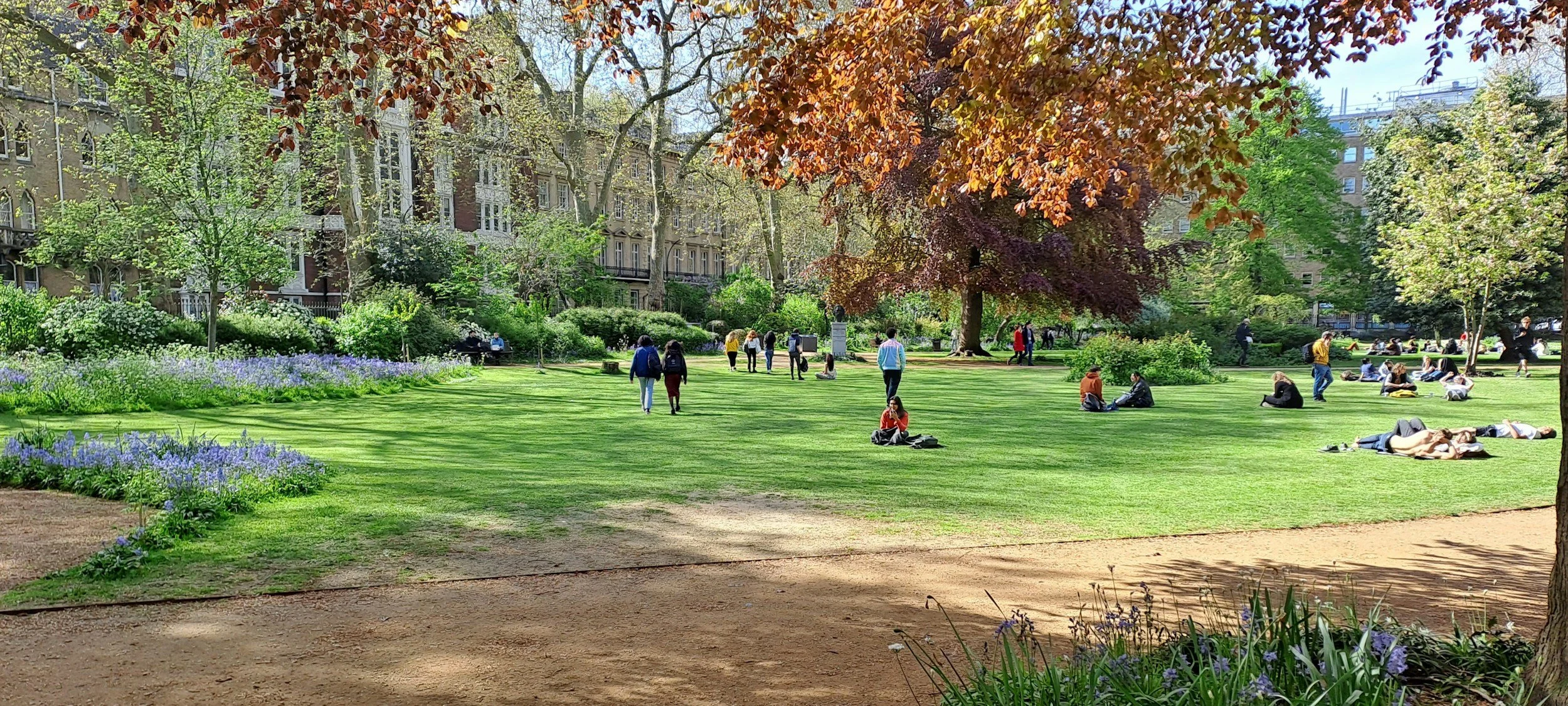
You hear it all the time.
London is full of parks.
London has thousands of green spaces.
And depending on where you look, you might see London described as having 3,000 parks, 4,000+ parks and green spaces, or even thousands more open spaces.
So which number is actually right?
How many parks does London really have?
The answer is surprisingly complicated because there isn't one single number that everyone uses for “a park”.
And once you start looking at what London actually counts as a green space, the number becomes even more interesting.
So, does London really have 3,000 parks?
If you want the simplest official answer, around 3,000 is the number to remember.
London City Hall currently describes the capital as having around 3,000 parks, while a London Assembly report describes London as having over 3,000 publicly accessible parks and green spaces. Visit London also currently uses the figure of more than 3,000 parks.
But there's an important detail hidden inside that number.
It doesn't mean London has 3,000 huge traditional parks like Hyde Park.
The term covers a much wider collection of green and open spaces.
And that's where things get interesting.
Because what actually counts as a “park”?
Think about what you normally picture when someone says “London park”.
Maybe:
Hyde Park, Greenwich Park, Richmond Park.
But London's green spaces can be much smaller and very different.
Depending on the database, you can find:
Traditional parks
Commons
Public woodlands
Nature reserves
Community gardens
Recreation grounds
Country parks
Village greens
Formal gardens
Cemeteries
Churchyards
Allotments
Play spaces
Canals and riverside spaces
City farms
GoParksLondon, for example, currently maps more than 4,000 parks and green spaces, but its definition of “park” is deliberately broad. It says its map includes all kinds of publicly visitable green spaces, from traditional parks and commons to community gardens, cemeteries, canals and allotments.
So when you see 4,000+, that isn't necessarily contradicting London's official “around 3,000” figure.
It is simply counting a broader collection of places.
So which number should you actually use?
If you're writing about London and want to be accurate, I wouldn't say:
“London has exactly 3,216 parks.”
There isn't a definitive city-wide number like that.
Instead, the safest and most useful statement is:
London has around 3,000 parks, with broader databases such as GoParksLondon mapping more than 4,000 parks and green spaces.
That's much more honest.
The difference isn't necessarily about one source being wrong.
It's about what each source considers a park or green space.
And here's where it gets even more confusing
GoParksLondon says its underlying Greater London open-space database contains more than 12,500 open spaces.
More than 4,500 of those are published as an open-licence dataset, while around 4,000 are currently displayed on the GoParksLondon map.
Now, before you start thinking:
“So London actually has 12,500 parks?”
No.
Definitely not.
Those are open spaces, not 12,500 parks.
The database is much broader and includes different types of land and places with public roles.
That's why throwing one giant number into an article without explaining what it counts can be incredibly misleading.
There are also more than 2,500 historic green spaces documented separately
The London Parks & Gardens Trust has its own Inventory containing information on more than 2,500 parks, gardens, squares, churchyards, cemeteries and other sites of historic interest across London.
Again, notice the wording.
It doesn't say:
2,500 parks.
It says:
2,500 parks, gardens, squares, churchyards, cemeteries and other historic sites.
So you can see why the numbers start multiplying once different organisations begin counting different things.
But how many can you actually visit?
This is probably the more useful question.
If by “accessible” you mean:
Can members of the public actually go there?
then the London Assembly's current figure is more than 3,000 publicly accessible parks and green spaces.
And GoParksLondon deliberately excludes places where access is restricted, such as private garden squares and members-only clubs.
So we're not simply counting every patch of green land in London.
We're talking about places intended to be available to the public in some form.
But “publicly accessible” doesn't mean everything is accessible to everyone
This distinction is important.
When we say a park is publicly accessible, we're talking about whether the public can visit it.
That is different from saying that every park is fully physically accessible to every visitor.
Some parks have:
Step-free entrances
Smooth paths
Accessible toilets
Accessible playgrounds
Seating
Visitor facilities
Others may have:
Uneven paths
Steep sections
Grass or mud
Steps
Narrow entrances
Areas that can become difficult to navigate in poor weather
London City Hall's current terminology defines accessible green space as green space that is freely accessible for public use, and says it should be available to all, with reasonable efforts made to comply with the Equality Act.
But that still doesn't give us a single number for “how many London parks are wheelchair accessible.”
There simply isn't a reliable city-wide figure we should pretend exists.
And how much of London is actually green?
This is another figure that gets misunderstood.
London City Hall currently says around 20% of London is public green space.
That's the important figure if we're talking specifically about publicly accessible green space.
But then there's another number.
City Hall says almost 50% of London is green and blue from above.
That is a completely different measurement.
It includes things such as:
trees, green roofs, road verges, private gardens and other green and blue areas.
So it would be wrong to say:
“Half of London is public parks.”
It isn't.
The almost-50% figure is about the city's wider green and blue cover, not publicly accessible parks.
London has only eight Royal Parks
Then you have the parks most tourists probably know.
London has eight Royal Parks:
Hyde Park, Kensington Gardens, The Green Park, St James's Park, The Regent's Park, Greenwich Park, Richmond Park, Bushy Park
Together, the Royal Parks cover more than 5,000 acres of historic parkland.
And the Royal Parks themselves are free to enter.
So if you're simply looking for somewhere beautiful to walk, sit, picnic or explore without paying an entrance fee, you already have eight enormous options.
But these eight are just a tiny fraction of London's wider collection of parks and green spaces.
And some of London's biggest green spaces aren't even called parks
This is another reason the number can be misleading.
Take Hampstead Heath.
Or Clapham Common.
Or Wimbledon Common.
They're some of the most famous green spaces in London, but they're not simply listed as traditional “parks”.
So if someone asks:
“How many parks does London have?”
you have to decide whether you're asking about places officially called parks or the much broader network of publicly accessible green spaces.
That's a very different question.
What about gardens?
Gardens add another layer.
London has:
botanical gardens
formal gardens
community gardens
historic gardens
private gardens
and gardens attached to larger attractions.
Some are free.
Some require tickets.
Some are open every day.
Others have limited opening periods or special open days.
Take Kew Gardens.
It's one of London's most famous green spaces, but it isn't simply a free public park. It is a paid visitor attraction.
So again, “green space” doesn't automatically mean “free park”.
And this is why there isn't one definitive number
Put all of this together and the answer becomes clearer.
If you're talking about London's parks and publicly accessible green spaces, the widely used figure is around 3,000 or more than 3,000, depending on the source and wording.
If you're using the broader GoParksLondon definition, you're looking at more than 4,000 mapped parks and green spaces.
If you're looking at a much wider database of open spaces, there are more than 12,500 entries, but that absolutely does not mean London has 12,500 parks.
And if you're looking specifically at historic parks, gardens, squares, churchyards and cemeteries, the London Parks & Gardens Trust documents more than 2,500 sites.
They're all legitimate figures.
They're just answering slightly different questions.
So how many parks does London really have?
If you want the answer you can actually remember:
London has around 3,000 parks and publicly accessible green spaces.
But if you start using a broader definition of what counts as a park or green space, more than 4,000 are currently mapped by GoParksLondon.
And that's probably the most honest answer.
There isn't a giant sign somewhere saying:
“London Parks: 3,147.”
Because London's green spaces don't fit neatly into one category.
A huge Royal Park, a tiny community garden, a common, a nature reserve and a public woodland can all be part of the city's green network without being the same thing.
And you don't have to cross London to find one
Perhaps the best thing about all these numbers isn't actually the number itself.
It's what it means for you.
London City Hall has a goal of making sure every Londoner is within a 10-minute walk of green space.
So the next time you think you need to travel across London to find somewhere green, look around your own neighbourhood first.
There could be a small park, woodland, common, garden or recreation ground you've walked past dozens of times without ever properly exploring.
And with thousands of publicly accessible green spaces spread across the capital, you could spend years discovering them.
You'd probably still have more to find.
The answer is bigger than “3,000”
So, how many parks does London really have?
The best answer isn't simply 3,000.
It's:
Around 3,000 parks and publicly accessible green spaces is the widely used official figure.
More than 4,000 are currently mapped by GoParksLondon under its broader definition.
And there are thousands more open spaces, gardens, squares, churchyards and other types of green space depending on what you're counting.
So the next time someone tells you:
“London has thousands of parks.”
They're absolutely right.
The interesting part is just how many different things are hiding behind the word “park.”
And that's probably why London can feel like one enormous city one minute...
and then, five minutes later, you can be sitting under a tree wondering how you got so far away from it all.
Planning your next London day out? Discover more neighbourhood guides, hidden gems, food spots and things to do on LondonYaar.com.
Follow @rohan.londonyaar for more London places, stories and things worth knowing before you visit.