A Giant Earth and Moon Are Coming to London Here's Everything You Need to Know
London is a city full of extraordinary sights.
Historic landmarks.
Royal palaces.
World-famous museums.
Ancient churches.
Modern skyscrapers.
Yet every so often, an artwork arrives that makes even lifelong Londoners stop, look up, and simply stare.
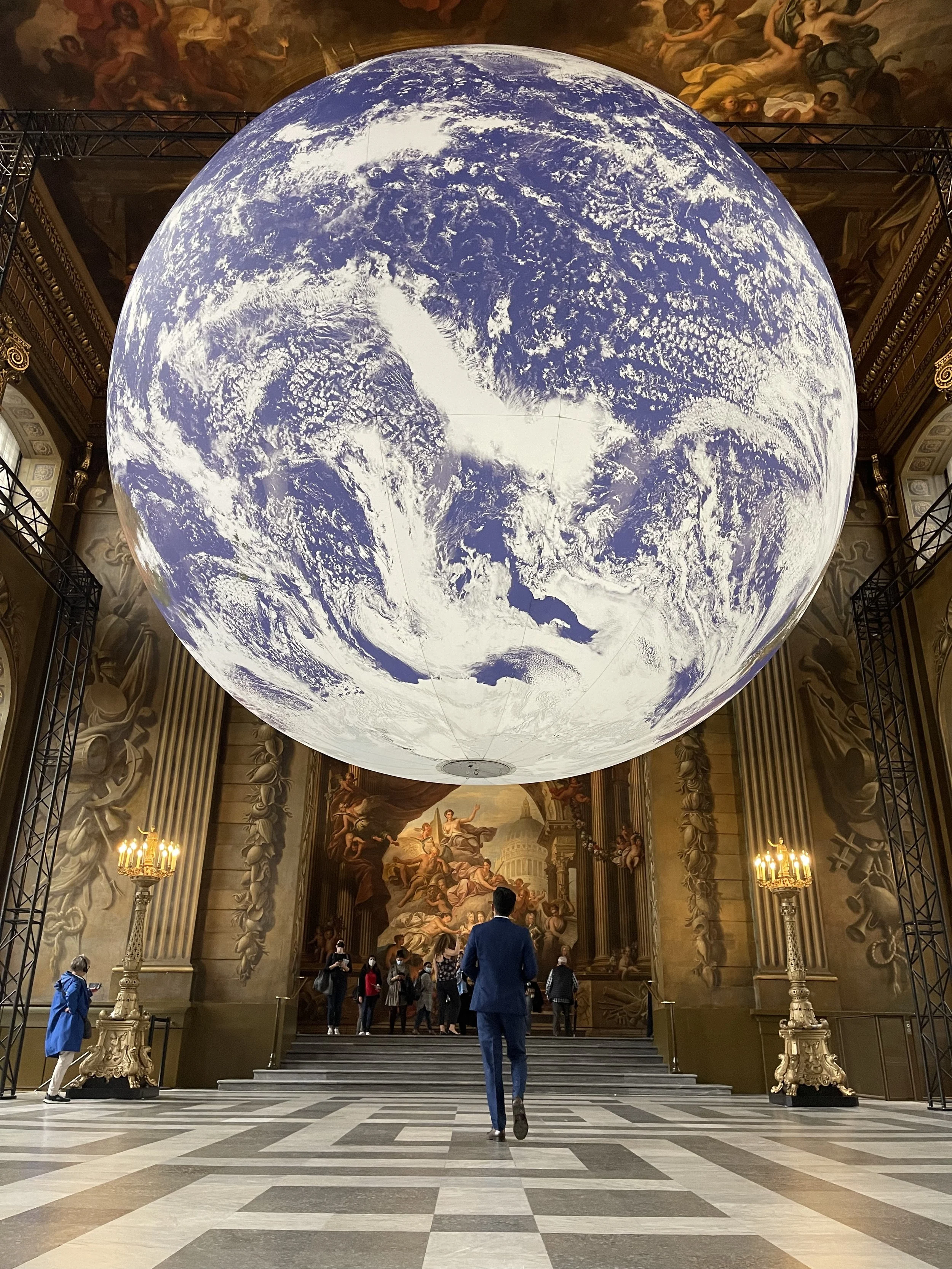
A giant illuminated Earth floating inside a cathedral.
A seven-metre Moon suspended above visitors.
An enormous celestial body hanging silently in a historic building while thousands of people gather beneath it.
Over the last decade, few public artworks have captured the imagination of London quite like Gaia and Museum of the Moon, two internationally acclaimed installations created by British artist Luke Jerram.
These remarkable works have toured the world, appeared in some of London's most iconic venues, and attracted millions of visitors globally. More importantly, they've changed the way people think about Earth, space, and humanity's place within the universe.
And honestly?
Photographs don't do them justice.
Because these aren't simply artworks.
They're experiences.
Experiences that make people pause, reflect, and see familiar things from an entirely different perspective.
The Artist Behind the Installations
The creator of both Gaia and Museum of the Moon is British artist Luke Jerram, known internationally for creating large-scale public artworks inspired by science, nature, astronomy and human experience.
Throughout his career, Jerram has worked closely with scientists, engineers and researchers to create installations that combine scientific accuracy with artistic imagination.
His most famous works include:
Museum of the Moon
Gaia
Mars
Helios
Mirror Moon
Each project transforms scientific data into immersive public art experiences that can be enjoyed by visitors of all ages.
One reason his installations have become so popular is their accessibility.
You don't need an art degree.
You don't need a scientific background.
You simply need curiosity.
What Is Gaia?
Of all Luke Jerram's creations, Gaia is perhaps the most emotionally powerful.
The installation is a giant illuminated representation of Earth measuring approximately seven metres in diameter.
Using high-resolution imagery provided by NASA, Gaia recreates the appearance of our planet as seen from space.
The sculpture slowly rotates while a specially commissioned surround-sound composition fills the space around it.
At first glance, the artwork is visually impressive.
But its real impact comes from perspective.
Most of us spend our lives looking outward from Earth.
Gaia allows us to look back at it.
Visitors see continents, oceans, weather systems and coastlines floating together as one interconnected world.
National borders disappear.
Political divisions vanish.
The planet suddenly feels both enormous and incredibly fragile.
The installation was designed to evoke what astronauts call the Overview Effect the profound shift in awareness many experience when viewing Earth from space for the first time.
Astronauts frequently describe feelings of awe, unity and responsibility after seeing our planet suspended alone against the darkness of space.
Gaia brings that perspective down to Earth.
Why Gaia Resonates With Visitors
What makes Gaia special isn't simply its size.
It's what it represents.
Standing beneath a giant Earth creates a strange emotional response.
You begin noticing things that normally go unnoticed:
the vastness of the oceans
the thin atmosphere surrounding the planet
the absence of visible borders
the interconnected nature of life on Earth
Many visitors describe the experience as calming.
Others find it inspiring.
Some simply sit quietly beneath the installation and observe.
In a busy city like London, moments that encourage reflection are surprisingly rare.
Gaia creates exactly that kind of space.
Museum of the Moon: Bringing the Lunar Surface Down to Earth
If Gaia invites visitors to reconsider Earth, Museum of the Moon does the same for our nearest celestial neighbour.
Created in 2016, the artwork measures approximately seven metres in diameter and uses detailed NASA lunar imagery to reproduce the Moon's surface at remarkable scale.
At this size, every centimetre of the sculpture represents several kilometres of the actual lunar landscape.
Visitors can examine:
impact craters
mountain ranges
lava plains
valleys
surface textures
in extraordinary detail.
Internally illuminated and accompanied by an atmospheric soundscape, the artwork transforms any venue into something almost dreamlike.
Whether displayed inside a cathedral, museum or historic hall, the Moon appears to float effortlessly above visitors.
And honestly?
Few installations create the same immediate sense of wonder.
Why the Moon Continues to Fascinate Us
Human beings have been fascinated by the Moon for thousands of years.
It has influenced:
mythology
navigation
religion
science
literature
art
across countless cultures.
Museum of the Moon taps directly into that universal fascination.
Children often view it as an adventure.
Astronomy enthusiasts appreciate the scientific detail.
Photographers love the dramatic visuals.
And everyone else simply enjoys being close to something that usually feels impossibly distant.
The artwork manages to feel educational without feeling like a science exhibit.
That's part of its genius.
London's Relationship With the Giant Moon
Over the years, Museum of the Moon has appeared in various London venues, becoming one of the city's most talked-about touring installations.
Displayed beneath historic ceilings and within grand architectural spaces, the artwork often felt as though it belonged there.
Visitors gathered beneath it to:
take photographs
attend concerts
listen to talks
experience performances
explore astronomy-themed events
The combination of art, science and atmosphere proved enormously popular.
Each venue created a different experience.
A Moon suspended inside a cathedral felt dramatically different from one displayed within a museum or cultural centre.
And that flexibility helped the artwork become a global success.
More Than Art: The Science Behind the Installations
One reason Gaia and Museum of the Moon appeal to such a wide audience is their scientific foundation.
Both installations rely on genuine NASA imagery and astronomical data.
Rather than inventing fictional worlds, Luke Jerram uses real information to create accurate representations of celestial bodies.
The result is something unique.
Visitors encounter works that are simultaneously:
artistic
educational
scientific
emotional
Children learn.
Adults reflect.
Scientists appreciate the accuracy.
Artists admire the presentation.
Very few public artworks successfully bridge all those worlds.
Why These Installations Work So Well in London
London provides the perfect setting for large-scale public art.
The city combines:
historic architecture
scientific heritage
world-class museums
cultural diversity
curious audiences
Few cities can place a giant Moon inside a centuries-old building and have it feel completely natural.
And London has long embraced installations that encourage people to engage with science, culture and public spaces in new ways.
Gaia and Museum of the Moon fit perfectly within that tradition.
They are visually spectacular, intellectually engaging and accessible to everyone.
A New Lunar Experience Arriving in Greenwich
London's connection with celestial art continues.
The Royal Observatory Greenwich is set to host Mirror Moon, another artwork created by Luke Jerram.
Unlike Museum of the Moon, which focuses on visual scale, Mirror Moon introduces a tactile dimension.
Created using detailed lunar topographic data and reflective materials, the artwork allows visitors to explore the Moon's landscape through both sight and touch.
Features include:
craters
mountain ranges
valleys
maria (ancient lava plains)
rendered in a form that encourages physical interaction.
Given Greenwich's centuries-long relationship with astronomy and navigation, it is a particularly fitting location for the installation.
Why Social Media Fell in Love With Them
Let's be honest.
Part of the popularity comes from how spectacular these installations look.
A giant glowing Moon floating beneath historic architecture creates unforgettable photographs.
The same is true for Gaia.
Yet unlike many social-media-famous attractions, the appeal extends beyond visuals.
People leave talking about:
perspective
wonder
science
exploration
humanity's place in the universe
The installations create conversations.
And that's one reason they continue attracting audiences wherever they appear.
Why Everyone Should Experience Them at Least Once
London offers countless attractions.
Yet very few create the feeling of standing beneath a floating Earth or Moon.
For a moment, everyday concerns fade away.
The commute.
The deadlines.
The notifications.
Everything becomes quieter.
Instead, visitors are reminded of something larger:
a planet suspended in space,
a Moon that has fascinated humanity for millennia,
and a universe that remains filled with mystery.
That's a rare experience.
And it's one that stays with people long after they leave.
Final Thoughts
Gaia and Museum of the Moon have become two of the most celebrated public art installations of modern times.
Not because they rely on complicated concepts or exclusive experiences.
But because they make people feel something.
Wonder.
Curiosity.
Perspective.
Awe.
Whether you're fascinated by astronomy, interested in art, or simply looking for one of the most memorable cultural experiences London has hosted in recent years, these giant celestial installations offer something genuinely special.
They remind us to look up.
And sometimes, that's exactly what we need.