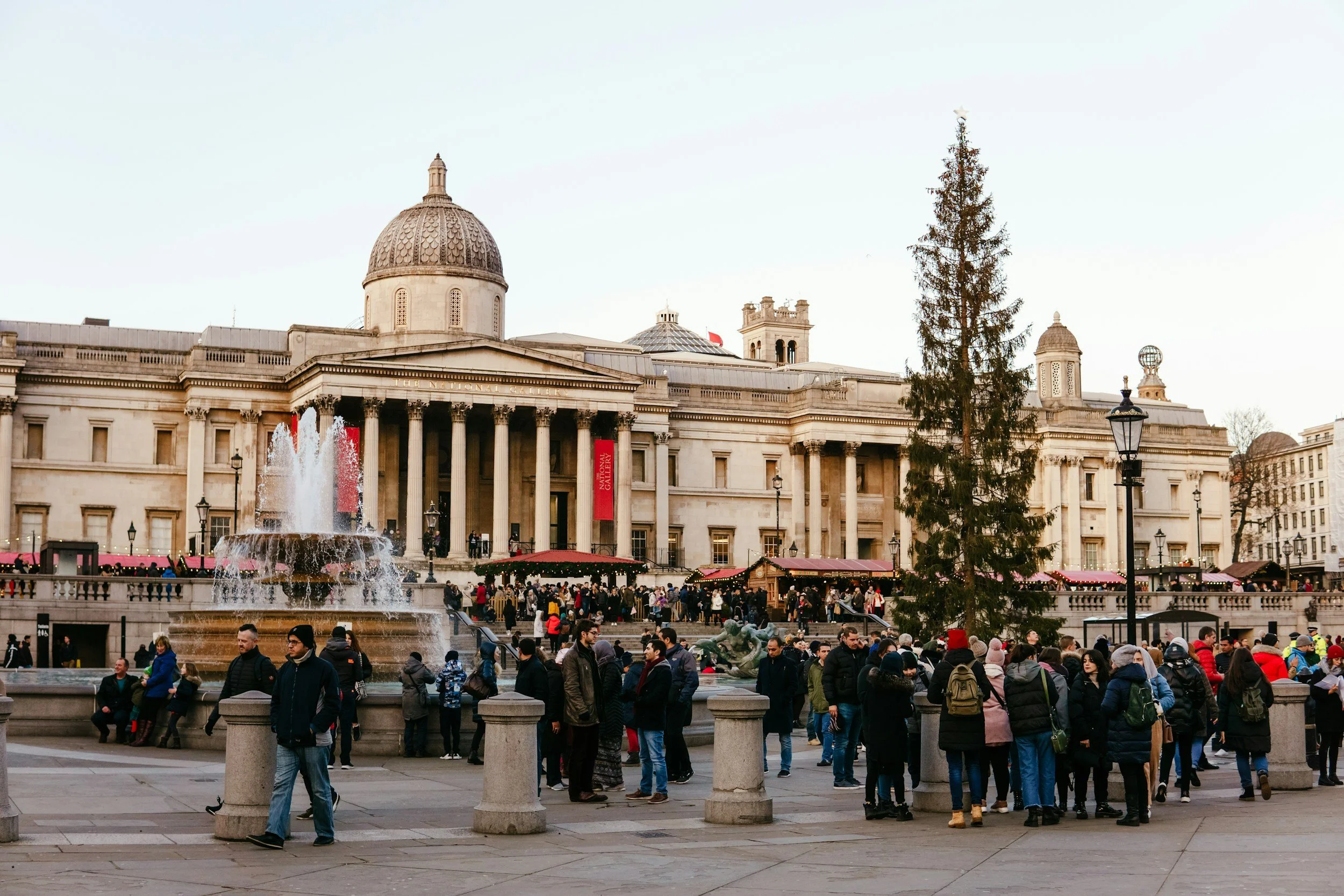
Every Christmas, a giant Christmas tree appears in one of London's most famous public squares. Standing proudly in Trafalgar Square, surrounded by historic buildings and thousands of festive visitors, it has become one of the capital's most recognisable Christmas traditions.
But there is something unusual about this particular tree. It doesn't come from a Christmas tree farm in Britain. It travels all the way from Norway.
Every year, the people of Oslo send London a Norwegian spruce as a gift. The tradition began in 1947 and has continued for nearly eight decades, making it one of the longest-running connections between the two cities.
And the reason behind it is much more meaningful than simply spreading Christmas cheer.
The tree is a gesture of gratitude for Britain's support of Norway during the Second World War. It represents friendship, remembrance and a relationship that developed during one of the darkest periods in European history.
So, why does London receive a Christmas tree from Norway? How does a tree growing in a Norwegian forest make its way to Trafalgar Square? And when can you see it in London this Christmas?
Here's everything worth knowing about this fascinating tradition.
Why Does Norway Give London a Christmas Tree Every Year?
The story begins during the Second World War.
In April 1940, Nazi Germany invaded Norway. The country was occupied, and its King, Haakon VII, and government eventually established themselves in exile in Britain.
London became an important base for the Norwegian government-in-exile during the occupation. Britain provided support to Norway throughout the war, while the Norwegian resistance continued its efforts against German occupation.
The relationship between the two countries became particularly significant during those difficult years.
When the war ended in 1945, Norway wanted to express its gratitude to the British people for the support they had received.
Two years later, in 1947, Oslo began sending a Christmas tree to London as a symbolic thank-you.
What started as a gesture of appreciation gradually became an annual tradition.
The tree is presented as a gift from the people of Oslo to the people of London. It is not simply a decoration for the festive season; it represents the friendship between the two cities and their shared history.
That is why the tradition has continued for so many years, even as London itself has changed considerably.
Today, when visitors gather around the tree in Trafalgar Square, they are looking at a tradition that connects modern Christmas celebrations with an important part of European history.
Why Is the Norwegian Christmas Tree in Trafalgar Square?
Trafalgar Square is one of London's most recognisable public spaces.
Located in the heart of central London, it is surrounded by landmarks including the National Gallery and St Martin-in-the-Fields. Nelson's Column stands at its centre, while its fountains and open spaces make it a popular meeting point throughout the year.
It is also a natural location for a public Christmas celebration.
The Norwegian tree is intended as a gift for Londoners, so placing it in an accessible public square allows residents and visitors to enjoy it without needing to buy an attraction ticket.
Over the years, the tree has become an important part of Trafalgar Square's Christmas identity.
During December, people visit to photograph it, enjoy the festive atmosphere and attend seasonal carol-singing sessions organised around the tree.
Its location also makes it easy to include in a wider Christmas walk through central London. You can explore Leicester Square, Covent Garden, Piccadilly Circus and Regent Street without travelling far.
There is a lovely contrast between the tree's traditional Norwegian decoration and the busy streets of the modern West End surrounding it.
Where Does London's Christmas Tree Come From?
The Trafalgar Square Christmas tree comes from the forests surrounding Oslo, an area known as Oslomarka.
It is usually a Norwegian spruce, scientifically known as Picea abies.
The tree is selected by Oslo's Agency for Urban Environment, which follows specific requirements before choosing the one that will represent the city in London.
It must grow naturally in the forests around Oslo and be accessible to forestry vehicles and cranes. It also needs to have an attractive shape when viewed from different angles and be suitable for the specially designed cradle used during transportation.
The selection process is particularly interesting because it can begin many years before the tree is actually sent to London.
Some potential trees are identified when they are still young. They may receive additional care during the final five to ten years before being selected.
The trees chosen for Trafalgar Square are generally around 50 to 60 years old and more than 20 metres tall.
Norwegian foresters affectionately refer to the selected tree as the 'queen of the forest'.
It is quite remarkable to think that a tree that has spent decades growing in a Norwegian forest eventually becomes the centrepiece of London's Christmas celebrations.
How Does the Norwegian Christmas Tree Travel to London?
One of the most fascinating parts of this tradition is the journey from Norway to the UK.
The tree cannot simply be cut down, placed on an ordinary lorry and driven to London. Its size means that the entire journey requires careful planning and specialist transportation.
Here is how it makes its way to Trafalgar Square.
1. The tree is selected and felled in Norway
Once Oslo has selected its Christmas tree, arrangements are made for it to be felled in November.
The occasion is traditionally marked by a ceremony attended by representatives from Oslo and Westminster.
After being cut down, the tree is placed in a specially designed cradle that supports its trunk and branches during transportation.
2. It travels to the port of Brevik
The tree is transported from the Oslo forest to the port of Brevik, approximately 180 kilometres away.
Before it begins its sea journey, it is watered and rinsed to remove road salt that may have collected during transportation on Norwegian winter roads.
This preparation helps protect the tree before its journey across the North Sea.
3. It crosses the North Sea by ship
From Brevik, the tree travels by ship to Immingham in England.
The sea journey takes approximately 26 hours.
During the crossing, the tree is kept below deck to protect it from saltwater and the conditions outside the vessel.
4. It completes its journey to London
Once the ship reaches Immingham, the tree is transported by road towards London.
It eventually arrives at Trafalgar Square, where a specialist team prepares to lift it into position.
The entire journey is a carefully organised operation, ensuring that the tree arrives in suitable condition for the festive season.
The next time you see it standing in Trafalgar Square, remember that it has travelled hundreds of kilometres from the forests around Oslo to reach its Christmas destination.
How Is the Giant Christmas Tree Installed in Trafalgar Square?
Putting up a Christmas tree at home is one thing. Installing a tree more than 20 metres tall in the middle of central London is quite another.
Once the Norwegian tree reaches Trafalgar Square, a specialist rigging team takes responsibility for its installation.
A hydraulic crane is used to lift the tree into position, where it is secured so that it can remain standing throughout the festive period.
The installation needs to be carefully managed because of the tree's size and the busy public surroundings.
Once it has been safely erected, the decoration process begins.
The tree is decorated in a traditional Norwegian style, with vertical strings of lights hanging from the upper branches towards the bottom.
Energy-efficient light bulbs are used, giving the tree its familiar illuminated appearance.
The result is relatively simple compared with some of London's more elaborate Christmas displays, but that is part of its charm.
It allows the natural shape of the Norwegian spruce to remain visible while creating a beautiful festive centrepiece.
When Will the Norwegian Christmas Tree Arrive in London in 2026?
If you are planning to see the famous Norwegian Christmas tree this year, there is a date worth keeping in mind.
According to reporting published by Time Out on 6 November 2026, the tree is scheduled to be erected in Trafalgar Square on Thursday 3 December 2026.
This is the reported installation date, rather than a separately confirmed public lighting-ceremony date.
The tree's arrival and its official switch-on are two different occasions, so it is important not to confuse them.
The exact date, time and programme for the 2026 lighting ceremony have not yet been officially announced in the sources checked for this article.
Traditionally, the lighting ceremony takes place on the first Thursday in December. In 2025, the ceremony was held on Thursday 4 December.
For 2026, Thursday 3 December is also the first Thursday of December, but the date should not be treated as officially confirmed until the organisers publish their announcement.
If you are planning your visit around the switch-on, check the Mayor of London's and Westminster City Council's official announcements before travelling.
What Happens During the Christmas Tree Lighting Ceremony?
The lighting ceremony is an important part of the Norwegian Christmas tree tradition.
It brings together representatives from Norway and the UK to celebrate the annual gift and the friendship between the two cities.
Previous ceremonies have included Christmas carols, musical performances and speeches from representatives of Oslo and Westminster.
The lighting itself is the highlight, with the tree illuminated in front of the gathered crowd.
The ceremony has traditionally taken place in the early evening, allowing visitors to see the lights against the dark winter sky.
It is also a public occasion, giving people an opportunity to celebrate a tradition that has been part of London's Christmas season since 1947.
The exact programme changes from year to year, so previous performances should not be taken as a guarantee of what will happen in 2026.
For the latest information about this year's event, check the official announcements before making a special journey.
Why Are the Lights on the Norwegian Christmas Tree Different?
One of the details that makes the Trafalgar Square Christmas tree stand out is its decoration.
Rather than wrapping lights around the branches in a spiral, the lights hang vertically from the top of the tree.
This is the traditional Norwegian style of decorating Christmas trees.
The arrangement creates a simple, elegant appearance while allowing the tree's natural shape to remain visible.
It also gives the Trafalgar Square tree a distinctive look compared with many of the other Christmas trees displayed around London.
The energy-efficient lights are another part of the decoration, helping to illuminate the tree throughout the festive season.
It is a relatively understated display, but one that has become instantly recognisable to anyone familiar with London's Christmas celebrations.
Can You Visit the Norwegian Christmas Tree for Free?
Yes. You can visit the Norwegian Christmas tree in Trafalgar Square for free.
The tree is displayed in a public square, so there is no general admission charge to walk up to it, take photographs or enjoy the festive atmosphere.
You can visit during the day or after dark, although the illuminated tree is naturally more impressive in the evening.
Trafalgar Square is also a convenient starting point for exploring other Christmas attractions in central London.
You could combine your visit with:
Leicester Square: Explore its festive decorations and seasonal atmosphere.
Covent Garden: Visit the historic market building and surrounding Christmas displays.
Regent Street: Admire the famous illuminated street decorations.
Piccadilly Circus: Continue your walk through one of London's busiest and most recognisable areas.
Southbank: Cross towards the Thames for riverside views and seasonal activities.
The tree is particularly popular during December, so expect larger crowds during evenings and weekends.
If you prefer a quieter visit, consider going earlier in the day or choosing a weekday.
How Long Does the Christmas Tree Stay in Trafalgar Square?
The Norwegian Christmas tree remains in Trafalgar Square throughout the festive season.
It is usually taken down shortly before Twelfth Night, the traditional end of the Christmas period, which falls on 5 January.
The exact removal date can vary, so it is best not to leave your visit until the final day if seeing the tree is important to you.
One particularly interesting detail is what happens to the tree after it is removed.
Rather than simply being thrown away, it is chipped and composted. The resulting material is used to make mulch.
This gives the tree a useful purpose after its time in Trafalgar Square comes to an end.
It is a fitting conclusion to a tradition that begins with a gift from Norway and finishes with the tree being recycled.
Where Exactly Can You Find the Norwegian Christmas Tree?
The Norwegian Christmas tree is displayed in Trafalgar Square, in the City of Westminster, central London.
Address: Trafalgar Square, London WC2N 5DN
Nearest station: Charing Cross
Other nearby stations: Embankment and Leicester Square
Cost: Free to visit
Expected 2026 installation: Thursday 3 December, according to Time Out's November 2026 reporting
The square is easy to reach on foot from Leicester Square, Covent Garden, Piccadilly Circus and the National Gallery.
If you are already exploring central London, it is easy to include the tree in a festive walking route without making a separate journey.
For the best photographs, consider visiting after dark when the lights are illuminated. Remember that the square can become busy during the Christmas period, particularly around the lighting ceremony.
Is a New Christmas Tree Sent from Norway Every Year?
Yes. A new tree is selected from the forests around Oslo each year.
Although the tradition remains the same, the individual tree changes.
Every selected tree has its own shape, height and appearance, depending on how it has grown in the forest.
The selection process is managed by Oslo's Agency for Urban Environment, which looks for a suitable Norwegian spruce that meets the requirements for transportation and display.
The City of Oslo has also agreed to continue the tradition of gifting a Christmas tree to London until 2027.
That means the annual gift is set to continue beyond the 2026 Christmas season.
More Than Just a Christmas Tree: A Tradition That Connects Norway and London
It is easy to walk through Trafalgar Square in December, see the enormous Christmas tree and think of it as another part of London's festive decorations.
But the story behind it makes it much more meaningful.
Since 1947, Norway has continued to send London a Christmas tree as a gesture of gratitude for Britain's support during the Second World War.
The tree travels from the forests surrounding Oslo, crosses the North Sea and eventually finds its place in one of London's most famous public squares.
Its arrival, decoration and lighting have become familiar parts of the capital's Christmas season.
But the reason behind the tradition remains just as important as it was when the first tree arrived.
It represents friendship, gratitude and a shared history between two countries.
So, when you next visit Trafalgar Square and see the Norwegian Christmas tree, remember that you are looking at more than a festive display. You are looking at a gift that has connected London and Oslo for nearly eight decades.
And perhaps that is what makes it one of London's most special Christmas traditions.
Planning your next London day out? Discover more neighbourhood guides, hidden gems, food spots and things to do on LondonYaar.com.
Follow @rohan.londonyaar for more London places, stories and things worth knowing before you visit.