What Are the Chances of a White Christmas in the UK in 2026?
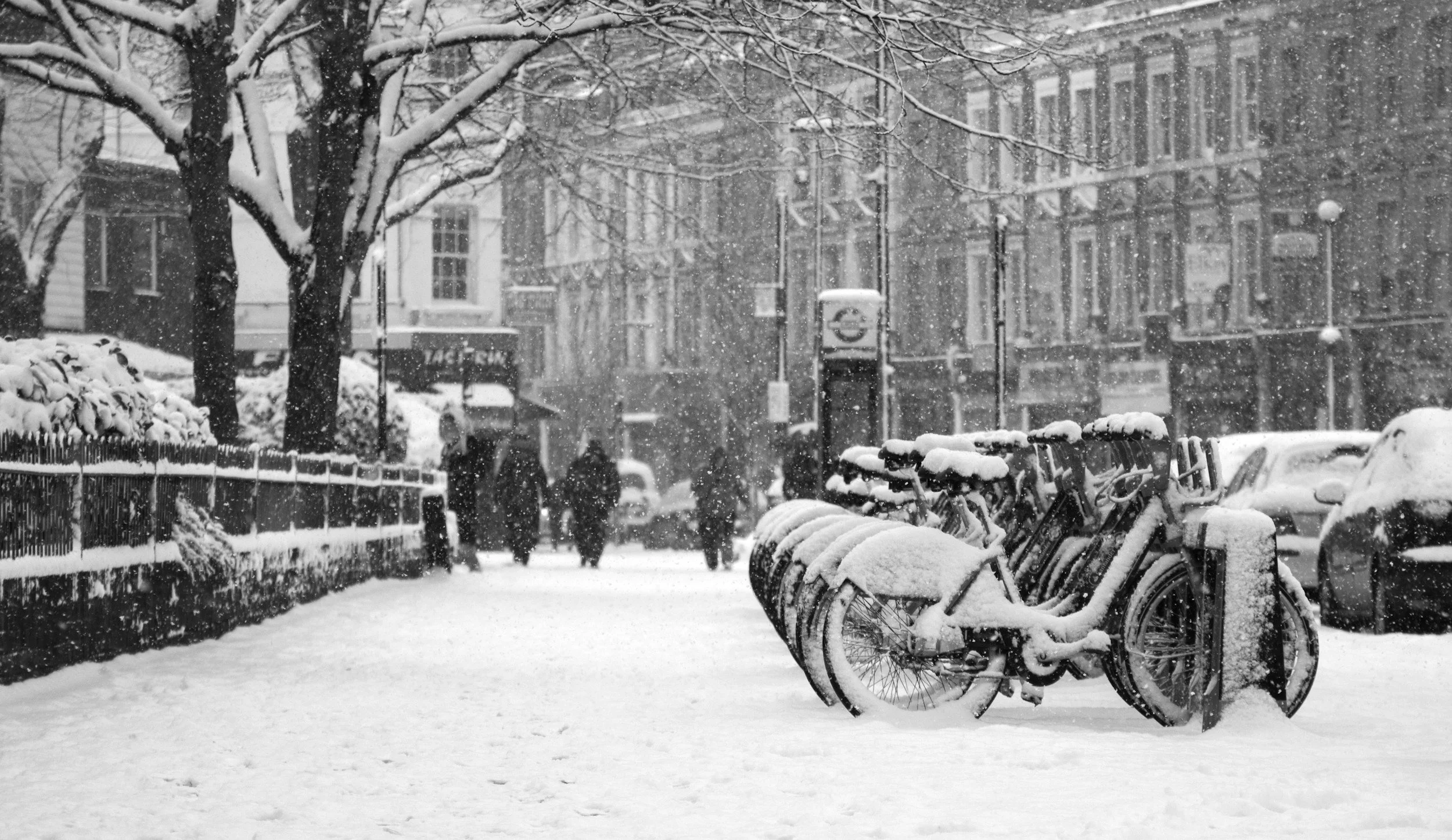
There is something about the idea of waking up on Christmas morning, opening the curtains and seeing everything covered in snow that feels almost too perfect.
Snow-covered rooftops. Frozen pavements. Christmas lights reflecting off the white ground. Kids running outside to build snowmen.
But how likely is that actually to happen in the UK?
The answer is a little more complicated than you might expect.
Depending on what you mean by a “White Christmas”, the chances can look surprisingly high or surprisingly low.
Officially, the Met Office has a very simple definition: if even a single snowflake is observed falling somewhere in the UK during the 24 hours of Christmas Day, 25 December, it can officially count as a White Christmas.
That doesn't mean London will be covered in snow.
It doesn't even mean most people in the UK will see snow.
And that is where the White Christmas story gets interesting.
So, what are the chances of a White Christmas in the UK?
If you are looking for one simple percentage, there isn't an official Met Office figure saying:
“There is a 50% chance of a White Christmas in the UK this year.”
Weather doesn't work that way this far ahead.
However, the historical statistics give us a useful idea.
According to the Met Office, since 1960, around half of the years have had snow falling on at least 5% of the UK's weather-station network on Christmas Day. Under the official definition of a White Christmas, this means we can expect more than half of Christmas Days to technically qualify.
But there's a huge catch.
That could mean a few snowflakes falling at weather stations in northern Scotland while London, Birmingham, Manchester and most of southern England are having a completely ordinary wet or cloudy Christmas.
So when people ask, “Will the UK have a White Christmas?”, the answer can be very different from:
“Will I have a White Christmas?”
And that is the important distinction.
What actually counts as a White Christmas?
This might surprise you.
You don't need to wake up to a blanket of snow.
You don't need snow covering your garden.
You don't even need enough snow to make a snowball.
For the Met Office, a White Christmas is officially recorded when a single snowflake is observed falling during the 24 hours of 25 December at an official observation site or automated weather station.
So imagine this:
It's Christmas Day.
London is grey and rainy.
Manchester is cloudy.
Birmingham is completely dry.
But somewhere in the Scottish Highlands, a weather station records one snowflake.
Technically, the UK has just had a White Christmas.
That is why the phrase can sometimes sound more impressive than the actual weather experienced by most people.
A White Christmas is not the same as a snowy Christmas
This is probably the most important thing to remember.
There are actually several different versions of the Christmas people imagine.
A technical White Christmas:
Snow is observed falling somewhere in the UK.
A local White Christmas:
Snow actually falls where you live.
A snowy Christmas:
Snow settles on the ground and remains there.
The classic Christmas-card Christmas:
Large parts of the country wake up with a thick blanket of snow.
That last one is much, much rarer.
So how often does the UK get a proper snowy Christmas?
Not very often.
The Met Office says that a widespread covering of snow on the ground — defined as more than 40% of UK stations reporting snow lying at 9am on Christmas Day — has occurred only four times since 1960:
1981
1995
2009
2010
So if your definition of a White Christmas is:
“I want to wake up and see the whole neighbourhood covered in snow.”
Then the chances are considerably lower than the headline “White Christmas” statistics might make you think.
When was the last White Christmas in the UK?
The most recent technical White Christmas was 2023.
In that year, 11% of weather stations recorded snow falling on Christmas Day, although none reported snow lying on the ground.
Before that:
2022: 9% of stations recorded snow falling, but none reported snow lying.
2021: 6% recorded snow falling, with less than 1% reporting lying snow.
2020: 6% recorded snow falling, while around 4% reported snow lying.
So yes, the UK has technically had several White Christmases in recent years.
But most of them were nothing like the classic snowy Christmas people imagine.
What about the famous White Christmas of 2010?
If you want to know what a proper UK White Christmas looks like, 2010 is probably the year to remember.
It was exceptional.
The Met Office records show that 83% of stations had snow lying on the ground on Christmas Day in 2010, the highest percentage ever recorded. Snow or sleet also fell at 19% of stations.
That is much closer to the Christmas-card image people have in their heads.
The previous year, 2009, was also remarkable.
In 2009, 57% of stations reported snow lying on the ground, while 13% recorded snow or sleet falling.
So if you're hoping for another 2009 or 2010 this year, you're hoping for something genuinely unusual.
What are the chances of a White Christmas in 2026?
This is where we need to be careful.
As of late October 2026, it is far too early for anyone to give a reliable day-specific weather forecast for Christmas Day.
The Met Office itself explains that detailed Christmas forecasts become much more useful much closer to the date. Its long-range forecasts can indicate broad weather patterns, but they cannot reliably tell you in October whether it will snow on 25 December.
So if you see a headline in October saying:
“Scientists predict a huge snowstorm for Christmas Day!”
be careful.
A single computer-model run weeks in advance is not the same thing as a reliable forecast.
The atmosphere is simply too unpredictable that far out.
The Met Office says that snow forecasting is particularly difficult because relatively small differences in temperature and atmospheric conditions can determine whether precipitation falls as rain, sleet or snow.
But there is already a 2026 percentage going around
This is where things get interesting for anyone who has seen White Christmas content online.
Current bookmaker markets have already put odds on snow falling at various UK locations on Christmas Day 2026.
For example, William Hill's current market has listed:
Edinburgh – 2/1
Newcastle – 3/1
Manchester – 4/1
Leeds – 4/1
Cardiff – 5/1
Birmingham – 5/1
London – 6/1
If you convert those odds into simple implied probabilities, that works out to approximately:
LocationCurrent oddsImplied probability*Edinburgh2/133.3%Newcastle3/125%Manchester4/120%Leeds4/120%Cardiff5/116.7%Birmingham5/116.7%London6/114.3%
*These are implied betting probabilities, not official weather forecasts, and odds can change.
So if you're specifically asking:
“What are the current odds of snow in London on Christmas Day?”
The current market figure of 6/1 corresponds to roughly a 14% implied probability.
That's very different from saying there is a 14% official Met Office forecast.
There isn't.
It's simply what the current betting market implies.
What are the chances of snow in London?
London is one of the places where expectations need to be realistic.
Historically, London has had far fewer Christmas snowfalls than some northern parts of the UK.
A recent BBC analysis of Met Office data found that London had only five Christmas Days with snow falling since 1960, with the most recent being 2001.
That is a very different picture from the idea that a White Christmas is a 50/50 possibility for everyone.
The UK as a whole might technically record a White Christmas because snow falls somewhere in the country.
But the chances of London waking up under a blanket of snow are much lower.
And that is something to remember if you're planning a Christmas trip to London specifically for snowy streets.
Where in the UK is snow more likely?
Generally, your chances improve as you travel north and towards higher ground.
Scotland is particularly favourable compared with southern England.
That's partly because northern areas are more likely to experience colder air and suitable conditions for snowfall.
The Met Office's Christmas statistics also show some enormous differences in the UK's snow records.
For example, the deepest snow ever recorded on Christmas Day was:
47cm at Kindrogan in Perthshire in 1981.
In England, the Christmas Day record is 43cm, recorded at both Buxton in Derbyshire and Malham Tarn in North Yorkshire.
Wales recorded 45cm at Cae Poeth in Gwynedd in 2010, while Northern Ireland's Christmas Day record is 17cm at Hillsborough in County Down, also in 2010.
So if your dream is a genuinely snowy Christmas, the Scottish Highlands and other northern or elevated areas generally give you a better chance than London or southern England.
But even there, nothing is guaranteed.
Why is snow at Christmas so difficult to predict?
The UK's position makes Christmas snow particularly unpredictable.
The country sits between the Atlantic and continental Europe, meaning the weather can change dramatically depending on the air mass affecting the UK.
One weather pattern can bring mild Atlantic air and rain.
Another can bring cold northerly air.
Another can bring easterly winds carrying colder air from continental Europe.
And then there is the jet stream.
The exact position and behaviour of these weather systems can make the difference between:
rain → sleet → wet snow → proper snowfall.
Sometimes the difference can be just a small change in temperature.
That's why meteorologists don't seriously predict an exact Christmas Day snowfall scenario months in advance.
The useful forecasts come much closer to Christmas.
Why does everyone imagine a snowy Christmas?
There's actually a fascinating reason.
The modern image of Christmas is heavily associated with snow because of Victorian-era Christmas culture, Christmas cards and literature.
The snowy Christmas scenes became part of the way Christmas was represented, and films and advertising have continued the tradition.
The Royal Meteorological Society notes that snowy winter imagery became strongly associated with Christmas, even though a snowy Christmas isn't the norm for most of the UK.
Then Hollywood added another layer.
Many Christmas films show huge amounts of snow, often in places where winter conditions are very different from Britain's.
So when you picture Christmas, your brain may be expecting something closer to a Christmas movie than an average December day in London.
Is climate change making White Christmases less likely?
The long-term trend isn't good news for anyone dreaming of a snowy Christmas.
The Met Office says that higher average temperatures over land and sea have generally reduced the chances of a White Christmas.
That doesn't mean snow is disappearing from the UK.
Cold spells can still happen.
Heavy snowfall can still happen.
And an individual winter can still be exceptionally cold.
But as average temperatures rise, the conditions required for snow particularly snow that settles and remains on the ground become less frequent.
This is another reason why the difference between a single snowflake and a widespread snowy Christmas matters.
A technical White Christmas can happen with very little snow.
A 2010-style Christmas requires much more unusual conditions.
So, will the UK have a White Christmas in 2026?
Right now, nobody can responsibly tell you.
And that's actually the honest answer.
In late October, there is no reliable Christmas Day snowfall forecast.
Historically, however, the UK has had a technical White Christmas more often than the phrase might suggest because the official definition only requires snow to be observed somewhere in the country.
But a proper snowy Christmas, with snow lying across large parts of the UK, is much rarer.
And if you're in London, the chances are considerably lower than the UK-wide headline suggests.
So if you're dreaming of waking up on Christmas morning to snow-covered London streets, keep hoping but don't book your Christmas trip assuming it will happen.
The White Christmas numbers worth remembering
If you want the short version, these are the numbers to remember:
50%+ - roughly the historical frequency suggested by the Met Office's network-based statistics for Christmas Days meeting its snow threshold.
2023 - the most recent technical White Christmas, with snow falling at 11% of stations.
2010 - the last truly widespread snowy Christmas, with snow lying at 83% of stations.
14.3% - the current implied probability represented by 6/1 odds for London in the 2026 William Hill market. This is a betting-market figure, not a Met Office forecast.
47cm - the deepest snow recorded on Christmas Day in the UK, at Kindrogan, Perthshire, in 1981.
And perhaps the most important number of all:
0% certainty right now.
Because Christmas is still weeks away, and the weather can change dramatically.
So, should you expect snow in London this Christmas?
If you're coming to London for Christmas, I wouldn't make snow part of your travel plan.
Plan for a typical British winter instead: cold temperatures, clouds, rain, wind and the possibility of some bright winter days.
If snow arrives, consider it a bonus.
And if London really does wake up to a proper blanket of snow on Christmas morning, you'll have one of those rare London days where everyone suddenly forgets about the weather complaints and starts taking photographs.
Because that's the funny thing about snow in London.
We might complain about the cold all winter.
But give us a few centimetres of snow on Christmas morning and suddenly everyone wants to go outside.
Planning your next London day out? Discover more neighbourhood guides, hidden gems, food spots and things to do on LondonYaar.com.
Follow @rohan.londonyaar for more London places, stories and things worth knowing before you visit.