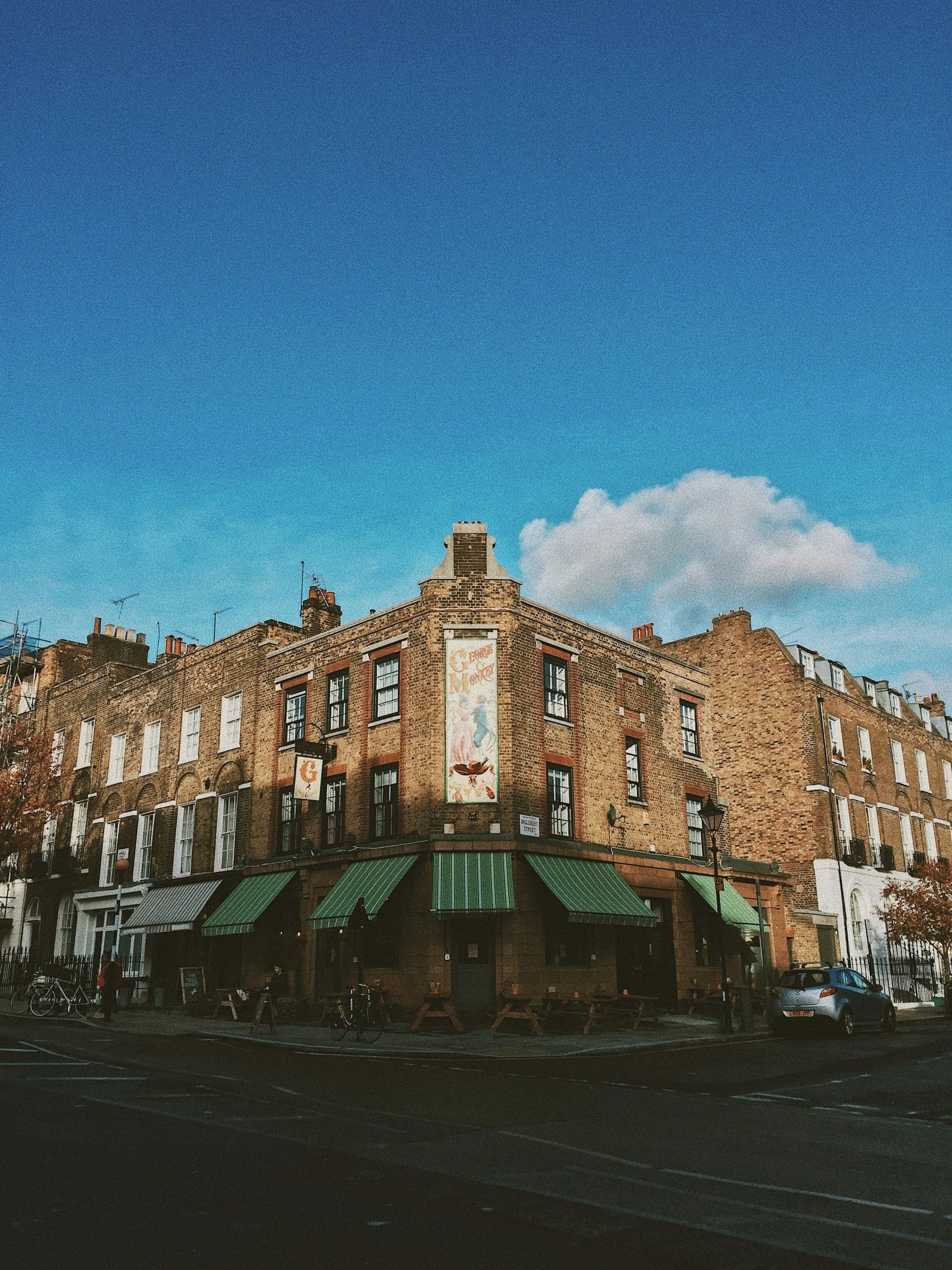
London is full of familiar sights: red buses, historic pubs, busy shopping streets and famous landmarks. But every now and then, you turn a corner and find something that feels as though it belongs in an entirely different city, a different century, or even a different country.
From a Japanese garden tucked away in Kensington to Victorian dinosaurs that still look wonderfully strange, London has plenty of places that make you stop and wonder how they ended up here.
These aren't simply hidden places. They're corners of London with a completely different atmosphere from the streets surrounding them.
Here are nine places in London that feel unexpectedly out of place.
1. Kyoto Garden, Holland Park
It doesn't take long to forget you're in London when you step into Kyoto Garden. Tucked inside Holland Park, this Japanese garden feels like a little piece of Japan hidden behind the trees and paths of West London.
The garden was opened in 1991 as a gift from the city of Kyoto to London, celebrating the relationship between Japan and the UK. It features a waterfall, a pond, carefully arranged stones, Japanese planting and winding paths designed to create a peaceful atmosphere.
What makes the place particularly unusual is the contrast. You can be walking through one of London's residential neighbourhoods, surrounded by traffic, restaurants and busy streets, and suddenly find yourself in a garden designed around quietness and balance.
There are koi fish in the pond, beautiful seasonal planting and, if you're lucky, peacocks wandering around the garden.
It isn't a huge garden, but that's part of its charm. You don't need hours here. Sometimes a few minutes away from the city is enough.
Where: Holland Park, Kensington, W8
Why it feels out of place: A Japanese garden with a waterfall, koi pond and carefully designed landscapes hidden inside a West London park.
Good to know: The garden is within Holland Park and is free to visit. Check the park's official website before visiting for current access information.
2. St Dunstan-in-the-East
In the middle of the City of London, surrounded by offices, skyscrapers and busy streets, sits a church that looks as though nature has slowly taken it back.
St Dunstan-in-the-East was originally built centuries ago and suffered severe damage during the Second World War. Rather than rebuilding the church entirely, the surviving ruins were transformed into a public garden.
Today, plants grow through the old church walls, climbing around Gothic arches and filling the space where a roof once stood. The remaining tower and stonework make it feel more like an abandoned European monastery than a garden in one of the world's busiest financial districts.
It's particularly striking on a weekday. You might see office workers sitting quietly with their lunch, tourists taking photographs and people passing through the garden without realising what they're walking into.
The combination of ruined architecture and greenery gives the place a genuinely unusual atmosphere. It's one of those corners where London seems to have paused for a moment.
Where: St Dunstan's Hill, City of London
Why it feels out of place: A medieval church ruin turned into a green garden surrounded by modern office buildings.
Good to know: The garden is free to visit. Check the City of London website for current information.
3. The Fake Houses of Leinster Gardens
At first glance, 23 and 24 Leinster Gardens look like ordinary Victorian houses. They have elegant façades, windows, decorative details and the appearance of belonging to the same residential terrace as the neighbouring properties.
But these two buildings are not proper houses.
The façades were constructed to conceal the gap left by railway infrastructure running behind them. The railway cutting interrupted the terrace, and the decorative fronts helped maintain the appearance of a continuous row of houses from the street.
The windows and architectural details make the buildings look convincingly residential, which is precisely why so many people walk past without noticing anything unusual.
It's a small architectural trick rather than a major attraction, but it says a lot about the way London has evolved. Railway infrastructure, Victorian architecture and urban planning have all left their mark on the city, sometimes in very strange ways.
If you know what you're looking for, the buildings become much more interesting than an ordinary street frontage.
Where: 23–24 Leinster Gardens, Bayswater, W2
Why it feels out of place: Two convincing Victorian house fronts hiding a gap created by railway infrastructure.
Good to know: This is a residential street, so admire the façades from the public pavement and respect the privacy of local residents.
4. Pickering Place
Pickering Place is one of those tiny corners of London that feels as though it has been left behind by the rest of the city.
Hidden off St James's Street, the courtyard is surrounded by historic buildings and reached through a discreet entrance. The moment you step inside, the atmosphere changes. The busy streets of St James's disappear, replaced by a small, enclosed courtyard with a distinctly old-fashioned character.
Pickering Place dates back to the Georgian period and is closely associated with London's historic St James's neighbourhood. The area has connections to diplomatic history, including the former Texas Legation, which operated nearby before Texas became part of the United States.
The courtyard is often described as one of London's smallest squares, and its scale makes it feel almost secretive.
You won't find a sprawling garden or a major attraction here. It's the sort of place worth discovering while exploring St James's, particularly if you enjoy London's smaller architectural details and hidden passages.
There are plenty of stories associated with Pickering Place, including tales of duels, but not every popular story about its history is firmly documented. Its historic courtyard and diplomatic connections are the more reliable reasons to visit.
Where: Pickering Place, St James's, SW1
Why it feels out of place: A tiny Georgian courtyard hidden behind the busy streets of central London.
Good to know: It is a small courtyard in a working area, so access and activity may vary. Keep your visit respectful.
5. Hill Garden and Pergola, Hampstead Heath
Hampstead Heath is already one of the places where London feels less like a city, but the Hill Garden and Pergola takes that feeling a step further.
The Pergola is an elevated walkway surrounded by columns, timber structures, gardens and climbing plants. It was developed in the early twentieth century as part of a private estate, associated with Lord Leverhulme and landscape architect Thomas Mawson.
Today, the structure has a wonderfully romantic appearance. The long walkways, aged stonework, greenery and views over West Heath create an atmosphere that feels more like an old estate garden than a public space in London.
It's particularly beautiful when plants grow over the structure and the surrounding garden is in bloom. The architecture has a weathered character that makes the entire place feel unusually atmospheric.
However, there is an important visitor update to know before planning your visit. Essential maintenance and conservation work is currently taking place, and some areas may be inaccessible, with scaffolding on site. This is an ongoing project, so the experience may differ from photographs you see online.
The garden remains a fascinating place to explore, but check the official information before travelling.
Where: Hampstead Heath, NW3
Why it feels out of place: An Edwardian elevated garden walkway with a romantic, almost abandoned-estate atmosphere.
Good to know: Entry is free, but access to parts of the Pergola is affected by current conservation work. Check the City of London visitor page before visiting.
6. The Victorian Dinosaurs of Crystal Palace Park
You don't expect to encounter enormous prehistoric animals while walking through a London park, but Crystal Palace Park has been doing exactly that since the nineteenth century.
The park's dinosaur sculptures were created by sculptor Benjamin Waterhouse Hawkins in the 1850s. They were designed using the scientific knowledge available at the time, which means some of the creatures look very different from how modern palaeontologists believe they actually appeared.
That is part of the fascination.
These sculptures weren't simply decorative statues. They were among the earliest attempts to create full-scale representations of extinct animals for the public, making prehistoric life something people could physically see rather than just read about.
The models sit around the park's geological landscape, including islands and water features, creating a setting that feels surprisingly theatrical.
Some of the dinosaurs have been restored over the years, and the sculptures remain a significant part of the park's heritage.
Walking around them is a strange experience in the best possible way. They're not polished theme-park dinosaurs. They are Victorian interpretations of prehistoric creatures, complete with the scientific ideas and artistic imagination of their time.
Where: Crystal Palace Park, South London
Why it feels out of place: Victorian life-sized dinosaur sculptures sitting in an ordinary London public park.
Good to know: The dinosaur sculptures are in the public park and can be explored without buying an attraction ticket. The restoration programme has helped preserve these historic models. Check the Crystal Palace Park website for park updates.
7. Eltham Palace
Eltham Palace is one of London's most unusual historic buildings because it combines two very different architectural worlds.
The site has a long royal history, including its medieval Great Hall, which survives as one of the most striking parts of the property. But alongside this medieval structure sits a mansion created in the 1930s by Stephen and Virginia Courtauld.
The Courtaulds transformed the site into a stylish home with Art Deco interiors, modern design and an impressive collection of architectural details. The result is a building where medieval royal history meets the glamour of interwar design.
You can explore the historic Great Hall, walk through rooms influenced by Art Deco design and see how the Courtaulds created a home that was modern for its time.
It feels unusual because you don't normally encounter a medieval royal hall alongside such distinctly 1930s interiors in the same place.
Eltham Palace isn't a quick free walk-in garden like some of the places on this list, but it's worth considering if you want something genuinely different from London's usual historic attractions.
Where: Eltham, Greenwich, SE9
Why it feels out of place: A medieval royal palace site combined with a striking 1930s Art Deco mansion.
Good to know: Eltham Palace is managed by English Heritage and normally requires a ticket for entry. Check English Heritage's official Eltham Palace page for opening dates, tickets and access information.
8. Crossrail Place Roof Garden, Canary Wharf
Canary Wharf is known for its skyscrapers, financial offices, shopping centres and modern architecture. But above one of its major transport developments sits a garden that feels like a completely different world.
Crossrail Place Roof Garden is located above the Crossrail station development in Canary Wharf. Its enclosed structure houses a variety of plants, including species from different parts of the world, creating an unusual green space surrounded by the area's modern buildings.
The garden has a distinctive architectural design, with a roof structure that allows natural light to enter. Walking through it feels less like being in a traditional London park and more like wandering through a contemporary botanical space.
One of its interesting features is the way the planting reflects the history of global trade and the movement of plants between different regions. The garden's design also incorporates paths, seating and spaces to stop and explore.
It's a particularly interesting contrast with Canary Wharf itself. Outside, the area is defined by glass towers, offices and modern infrastructure. Inside, you find greenery, different plant species and a quieter environment.
Where: Crossrail Place, Canary Wharf, E14
Why it feels out of place: A botanical garden housed within a modern transport and commercial development.
Good to know: Check the Canary Wharf website for current visitor information and access arrangements before making a special trip.
9. The Egyptian Cats of the Carreras Building
London has plenty of buildings with unusual architectural details, but few look quite as unexpected as the Carreras Building.
Located near Mornington Crescent, this striking Art Deco building was originally constructed as a cigarette factory in the 1920s. Its design was heavily influenced by Egyptian Revival architecture, a style that became popular in Britain following renewed interest in ancient Egypt.
The building's most recognisable features are the Egyptian-inspired details, including the large cat statues associated with the entrance.
The cats reference Bastet, the ancient Egyptian feline deity, and the building's former Black Cat cigarette brand. The original statues were later replaced with replicas, restoring one of the building's most distinctive features.
The entire façade is unusual, with decorative columns, geometric patterns and Egyptian-inspired elements that make it stand out from the surrounding streets.
You don't need to go inside to appreciate it. Simply walking past the building and looking up at the architectural details is enough to understand why it feels so different from the buildings around it.
Where: 180 Hampstead Road, London, near Mornington Crescent
Why it feels out of place: An Egyptian-inspired Art Deco former factory with monumental cat statues in the middle of Camden's streets.
Good to know: The building is primarily an office building, so admire its exterior from the public street. The Egyptian-inspired façade and cat sculptures are the main attraction.
London is stranger than it looks
Some of London's most interesting places aren't grand landmarks or famous attractions. They're the small surprises hidden between residential streets, parks, office buildings and historic neighbourhoods.
A Japanese garden tucked inside Kensington, a ruined church surrounded by greenery, fake Victorian façades hiding railway infrastructure, dinosaurs in a public park and an Egyptian-inspired factory in Camden are all reminders that London isn't a city with just one identity.
It's a city built over centuries, constantly changing, with layers of architecture, history and ideas that don't always fit neatly together.
And sometimes, the best thing about exploring London is finding a place that makes you question what you're looking at in the first place.
Planning your next London day out? Discover more neighbourhood guides, hidden gems, food spots and things to do on LondonYaar.com.
Follow @rohan.londonyaar for more London places, stories and things worth knowing before you visit.