Japanese Market in London: Everything to Know About Shōtengai Market
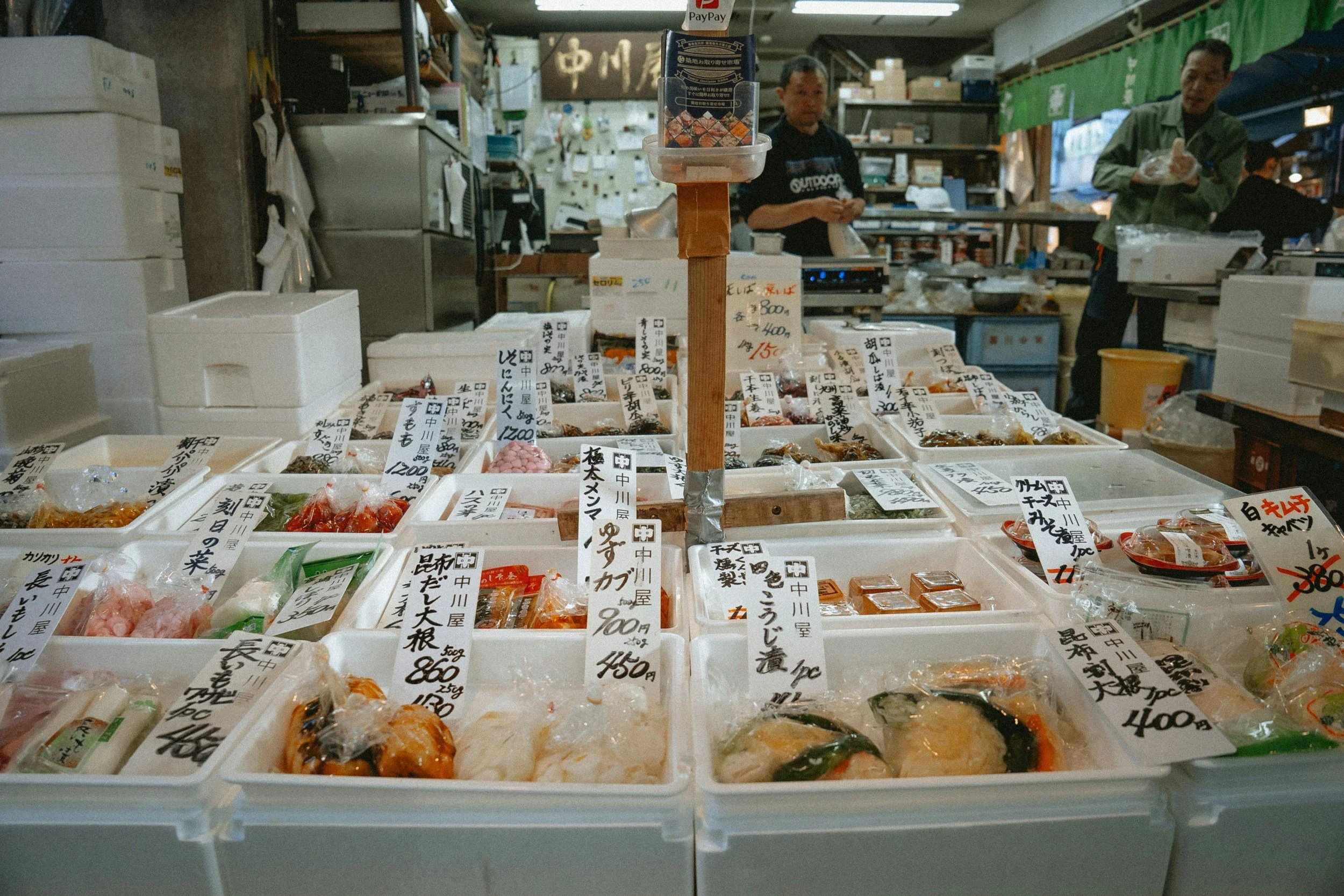
You don't need to fly to Japan to experience the atmosphere of a Japanese-inspired street market.
Sometimes, you just need to take the Tube to King's Cross.
Once a month, Lower Stable Street at Coal Drops Yard becomes home to Shōtengai Market, bringing together independent traders selling food, homeware, crafts, fashion, accessories and other finds.
It has recently been getting more attention on social media, with people describing it as a Japanese street market hidden in King's Cross. And while that description isn't completely wrong, there is a little more to the story.
The official event is called the Shōtengai pan-Asian Market. It takes inspiration from Japan's traditional shōtengai — local shopping streets found in towns and cities across Japan — but the London market itself brings together a broader mix of pan-Asian businesses and independent traders.
That distinction is important.
This isn't a Japanese shopping street that has somehow been transported from Tokyo to London.
Instead, it is a London interpretation of the shōtengai idea: a recurring market where small businesses, food traders, makers and independent retailers come together.
And because the traders change, every visit can feel slightly different.
So, what exactly is Shōtengai Market, when does it happen, what can you buy there and is it actually worth visiting?
Here's everything you need to know.
What is Shōtengai Market?
The word shōtengai refers to a local shopping street or commercial district in Japan.
These streets can bring together independent shops, restaurants, food businesses and other local services, often becoming an important part of community life.
The market at Coal Drops Yard takes inspiration from that idea.
Once a month, Lower Stable Street transforms into Shōtengai Market, with a changing selection of stalls focused on food, lifestyle, crafts and independent businesses. King's Cross describes it as a market that puts an emphasis on small businesses and independent retailers, rather than simply being a collection of large commercial brands.
It is co-curated by Beams & Co, working with King's Cross and the Lower Stable Street Market.
The result is a market that combines Japanese inspiration with London's much broader independent and pan-Asian food and creative scene.
Is Shōtengai Market actually Japanese?
This is probably the most important question to answer after seeing the viral posts.
It is Japanese-inspired, but it isn't exclusively Japanese.
The concept itself comes directly from Japan. King's Cross explains that shōtengai are local street markets found across Japanese cities, and the London event is designed to embody that atmosphere.
However, the official event is specifically described as a pan-Asian market.
That means the stalls aren't limited to Japanese businesses or Japanese products.
You can find Japanese food, homeware and fashion alongside other Asian-inspired products, food and independent businesses.
So if you arrive expecting a miniature Tokyo shopping street where every stall is Japanese, you might be surprised.
But if you think of it as a London market inspired by Japanese shōtengai culture, the concept makes much more sense.
And honestly, that is the more interesting story.
Where is the market?
Shōtengai Market takes place at:
Lower Stable Street
Coal Drops Yard
King's Cross
London N1C 4LW
Coal Drops Yard is just a short walk from King's Cross and St Pancras stations, making the market particularly easy to reach from other parts of London.
The setting also adds to the experience.
Lower Stable Street sits within Coal Drops Yard, the redeveloped former railway and industrial area that now contains shops, restaurants, cafés, bars and public spaces.
So you're not travelling to an isolated market venue.
You can combine Shōtengai with an entire King's Cross afternoon.
King's Cross Shōtengai Market official listing
When does Shōtengai Market take place?
This isn't a one-off pop-up.
Shōtengai Market takes place monthly.
Beams & Co says the market is held from April to December, while King's Cross describes it as a monthly event at Lower Stable Street.
The exact dates vary from month to month, so it is always worth checking the current official listing before travelling.
For the 2026 season, the currently published upcoming dates include:
15–18 October 2026
19–22 November 2026
The October edition runs from Thursday to Sunday, while the November edition is the next currently listed market.
That monthly schedule is one of the best things about the market.
You don't have to treat it as a once-only London discovery.
If you enjoy it, you can come back another month and see a completely different collection of traders.
What are the opening hours?
The official King's Cross listing currently gives the following hours:
Thursday & Friday: 12pm–7pm
Saturday & Sunday: 11am–6pm
Bank holiday Mondays follow the weekend opening pattern when the market operates on one.
However, individual trader hours can vary, and the mix of food and craft traders can change by day.
For the October 2026 edition, for example, the market's own social updates have promoted food traders on Thursday and a combination of food and craft traders across the weekend.
So if you're travelling specifically for one stall, check the latest trader information before you go.
What can you find at Shōtengai Market?
This is where things get interesting.
There isn't one permanent list of stalls.
The organisers say the vendors are always changing, which means what you find one month may not be there the next.
The market can include:
Japanese and pan-Asian food
Homeware
Ceramics
Accessories
Fashion
Crafts
Art
Lifestyle products
Independent brands
Small food businesses
It is therefore much more than somewhere to grab lunch.
You can come looking for food and end up leaving with a piece of homeware, a gift or something you didn't know you wanted.
That's part of the fun.
What Japanese food can you find?
Previous traders listed by King's Cross have included several Japanese food businesses.
These have included Rise Bakery Bar, serving Japanese bread; Shima, known for cakes; OKAN London, serving okonomiyaki; and Takoyaki Iseji, serving takoyaki.
So yes, there is genuine Japanese food at the market.
You could find yourself eating takoyaki, trying okonomiyaki or browsing Japanese baked goods.
But don't assume that these exact stalls will be there every time.
The organisers specifically highlight the changing vendor line-up.
That's important because a social-media post from one month can make it look as though the same food stalls are permanent fixtures.
They aren't.
The market changes.
It's not just Japanese food
This is another reason why calling it simply a “Japanese market” can be misleading.
The event is officially a pan-Asian market, and the trader mix reflects that.
The October 2026 edition, for example, has included Korean street food such as tteokbokki, kimchi jeon, pajeon and mandu alongside other independent traders.
So if you're interested in Asian food more broadly, the market is arguably even more appealing.
You could visit expecting Japanese flavours and discover something completely different.
And because the selection changes, there is always an element of surprise.
What about shopping?
Food might be one of the easiest ways to discover Shōtengai, but shopping is an equally important part of the experience.
The market focuses on independent businesses and lifestyle products, with previous traders including businesses selling Japanese homeware, accessories and fashion.
You might find:
Tableware
Ceramics
Clothing
Jewellery
Accessories
Art
Handmade products
Home décor
Gifts
The range depends on the month.
That's why this isn't really a market where you should arrive with a fixed shopping list.
It's better suited to wandering.
Look around.
See what catches your eye.
Talk to the traders.
And perhaps discover a small business you wouldn't normally come across.
How did Shōtengai Market start?
The market has an interesting backstory.
According to Beams & Co, Shōtengai was initially created in 2021 to celebrate the Tokyo Olympics.
The event proved successful and was then continued, eventually developing into the recurring market that operates today.
That makes its evolution particularly interesting.
It wasn't originally created as a permanent monthly market.
It started as a one-off idea connected to Tokyo and the Olympics, but the response encouraged the organisers to keep going.
It has since developed into a recurring platform for independent and pan-Asian businesses.
Beams & Co describes the concept as having a strong focus on small and independent businesses, while also creating connections between businesses and the wider London community.
Why is it called Shōtengai?
The name isn't just a clever Japanese word chosen for branding.
It actually explains the idea behind the market.
Traditional shōtengai are local shopping streets found across Japan.
They aren't necessarily tourist attractions.
They're part of everyday life.
People shop there, eat there, meet businesses there and become familiar with the people running the shops.
The London market takes inspiration from that community-oriented model.
Of course, the physical setting is very different.
You are still in Coal Drops Yard, not Osaka or Tokyo.
But the idea of bringing independent businesses together in a lively street setting is what connects the two.
Is it free to visit?
The Shōtengai Market operates as a street market at Lower Stable Street rather than as a conventional ticketed attraction.
There is no advance event ticket listed by King's Cross for visiting the market itself.
You simply visit the market during its operating hours, while food, drinks and products from individual traders are purchased separately.
Because individual traders and market arrangements can change, it is still worth checking the official listing before travelling.
Is it really like visiting Japan?
This is where I'd be careful with the social-media hype.
You will see Japanese-inspired food.
You will see Japanese products.
You will see the word shōtengai everywhere.
And the atmosphere can certainly remind you of Japanese street markets.
But you're still in King's Cross.
The market is surrounded by London's railway heritage, modern architecture, restaurants, the Regent's Canal and Coal Drops Yard.
It is therefore better described as:
A London market inspired by Japanese shōtengai.
Not:
A Japanese market that has been transported from Tokyo.
That distinction doesn't make it less interesting.
If anything, it makes the story better.
It's an example of how London takes an idea from another culture and creates something new around it.
Why does Coal Drops Yard work so well?
The location is almost perfect for this type of market.
Coal Drops Yard already has a strong independent retail and food identity, while Lower Stable Street regularly hosts different traders and markets.
Shōtengai fits naturally into that environment.
You have the cobbled streets, railway arches, independent shops and restaurants, all surrounding a temporary collection of market stalls.
King's Cross itself describes Coal Drops Yard as a neighbourhood with independent boutiques, restaurants and public spaces, while its autumn programme positions Shōtengai alongside other seasonal markets and events.
So you don't need to visit just for the market.
Make a day of it.
When is the best time to visit?
I'd recommend Saturday or Sunday if you want the broadest market experience.
The official listing says the food market runs from Thursday to Sunday, while the craft side runs from Friday to Sunday.
That means the weekend generally gives you the best combination of food and things to browse.
Going earlier can also be a good idea if you're visiting for a particular food trader.
Some small independent businesses can sell out of popular items, and because the traders change, you shouldn't assume that everything advertised online will still be available when you arrive.
What else can you do around King's Cross?
One of the biggest advantages of Shōtengai is how easy it is to build into a wider London day.
After browsing the market, you can explore Coal Drops Yard, walk through Granary Square, follow the Regent's Canal or browse the neighbourhood's shops and cafés.
King's Cross also has plenty of green spaces and public areas, making it easy to slow the day down rather than rushing from one attraction to another.
And, of course, King's Cross and St Pancras stations are nearby.
So you can visit the market without dedicating an entire day to it.
How to plan your visit
Before you leave home, check the latest official market listing.
The most important thing to remember is that the traders change.
Then keep these simple tips in mind:
Check the date.
The market is monthly, but the exact four-day run changes.
Check the current trader line-up.
Don't assume a food stall you saw on Instagram will be there.
Visit on the weekend if possible.
That's generally when food and craft traders overlap.
Go hungry.
There is plenty of food to discover.
Bring a reusable bag.
You may find homeware, art, fashion or other products you want to take home.
Explore Coal Drops Yard afterwards.
The market works particularly well as part of a wider King's Cross day out.
The October 2026 Shōtengai Market
If you're reading this while planning an October visit, there is a market happening 15–18 October 2026.
The official schedule is:
Thursday 15 October: 12pm–7pm
Friday 16 October: 12pm–7pm
Saturday 17 October: 11am–6pm
Sunday 18 October: 11am–6pm
The next currently listed edition is 19–22 November 2026.
That makes October particularly useful for anyone looking for something different to do during the autumn.
And if you miss it, there is another opportunity the following month.
Final thoughts
London is full of markets, but the best ones often have a story behind them.
Shōtengai Market does.
What began in 2021 as a market created around the Tokyo Olympics has developed into a monthly platform for independent and pan-Asian businesses at Coal Drops Yard.
You can come for Japanese food.
You can come looking for homeware or fashion.
You can come because you've seen the market on Instagram.
Or you can simply come to wander around somewhere in London that feels a little different from the usual weekend itinerary.
And because the traders change, there is a reason to return.
So next time you're around King's Cross and Lower Stable Street starts filling with stalls, don't just walk past.
Stop.
Have a look.
Try something you've never eaten before.
And see what this little piece of Japanese-inspired market culture has brought to London this month.
Planning your next London day out? Discover more neighbourhood guides, hidden gems, food spots and things to do on LondonYaar.com.
Follow @rohan.londonyaar for more London places, stories and things worth knowing before you visit.