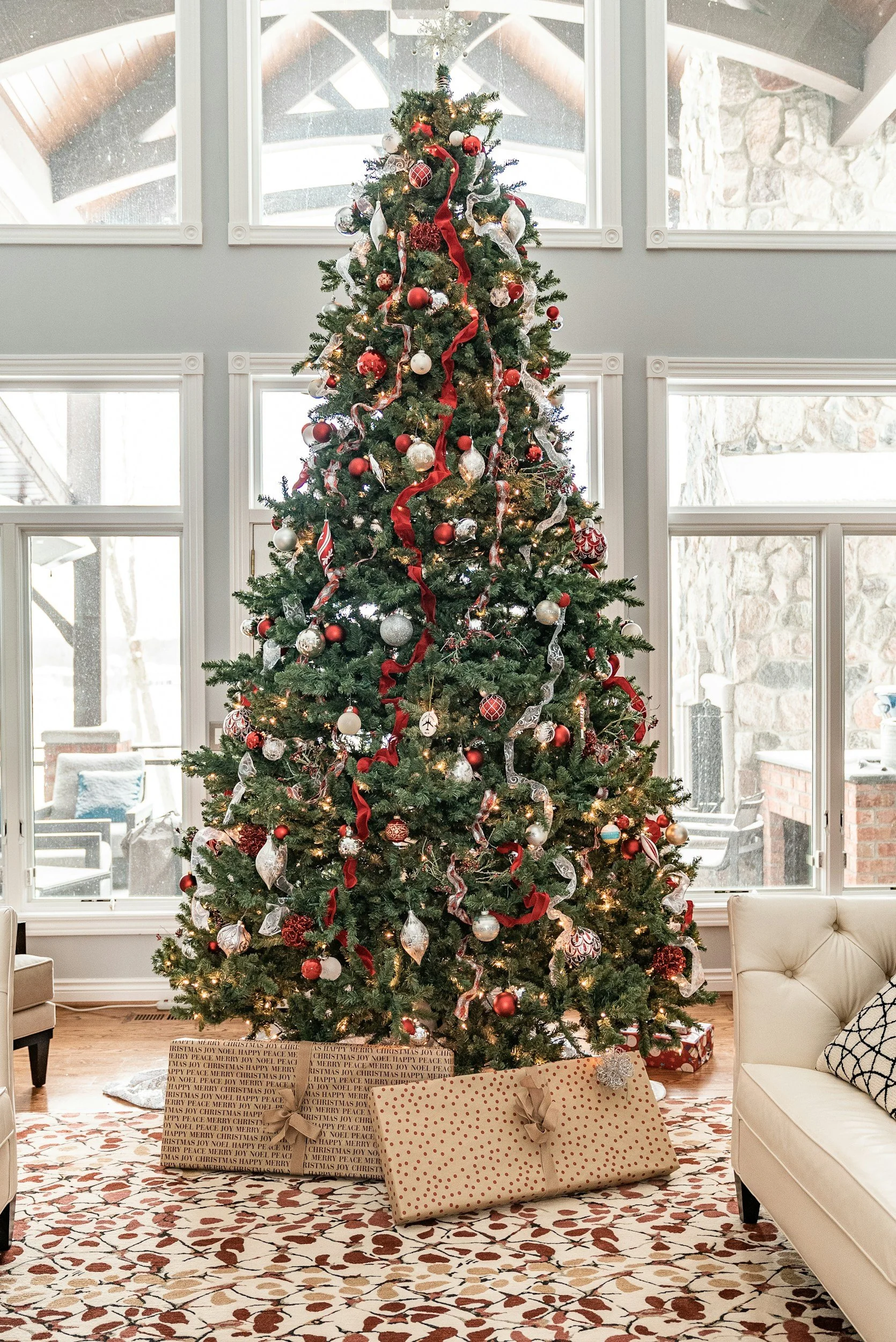
When to buy, where to order, how to choose the right size and what to do with your tree after Christmas
Christmas is only a few weeks away, and if you're planning to have a Christmas tree at home this year, now is a good time to start looking.
Buying a tree might seem like a straightforward task, but there are actually quite a few things to consider. Do you want a real tree or an artificial one? Should you buy it now or wait until December? How tall should it be? Can it be delivered to your home? And when Christmas is over, what do you do with it?
In London, there are pop-up Christmas tree shops, garden centres, online delivery services, rental schemes and even council recycling programmes. Some sellers begin taking orders well before December, while popular delivery dates and particular tree sizes can become harder to find as Christmas approaches.
If you're planning to get a Christmas tree this year, here's how to go about it.
When should you buy your Christmas tree?
Late November to early December is generally a good time to start shopping for a real cut Christmas tree.
By late November, many London Christmas tree sellers have opened their seasonal sites, garden centres have stocked their trees and delivery services are taking orders for December.
If you have a specific size, type of tree or delivery date in mind, booking early gives you a better choice. Some sellers already have delivery calendars running, and particular dates may become unavailable.
However, buying a real tree too early doesn't automatically mean it will stay fresh until Christmas. A cut tree's longevity depends on its species, how fresh it is when purchased, its water supply and where it is kept indoors.
For example, Nordmann fir trees generally hold their needles well, making them a popular choice for people who want to buy earlier. Norway spruce tends to drop needles more quickly indoors, so it is usually better purchased closer to Christmas.
Pines and Needles recommends that Norway spruce trees be delivered after 10 December, while Nordmann firs are more suitable for earlier delivery. Its care advice also notes that the average tree lifespan can be around two to four weeks, depending on conditions.
If you are buying a pot-grown tree or renting a living tree, you can generally plan earlier, as these trees are intended to remain alive rather than being cut.
Where can you buy a Christmas tree in London?
You don't necessarily need to visit a supermarket to buy a Christmas tree. London has a variety of specialist sellers, seasonal pop-ups and garden centres.
1. Pines and Needles
Pines and Needles operates seasonal Christmas tree sites across London, with locations in parks, church grounds, car parks and other neighbourhood locations.
Its 2026 London locations include sites such as Victoria Park, Battersea Park, Covent Garden, Hampstead, Dulwich, Greenwich, Wimbledon and many others.
You can choose a tree at a local site or use its delivery service, depending on your area and availability.
The company also offers different tree varieties, stands, delivery and additional services.
Best for: Choosing a tree in person or arranging delivery.
When: Seasonal sites generally open during November and operate into December.
Website: Pines and Needles
2. The Christmas Forest
The Christmas Forest operates seasonal tree shops and offers delivery and installation services in selected London areas.
You can order online and choose a delivery date, or visit one of its stores to select your tree. Delivery services may include dropping the tree at your door or an installation service, depending on the option you choose.
This is useful if you don't want to carry a large tree through the streets or transport it on public transport.
Best for: Delivery and installation.
Website: The Christmas Forest
3. Garden centres
Garden centres are another good option if you want to see different types and sizes of trees before purchasing.
Some London garden centres selling seasonal trees include:
Boma Garden Centre – Offers cut Nordmann and Fraser firs, as well as pot-grown Nordmann trees, with delivery within the M25.
Camden Garden Centre – A seasonal destination for Christmas trees and decorations.
Clifton Nurseries – A garden centre where seasonal Christmas trees are among the festive offerings.
Garden centres are particularly useful if you want to compare trees physically, check their shape and look at accessories such as stands and decorations.
4. Columbia Road Flower Market and seasonal sellers
Columbia Road in East London is well known for its flower market, but the surrounding area also has seasonal Christmas sellers and shops that can be worth exploring in the run-up to Christmas.
Some sellers in London operate temporary seasonal sites rather than permanent shops, so check opening dates before making a trip.
Best for: Exploring local seasonal sellers and buying in person.
Where: Columbia Road, Bethnal Green, East London.
5. Online Christmas tree delivery
If you'd rather not visit a tree shop, ordering online is one of the easiest ways to get a Christmas tree delivered to your home.
Several London services offer delivery, with options to choose the size, variety, delivery date and sometimes installation.
For example:
Creekside Christmas delivers real trees across London within the M25 and offers delivery options ranging from doorstep delivery to placing the tree in a room and installing it in a stand. Its published 2026 delivery period is 19 November–23 December, and it also offers January collection.
Boma Garden Centre offers real trees and delivery across the M25, with its published delivery period running from 23 November to 22 December 2026.
The Christmas Forest offers online orders, delivery and installation in selected areas.
Before ordering: Check delivery charges, the delivery date, whether the tree is carried inside, whether a stand is included and what happens if you need to change the delivery slot.
Real, artificial or rented? Which Christmas tree should you choose?
There isn't one perfect Christmas tree for everyone. Your decision may depend on how much space you have, whether you want the scent of a real tree, how much maintenance you're comfortable with and what you want to do with it after Christmas.
Real cut Christmas trees
A real cut tree is the traditional option.
The advantages include its natural appearance, the smell of fresh pine or fir, and the fact that it can be recycled after Christmas through an appropriate local collection or recycling scheme.
The disadvantages are that it needs watering, can shed needles and will eventually need to be disposed of.
Popular varieties include:
Nordmann fir: A popular choice because it generally holds its needles well and has relatively soft needles.
Fraser fir: Often has a narrower shape and good needle retention.
Norway spruce: Known for its traditional Christmas-tree scent, but tends to drop needles more readily indoors.
The variety available will depend on the seller.
Artificial Christmas trees
Artificial trees are worth considering if you want something you can store and reuse every year.
They come in different heights, shapes, colours and styles. Some are designed to look almost identical to real fir trees, while others are deliberately decorative.
Advantages include:
No daily watering.
Fewer fallen needles.
Can be reused for several years.
Easy to store once Christmas is over.
Available in a wide range of sizes and styles.
The main consideration is how long you will use it. Artificial trees are made using materials that can have a significant environmental footprint, so repeatedly using the same tree for many years matters.
The Royal Horticultural Society notes that the environmental comparison depends on factors such as the materials used, transport, reuse and disposal. Its advice generally favours real trees that are reused or properly recycled, while artificial trees need to be used repeatedly to offset their production impact.
RHS Advice
Artificial trees can be purchased from retailers such as:
Renting a living Christmas tree
A less familiar option is renting a living Christmas tree.
Instead of buying a cut tree, you receive a living tree grown in a pot, use it for the festive season and return it after Christmas. The tree is then cared for and ideally kept growing for use in future seasons.
Some services offer delivery and collection, meaning you don't have to worry about finding a recycling point in January.
For example, Green Elf Trees and specialist rental services offer options for living trees or Christmas tree rental, although their locations, stock, conditions and delivery arrangements vary.
Important: A living tree in a pot is not automatically easy to keep alive indoors for extended periods. Living trees should not be kept in a warm room for too long. Follow the supplier's instructions and return or move the tree outdoors promptly after Christmas.
The RHS also cautions that trees grown in pots may not thrive indefinitely in containers.
How tall should your Christmas tree be?
This is probably the most important thing to measure before ordering a tree online.
A tree that looks perfect on a website can be too tall for your living room, particularly once you add a tree stand and topper.
Most UK homes have ceilings around 2.4 metres, although ceiling heights vary considerably. Don't assume a tree will fit just because its advertised height looks reasonable.
Tree height
Approximate size
Usually suitable for
3–4ft
90–120cm
Small rooms, flats, tables or compact spaces
4–5ft
120–150cm
Smaller living rooms
5–6ft
150–180cm
Many average living rooms
6–7ft
180–210cm
Larger rooms with good ceiling clearance
7–8ft
210–240cm
High-ceiling rooms
8ft+
240cm+
Large rooms or homes with high ceilings
My recommendation: For many London flats and houses, a 5–6ft tree is a practical starting point, but measure your room first.
Remember to account for:
The height of your tree stand.
Your Christmas tree topper.
Ceiling lights or other fixtures.
The width of the tree, not just its height.
The space needed to move around it.
A slim tree can be a better choice if you're placing it in a corner, beside a sofa or in a small room.
How to look after a real Christmas tree
If you choose a real cut tree, a little care can make a difference to how long it stays looking good.
1. Make a fresh cut at the base.
If the tree has been cut for some time, trimming a small section from the bottom of the trunk before placing it in water can help it take up water.
2. Put it in a water-holding stand.
Choose a stand that has a reservoir and make sure the trunk is able to take up water. Check the water level regularly and don't let it run dry.
3. Keep it away from heat.
Avoid placing the tree beside radiators, fireplaces, heaters or other heat sources. Excessive heat can dry it out more quickly.
4. Don't bring it indoors too early.
If you're buying a tree in November, consider keeping it in a cool place before bringing it into the warm living room, particularly if you are buying a cut tree.
5. Check it every day.
Real trees can drink surprisingly large amounts of water, particularly when freshly installed. Check the reservoir daily.
These care recommendations are consistent with guidance from the Royal Horticultural Society and specialist Christmas tree sellers.
What do you do with your Christmas tree after Christmas?
This is something worth thinking about before buying your tree, particularly if you live in a flat and don't have a garden.
Once Christmas is over, there are several ways to dispose of a real tree responsibly.
1. Check your borough's Christmas tree collection
Many London boroughs organise dedicated Christmas tree collections in January. Others have drop-off points where residents can leave their trees for recycling.
Depending on your borough, you may need to:
Leave the tree beside your normal rubbish or recycling collection point on a specified date.
Book a collection.
Take it to a designated park or recycling site.
Use a garden-waste service, where permitted.
Don't assume every borough works the same way. Collection dates, booking requirements and locations differ, and arrangements can change from year to year.
For example:
Southwark Council has published its 2026/27 Christmas tree collection arrangements, including collection booking dates and size restrictions.
Westminster City Council has published real-tree drop-off points for 26 December 2026–10 January 2027.
North London Waste Authority lists reuse and recycling centres where real trees can be taken.
2. Take your tree to a recycling point
If your council doesn't offer a convenient home collection, it may have a designated Christmas tree drop-off point.
Trees are generally processed into woodchips, mulch or other material that can be reused in parks, gardens and landscaping.
Before taking your tree:
Remove all decorations.
Remove tinsel.
Remove the tree stand.
Remove any pots or plastic wrapping.
Check the location and opening hours.
London Recycles provides a borough-by-borough guide to real Christmas tree recycling arrangements across London.
3. Ask your tree seller about collection
Some Christmas tree delivery companies offer a January collection service.
For example, Creekside Christmas publishes a tree collection service running from 2–12 January 2027, with different prices depending on tree size and collection arrangements.
This can be particularly useful if you live in a flat, have a large tree or would rather not carry it to a recycling point.
If you are ordering a tree, check whether collection is available at the time of purchase. Some services allow you to add it to the original order, while others offer a separate booking.
4. Don't leave it on the pavement
Don't simply leave your Christmas tree on a pavement, outside a park or beside a bin without checking the council's instructions.
A tree left in the wrong place can obstruct pedestrians, cause a nuisance or be treated as fly-tipping.
Use an official collection or recycling point.
What about pot-grown trees after Christmas?
If you've bought a living tree, the next step depends on whether it was genuinely grown with a root system suitable for continued life.
A pot-grown tree can potentially be planted in your garden or kept outside in a container. However, trees vary, and some are sold with roots that have been heavily disturbed or limited by their container.
If you plan to keep the tree:
Move it outdoors after the festive period.
Follow the seller's care advice.
Avoid leaving it in a warm indoor environment for extended periods.
Check whether it needs repotting.
Consider planting it in the garden if conditions and the tree's root system allow.
If you're renting a tree, follow the rental company's instructions and return it according to the agreed schedule.
Before buying your Christmas tree, remember these five things
Book early: Particularly if you want a specific delivery date or size.
Measure your space: Don't forget the stand and topper.
Choose the right type: Nordmann fir, Norway spruce, Fraser fir, artificial or a living rental tree.
Check delivery: Make sure the delivery service reaches your postcode and understand what it includes.
Plan for January: Know how you will recycle, return or reuse your tree before you buy it.
A Christmas tree is worth planning for
Getting a Christmas tree is one of those festive traditions that can seem simple until you start looking at sizes, delivery dates, prices, tree types and what to do with it afterwards.
The good news is that London has plenty of options. You can visit a pop-up tree forest, choose a tree at a garden centre, order one online, buy an artificial tree that you reuse for years or even rent a living tree.
If you're planning to get one this year, start looking now rather than leaving it until the final week before Christmas. The right tree, the right size and a little planning can make the entire process much easier.
Planning your next London day out? Discover more neighbourhood guides, hidden gems, food spots and things to do on LondonYaar.com.
Follow @rohan.londonyaar for more London places, stories and things worth knowing before you visit.