Why Escalators in London Tube Stations Are So Long (And Why That’s Actually Necessary)
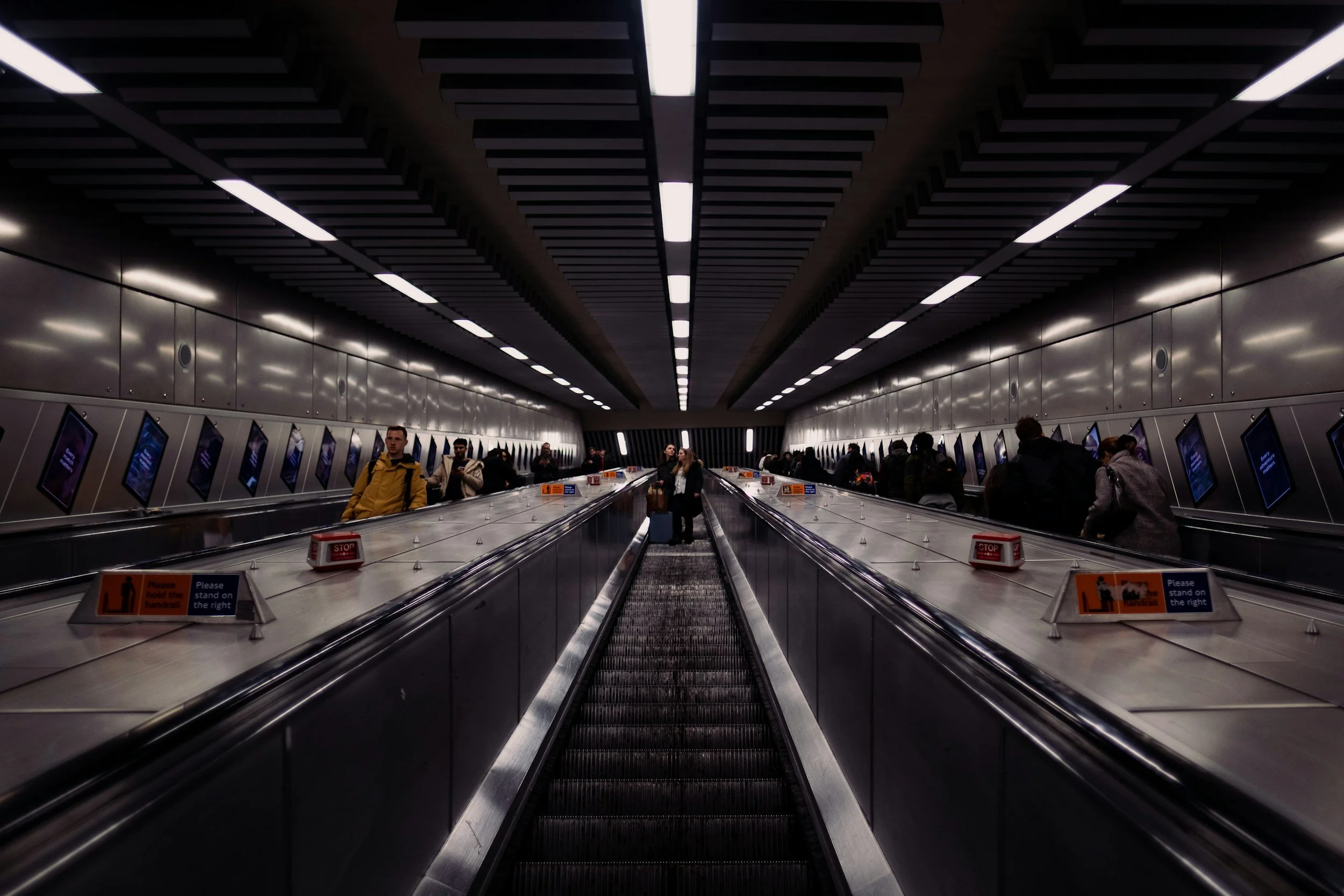
If you’ve ever used the London Underground, you’ve probably had this exact thought:
👉 “Why are these escalators so ridiculously long?”
At some stations, it feels like you’re standing on an escalator forever.
And you’re not wrong.
In fact, some of them are among the longest in the UK like at Angel Station, where escalators stretch around 60 metres in length.
But this isn’t random design.
There are very specific reasons why London’s Tube escalators are so long and once you understand them, it actually makes perfect sense.
1. The Biggest Reason: The Tube Is Extremely Deep Underground
This is the main reason.
Many London Underground stations especially on deep-level lines are built far below the surface.
Why?
Because when these lines were constructed (late 19th–early 20th century), engineers had to:
avoid existing buildings
tunnel under roads and infrastructure
work around the city without disturbing it
👉 The easiest solution was:
build tunnels deep underground
What that means for you
If platforms are very deep:
👉 you need a long way to travel vertically
And instead of stairs or lifts alone:
👉 escalators were installed
2. It’s Not Just Length It’s the Vertical Drop
Here’s something important:
Escalators feel long not just because of distance, but because of height (vertical rise).
Some Tube escalators:
rise over 20–30 metres vertically
stretch diagonally to make the journey manageable
👉 That’s why they feel endless.
3. Escalators Are Built Diagonally (Not Straight Down)
Escalators don’t go straight down like lifts.
They are angled.
So instead of:
going straight down (shorter distance)
They:
go diagonally → which increases the total length
👉 This makes them:
longer
but safer and easier to use
4. Designed to Handle Huge Crowds
London Underground is one of the busiest transport systems in the world.
There are:
hundreds of escalators across the network
over 400+ escalators in total
And they need to move:
👉 thousands of people per hour
Why length helps
Long escalators allow:
more people to stand at once
smoother flow of passengers
less congestion compared to stairs
👉 They act like moving corridors for crowds
5. Many people choose to stand, especially on longer escalators
You might think:
👉 “Why not just make them shorter and faster?”
But here’s the reality:
most people stand, not walk
especially on long escalators
Studies show that escalator efficiency changes depending on length fewer people walk when escalators are longer.
👉 So longer escalators are designed for:
standing passengers
steady flow
6. Old Stations = Old Design Decisions
The Underground is one of the oldest metro systems in the world.
Originally:
many stations used lifts
escalators were added later (early 1900s onwards)
When escalators replaced lifts:
👉 they had to fit into existing deep shafts
Result:
long, steep escalators
unusual layouts
variation between stations
7. Safety Changes Also Affected Design
After the King’s Cross fire (1987), safety rules changed.
wooden escalators were replaced with metal
systems were redesigned for safety
While this didn’t directly make them longer, it reinforced:
👉 controlled speed + safer gradients
Which contributes to the “long but steady” feel
8. Some Stations Are Just Exceptionally Deep
Not all stations are equal.
Some are particularly deep because of:
geology
construction constraints
later expansions
Example:
Angel Station → longest escalators on the network
👉 These stations exaggerate the experience even more.
9. Why Not Just Use Lifts Instead?
Good question.
Some stations do use lifts.
But:
lifts can’t handle large crowds quickly
escalators provide continuous movement
👉 Escalators are far more efficient for busy stations.
10. It’s a Trade-Off Between Depth, Safety, and Capacity
At the end of the day, long escalators are the result of balancing:
depth of tunnels
safety requirements
passenger flow
historical design
You can’t optimise all at once.
So London ended up with:
👉 deeper stations + longer escalators
Why It Feels Even Longer Than It Is
There’s also a psychological reason.
When you’re on a long escalator:
there’s no distraction
you’re standing still
you can see how far it goes
👉 So it feels longer than it actually is
Why Some Escalators Feel Steeper Than Others
Another reason London Underground escalators feel unusually long is the angle at which they are built.
Escalators need to maintain a specific gradient for safety, but because stations vary in depth, some escalators feel steeper or more dramatic than others. In deeper stations, the combination of height and angle can make the journey feel longer than it actually is.
Lighting and tunnel design also play a role. Long, uninterrupted escalator shafts where you can clearly see the full length ahead make the distance feel more noticeable compared to shorter or segmented escalators.
This is why stations like Angel Station feel particularly intense not just because of their length, but because of how visually exposed the full escalator journey is.
Final Thought
London’s escalators aren’t long by accident.
They’re the result of:
history
engineering constraints
and the sheer scale of the Underground
What feels like an inconvenience is actually:
👉 a solution to a very complex problem
London is full of small things like this details you experience every day without thinking about them.
But once you understand why they exist, the city starts to feel different.
For more London insights, guides, and hidden facts, keep checking Londonyaar.com
👉 And next time you’re on a Tube escalator… you’ll know exactly why it’s so long.