Why Do So Many Houses in Notting Hill Look the Same? The Surprising History Behind London’s Most Famous Streets
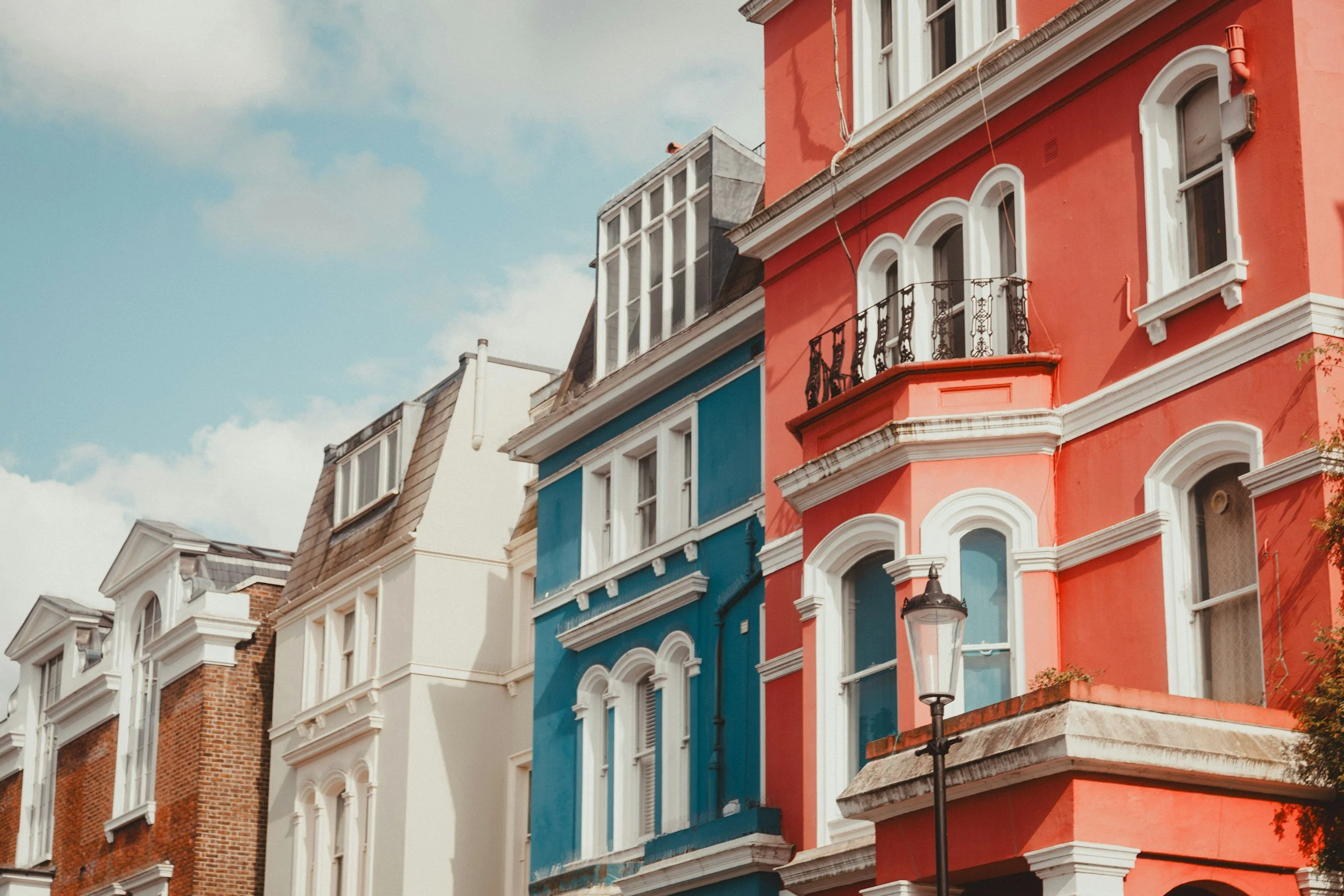
One of the strangest things about walking through Notting Hill for the first time is realising how similar everything looks.
The houses line up almost perfectly.
Same:
white façades
black railings
tall windows
pastel doors
curved terraces
and matching architectural details repeating street after street.
And honestly?
At first it almost feels artificial.
Like part of a film set designed to look “typically London.”
But the reason so much of Notting Hill looks visually consistent actually comes from:
Victorian urban planning,
19th-century wealth,
strict architectural rules,
and the way London expanded during one of the biggest building booms in British history.
Because unlike many modern cities that grew in scattered styles over centuries, large parts of west London were developed: all at once.
And that’s why entire neighbourhoods like Notting Hill still feel so visually unified today.
Notting Hill Wasn’t Always Wealthy
This surprises a lot of people.
Today, Notting Hill is associated with:
expensive homes
colourful streets
celebrities
cafés
luxury London life.
But historically?
It wasn’t always like that.
During the early 19th century, much of the area was still semi-rural land outside central London.
The transformation began during London’s huge expansion period in the:
1820s–1860s.
As London’s population exploded, developers began building large residential districts rapidly across west London. (british-history.ac.uk)
And instead of building random individual houses, they often designed:
entire terraces at once.
Why Entire Streets Were Built Together
This is the key reason so many Notting Hill streets look visually consistent.
Victorian developers didn’t usually sell empty plots to hundreds of different architects individually.
Instead:
large landowners leased huge areas to builders
builders designed entire terraces together
and rows of houses were constructed as one continuous project.
Meaning:
one architect or developer often controlled the visual design for an entire street.
That’s why you see:
matching windows
identical rooflines
repeating columns
consistent balconies
uniform façades.
And honestly?
That visual repetition became part of London’s identity itself.
The Famous White Stucco Houses
One of Notting Hill’s most recognisable features is:
white stucco architecture. Stucco is a plaster-like material used to create smooth decorative exterior finishes.
During the Regency and Victorian periods, white stucco terraces became fashionable because they gave homes:
elegance
symmetry
and a grand classical appearance.
Large parts of:
Notting Hill
Kensington
Chelsea
Bayswater
still feature these terraces today.
And because entire streets were built together, the uniform white appearance survived for generations.
But What About the Colourful Houses?
Ironically, the famous colourful Notting Hill houses came later.
Originally, many terraces were much more visually restrained.
Over time:
owners painted doors different colours
pastel shades became fashionable
creative residents personalised homes
and the neighbourhood slowly evolved visually.
Social media then amplified this massively.
Today, streets like:
Lancaster Road
Hillgate Place
Portobello Road side streets
became internationally famous online for colourful façades and pastel houses.
The Architecture Was Designed To Look Elegant From the Street
Victorian London architecture often focused heavily on:
uniformity.
Developers wanted streets to feel:
organised
wealthy
harmonious
impressive.
This was especially important in west London developments targeting middle- and upper-class residents.
And honestly?
The consistency was intentional.
Long terraces created:
visual rhythm
prestige
and a sense of order.
The goal wasn’t individuality.
It was:
collective elegance.
Strict Planning Rules Help Preserve the Look Today
A huge reason Notting Hill still looks visually consistent is because London protects many of these areas heavily.
Large parts of Notting Hill fall under:
conservation area protections.
This means:
major exterior alterations are restricted
historic character must often be preserved
certain architectural features cannot easily be removed.
And honestly?
Without those protections, the area would probably look completely different today.
London’s Terraced Housing System Changed the Entire City
The terraced-house style seen in Notting Hill became one of London’s defining urban designs.
Instead of:
detached suburban houses
developers created:
long connected terraces.
This allowed:
efficient land use
faster construction
visual consistency
and higher-density housing for a growing population.
And over time, those terraces became one of the most recognisable visual symbols of London itself.
Films & Social Media Made Notting Hill Even More Famous
Of course:
the movie Notting Hill helped massively.
The area became globally associated with:
romantic London imagery
colourful streets
charming cafés
and beautiful townhouses.
Instagram later amplified this even more.
Now people travel specifically to:
photograph pastel houses
walk Portobello Road
visit famous blue doors
or simply experience “that London feeling.”
But Notting Hill Also Had a Much Harder Past
This is important context people often miss.
By the mid-20th century, parts of Notting Hill had become:
overcrowded
poorly maintained
economically struggling.
Multiple families were often living inside subdivided townhouses.
The area’s later transformation into one of London’s wealthiest neighbourhoods happened gradually over decades through:
redevelopment
rising property values
cultural popularity
and gentrification.
And honestly?
That contrast between historic architecture and changing social history is part of what makes the area fascinating.
Why Walking Around Notting Hill Feels So Different From Other Parts of London
The visual consistency changes how the neighbourhood feels psychologically.
Because the matching terraces create:
calmness
rhythm
openness
and aesthetic balance.
Combined with:
tree-lined streets
cafés
pastel colours
independent shops
and quieter roads,
the area feels:
softer and more cinematic than much of central London.
The Most Famous Streets for Architecture & Photos
Some of the most photographed streets include:
Lancaster Road
Hillgate Place
Westbourne Park Road
Elgin Crescent
Colville Terrace.
And honestly?
Early morning is still the best time to explore before crowds arrive.
How To Explore Notting Hill Properly
Best nearby stations:
Notting Hill Gate
Ladbroke Grove
Westbourne Park.
And honestly?
The best approach is simply:
wander slowly without a strict route.
Because many of the nicest streets are the quieter residential ones away from Portobello crowds.
Things Visitors Often Don’t Realise
❗ Many Houses Are Extremely Expensive
Some terraces now sell for:
millions of pounds.
❗ Most Streets Are Residential
People actually live there so respectful photography matters.
❗ The Area Is Bigger Than People Expect
Notting Hill extends far beyond Portobello Road itself.
FINAL ANSWER
So many houses around Notting Hill look the same because large parts of the neighbourhood were planned and built together during London’s massive 19th-century expansion.
The consistency wasn’t accidental.
It was designed to create:
elegance
prestige
harmony
and architectural identity.
And honestly?
That carefully repeated design is part of why walking around Notting Hill still feels so different from almost anywhere else in London today.
Because the neighbourhood doesn’t just look beautiful.
It feels visually coherent in a way modern cities rarely do anymore.