Why Do London's Famous Red Phone Boxes Still Exist?
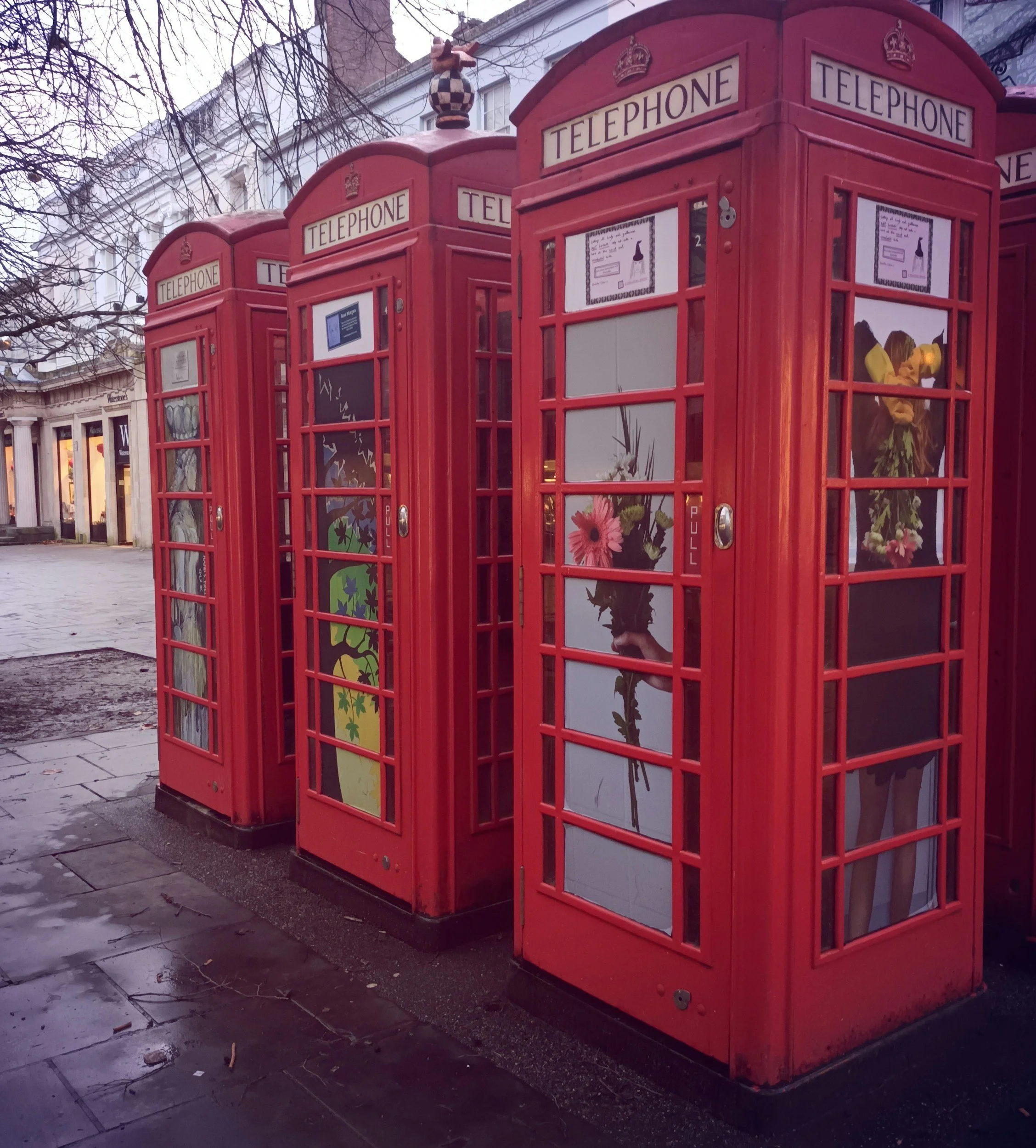
Few symbols are more closely associated with London than the red telephone box.
Alongside Big Ben, black cabs and red double-decker buses, it has become one of the images people instantly recognise around the world.
You'll find them on postcards.
You'll see them in films.
Tourists regularly queue to take photographs beside them.
Yet there is one obvious question.
Why do London's famous red phone boxes still exist?
After all, almost everyone carries a mobile phone. Public payphones have largely disappeared from many countries, and few people today would genuinely need a telephone box to make a call.
So why are they still standing across London?
The answer has less to do with technology and more to do with history, design, tourism and British identity.
The Story Begins Nearly 100 Years Ago
The most famous London telephone box is known as the K6.
It was designed in 1935 by the renowned British architect Sir Giles Gilbert Scott.
If the name sounds familiar, that's because Scott was also involved in several other famous British landmarks, including Liverpool Cathedral and the iconic Battersea Power Station.
The K6 was commissioned to mark the Silver Jubilee of King George V and was intended to create a standard telephone box design that could be used across Britain.
It quickly became one of the most recognisable pieces of street furniture in the country.
Why Are They Red?
The answer is surprisingly practical.
The bright red colour made telephone boxes easy to spot.
In busy streets, poor weather and crowded urban environments, visibility mattered.
The striking colour helped people locate a public telephone quickly.
Over time, the colour itself became part of the design's identity.
Today, it's difficult to imagine them being any other colour.
They Became a National Icon
Most street furniture serves a practical purpose.
Red phone boxes became something more.
They evolved into symbols of Britain itself.
Just as New York has yellow taxis and Paris has its cafés, London developed a collection of instantly recognisable visual icons.
The red telephone box became one of them.
Its popularity grew through:
Films
Television
Advertising
Tourism campaigns
Postcards
Souvenirs
Even people who have never visited Britain often recognise it immediately.
Most People Don't Use Them for Phone Calls
This is the part many visitors find surprising.
Very few people use traditional public phone boxes for their original purpose today.
Mobile phones transformed communication.
The need for public payphones declined dramatically during the late twentieth and early twenty-first centuries.
Many telephone boxes now see little or no telephone use.
So why not remove them entirely?
Because Many Are Protected
Some of Britain's historic telephone boxes have been granted listed status.
This means they are recognised as structures of architectural or historical significance.
Removing them is not as straightforward as removing an ordinary piece of street furniture.
The most historically important examples are protected because they are considered part of Britain's heritage.
In other words, they are valued not because people need them, but because they represent an important part of the country's story.
Tourists Love Them
If you visit Westminster, Covent Garden or the area around St Paul's Cathedral, you'll quickly notice something.
People constantly stop to photograph red phone boxes.
In some locations, they attract almost as much attention as nearby landmarks.
Visitors use them as:
Photo opportunities
Meeting points
Visual symbols of London
Their popularity with tourists gives them a value that goes far beyond their original purpose.
Even when they aren't functioning as telephones, they remain useful as part of London's identity.
Some Have Found New Purposes
One reason telephone boxes have survived is that many have been reinvented.
Across Britain, old phone boxes have been transformed into:
Mini libraries
Defibrillator stations
Community noticeboards
Art installations
Coffee kiosks
Small retail spaces
Rather than removing them, communities often find creative ways to reuse them.
It's a uniquely British solution.
Keep the historic structure while giving it a modern purpose.
Not Every Phone Box Is Historic
It's worth noting that not every red telephone box in London is a protected historic landmark.
Some have been removed over the years.
Others have fallen into disrepair.
A few survive primarily because of their location in tourist-heavy areas.
The famous examples visitors photograph are often the ones that have been carefully maintained because of their cultural significance.
The Phone Box and British Nostalgia
Part of the appeal comes from nostalgia.
The red telephone box represents a different era.
A time before smartphones, social media and constant internet access.
For older generations, it evokes memories of everyday life in Britain during the twentieth century.
For younger visitors, it offers a glimpse into a world that feels increasingly distant.
That nostalgia helps explain why people continue to feel affection for something they rarely use.
Where Can You See London's Most Famous Phone Boxes?
Some of the most photographed examples can be found near:
Westminster
Particularly around Parliament Square and Westminster Bridge.
Trafalgar Square
One of the busiest tourist areas in London.
Covent Garden
Popular with visitors exploring central London.
St Paul's Cathedral
Where historic architecture provides a fitting backdrop.
Tower Bridge
Another favourite location for photographs.
You'll often see tourists patiently waiting for their turn to take a picture.
Are They Likely to Disappear?
Probably not.
At least not entirely.
The number of functioning public payphones will likely continue to decline as technology evolves.
However, the most famous red telephone boxes have effectively become cultural landmarks.
Their value today isn't primarily practical.
It's symbolic.
They're part of the visual identity of London and Britain.
Removing them would be a little like removing red buses or black cabs.
Possible in theory.
Unpopular in practice.
More Than Just a Phone Box
The survival of London's red telephone boxes tells an interesting story about the city.
Not everything survives because it remains useful.
Sometimes things survive because they become meaningful.
The red phone box began as a piece of communication technology.
It evolved into a design icon.
Then a tourist attraction.
And finally a small but important piece of British heritage.
Few objects make that journey.
Final Thoughts
London's famous red phone boxes still exist because they represent far more than telephones.
They tell a story about design, history, culture and identity.
While mobile phones may have replaced their original function, they continue to play a role in the city's landscape.
They remind visitors of London's past while helping define how the city is seen around the world today.
And that's why, nearly a century after they first appeared, people still stop to photograph them.
Not because they need to make a call.
But because they have become one of the most recognisable symbols of London itself.
Looking for More London History and Culture Guides?
From hidden stories and iconic landmarks to curious traditions and everyday London mysteries, discover more on LondonYaar.com. And follow @rohan.londonyaar for more ways to explore the city like a local.