Why Buckingham Palace Became the Most Famous House in Britain
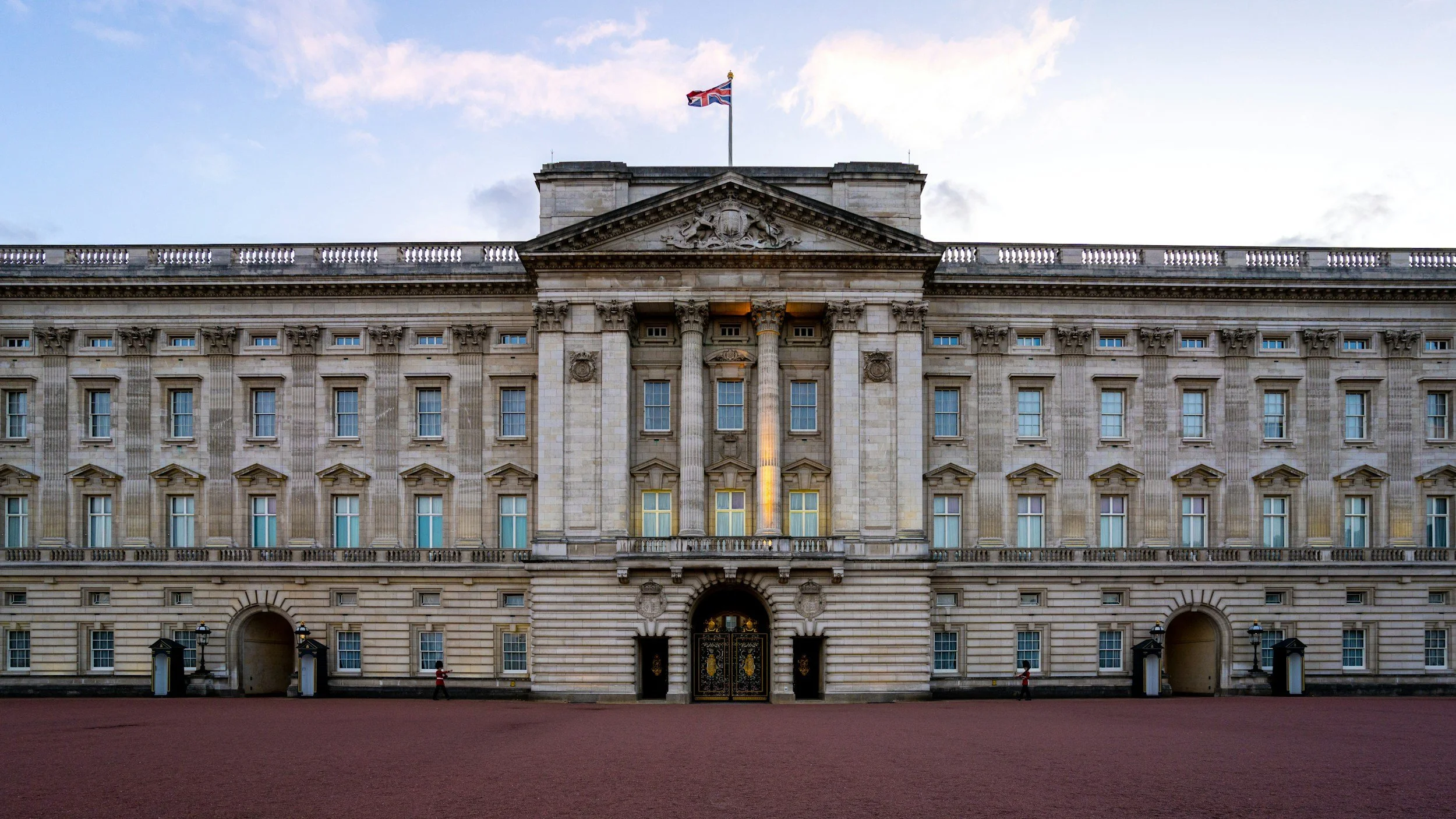
Ask someone to name a London landmark and there's a good chance they'll say Buckingham Palace.
It's one of the most photographed buildings in the world.
Millions of people visit it every year.
It's appeared in films, television broadcasts, newspapers and history books for generations.
And whenever something major happens involving the Royal Family, cameras from around the world seem to point in its direction.
But here's something many people don't realise.
Buckingham Palace wasn't originally built as a palace.
It wasn't designed to become the centre of royal life.
And the famous building we recognise today has changed far more than most visitors realise.
So how did it become the most famous house in Britain?
The answer is a story involving kings, queens, architecture, war and more than 300 years of London history.
It Didn't Start as a Palace
The story begins in 1703.
What we now know as Buckingham Palace was originally built as a large townhouse for the Duke of Buckingham.
At the time, it was known as Buckingham House.
Although impressive, it was simply one of several grand aristocratic homes in London.
Nobody could have predicted that it would eventually become one of the most recognisable buildings on Earth.
King George III Bought It for His Family
The next chapter came in 1761.
King George III purchased Buckingham House for his wife, Queen Charlotte.
It became known as the Queen's House and served as a private family residence.
Several of the couple's children were born there.
At this stage, however, it still wasn't the official home of the British monarch.
That role belonged elsewhere.
Buckingham House was comfortable and practical rather than ceremonial.
The King Who Wanted Something Grander
Everything changed during the reign of King George IV.
He believed Britain needed a royal residence that reflected the country's growing influence and prestige.
To achieve that, architect John Nash was commissioned to dramatically redesign and expand Buckingham House.
The project transformed the building into a much larger and more impressive royal residence.
Although George IV died before seeing the final result, his ambition laid the foundations for the palace we know today.
Queen Victoria Made It Famous
If one person turned Buckingham Palace into a global icon, it was Queen Victoria.
When Victoria became queen in 1837, she chose Buckingham Palace as her official London residence.
She became the first monarch to live there.
That decision changed everything.
From that point onwards, Buckingham Palace became the centre of royal life in Britain.
State occasions, royal ceremonies and official events increasingly revolved around the palace.
The connection between Buckingham Palace and the monarchy that exists today largely began with Victoria.
The Palace Most People Photograph Isn't the Original One
Here's a detail many visitors never realise.
The famous front façade facing the Victoria Memorial isn't the original appearance of Buckingham Palace.
The eastern front, which most people photograph today, was redesigned and refaced in the early 20th century during the reign of King George V.
In other words, the image recognised around the world is actually newer than many people assume.
The palace has evolved repeatedly over the centuries, reflecting changing tastes and royal priorities.
Why the Balcony Became So Important
Even people who have never visited London usually recognise one feature of Buckingham Palace.
The balcony.
Over the years it has become the setting for some of Britain's most famous public moments.
Royal weddings.
Coronation celebrations.
Jubilees.
Victory commemorations.
Whenever the Royal Family gathers on the balcony, millions of people watch around the world.
It's one of the reasons Buckingham Palace became more than just a residence.
It became a national symbol.
Where Britain Celebrates
One reason Buckingham Palace remains so important is that it acts as a gathering place for the nation.
During major royal events, crowds fill The Mall, gather around the Victoria Memorial and stretch through St James's Park.
When jubilees are celebrated, when royal weddings take place or when significant national moments occur, Buckingham Palace often becomes the focal point.
For many people, it represents continuity.
A place where generations have witnessed history unfold.
The Changing of the Guard
For many visitors, their first Buckingham Palace experience is the Changing of the Guard.
The ceremony involves soldiers in their famous red tunics and bearskin hats exchanging duties in a tradition that dates back centuries.
The spectacle attracts thousands of spectators.
But what many visitors don't realise is that the ceremony is not simply a tourist attraction.
The guards are active soldiers carrying out a genuine military duty.
That blend of ceremony and practicality is part of what makes the experience so uniquely British.
The Best View Isn't From the Gates
Most tourists stand directly outside Buckingham Palace.
Ironically, that's not where you'll find the best view.
Walk through St James's Park and head towards the Blue Bridge.
From there you'll see the palace framed by trees, water and one of London's most beautiful park landscapes.
It's a view many photographers prefer.
Yet countless visitors never discover it because they're focused on the palace gates.
It's one of those small London details that makes a big difference.
It Survived War
Buckingham Palace isn't simply associated with celebrations.
It has also witnessed some of Britain's most difficult moments.
During the Second World War, the palace was bombed multiple times during the Blitz.
King George VI and Queen Elizabeth remained in London despite the danger.
After one bombing, Queen Elizabeth famously remarked that she was glad the palace had been hit because she felt she could now "look the East End in the face."
The palace became a symbol of resilience during wartime.
Its survival strengthened its connection with the public.
What Happens Inside?
Most people only ever see Buckingham Palace from the outside.
Behind the gates lies an extraordinary building containing 775 rooms.
These include:
State Rooms
Grand staircases
Historic artworks
Reception rooms
Offices
Private apartments
During parts of the summer, visitors can tour selected State Rooms and see areas normally used for official ceremonies.
It's one of the few opportunities to step inside a working royal palace.
Why Buckingham Palace Became Famous Around the World
There are older palaces.
There are larger palaces.
There are arguably more extravagant palaces.
Yet Buckingham Palace remains one of the most recognised buildings anywhere on Earth.
Why?
Because for nearly two centuries it has served as the public face of the British monarchy.
Every major royal story seems to lead back to Buckingham Palace.
Whether it's a wedding, a coronation, a jubilee or a state visit, the palace often becomes the backdrop.
As Britain's influence spread around the world, images of Buckingham Palace travelled with it.
Over time, the building became inseparable from the idea of modern Britain itself.
Visit Early or Visit Late
If you arrive in the middle of a summer afternoon, you'll likely find crowds, tour groups and busy pavements.
Visit early in the morning or close to sunset and the atmosphere feels completely different.
The crowds thin out.
The parks become quieter.
The palace feels less like a tourist attraction and more like part of the city.
It's one of the easiest ways to experience a different side of one of London's most famous landmarks.
Final Thoughts
Buckingham Palace is far more than a royal residence.
It's a symbol of the monarchy.
A setting for historic events.
A working building at the heart of British public life.
And perhaps most importantly, it's a place where generations have watched history happen.
From its beginnings as Buckingham House in 1703 to its role as the backdrop for modern royal events, the palace has continually evolved alongside Britain itself.
That's the real reason Buckingham Palace became so famous.
Not simply because kings and queens lived there.
But because for nearly 200 years it has been the stage on which some of the nation's biggest moments have played out.