What Makes Covent Garden Feel So Different From the Rest of London?
Ask ten people to describe London and you'll probably hear similar answers.
Busy.
Fast-paced.
Crowded.
Noisy.
And often in a hurry.
Yet there is one corner of central London that somehow feels different.
Step into Covent Garden and the atmosphere changes.
The traffic seems further away. People move more slowly. Street performers draw crowds. Historic buildings surround open public spaces. Visitors linger rather than rush.
Despite sitting in the heart of one of the world's busiest cities, Covent Garden often feels surprisingly relaxed.
So what makes it different?
Why does this small part of London leave such a lasting impression on visitors and locals alike?
The answer lies in a combination of history, design, culture and a character that has evolved over centuries.
It Was Designed for People, Not Cars
One of the first things visitors notice is that Covent Garden feels more walkable than many other parts of central London.
That's because much of the area prioritises people rather than traffic.
The famous Piazza and surrounding streets encourage wandering, browsing and exploring on foot.
Unlike some areas where traffic dominates the experience, Covent Garden invites people to slow down.
That simple difference changes the atmosphere dramatically.
The Piazza Creates a Natural Gathering Space
At the heart of Covent Garden is the Piazza.
Inspired by Italian public squares, it was created in the seventeenth century and remains one of London's most successful public spaces.
People naturally gather here.
You'll see:
Families
Tourists
Shoppers
Office workers
Street performers
Photographers
Unlike many modern public spaces, it feels organic rather than planned.
The Piazza gives Covent Garden a sense of openness that's surprisingly rare in central London.
Street Performers Are Part of Its Identity
Few places in London embrace street performance quite like Covent Garden.
For decades, musicians, magicians, comedians and acrobats have entertained crowds here.
The tradition has become one of the area's defining features.
Visitors often arrive intending to spend a few minutes watching a performance.
An hour later, they're still there.
The performers help create an atmosphere that feels lively without being overwhelming.
Its History Still Feels Visible
Many London neighbourhoods have changed dramatically over time.
Covent Garden certainly has too.
Yet traces of its past remain everywhere.
The area began as a garden belonging to Westminster Abbey before evolving into one of London's most important fruit and vegetable markets.
For centuries, traders, buyers and sellers filled the streets around the market.
Although the wholesale market eventually moved to Nine Elms in the 1970s, the historic buildings remain.
Today, visitors walk through spaces that still reflect that earlier chapter of London's history.
It Balances Tourism and Character Better Than Most Places
Tourist areas often face a challenge.
The more popular they become, the more they risk losing their identity.
Covent Garden has managed this balancing act surprisingly well.
Yes, it attracts millions of visitors every year.
But it still retains:
Historic architecture
Independent businesses
Cultural institutions
Long-standing traditions
It feels like a real part of London rather than a destination built solely for tourists.
The Architecture Creates a Unique Atmosphere
Architecture plays a huge role in shaping how places feel.
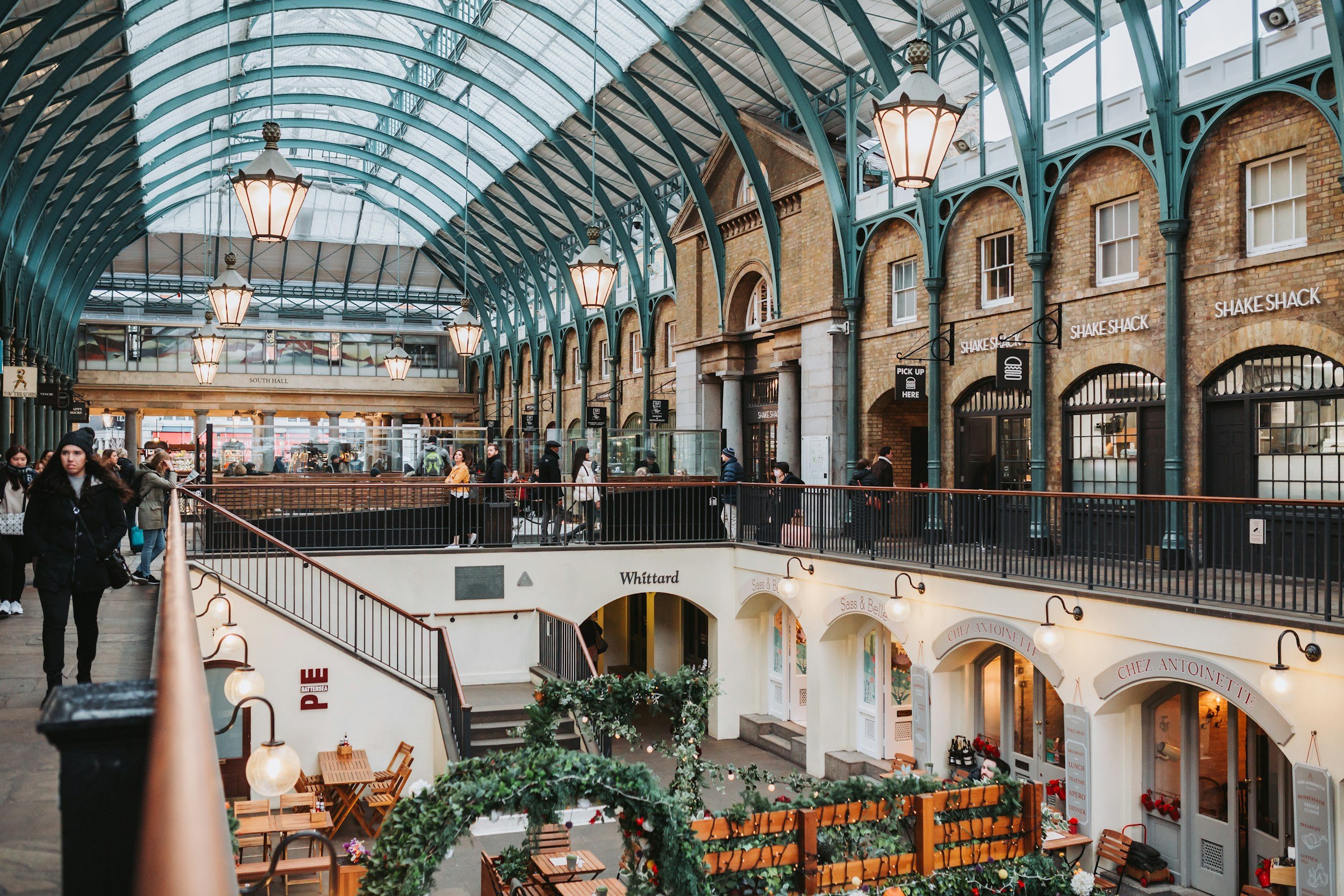
Covent Garden's streets are lined with elegant historic buildings that create a sense of continuity and character.
The covered market buildings, arcades and surrounding streets help define the neighbourhood's identity.
Unlike areas dominated by modern office towers, Covent Garden feels connected to its past.
That visual consistency contributes significantly to its charm.
It's One of London's Great People-Watching Spots
Some places are enjoyable simply because of the people they attract.
Covent Garden is one of them.
Spend half an hour sitting with a coffee and you'll encounter:
Tourists discovering London for the first time
Street performers entertaining crowds
Theatre-goers heading to nearby shows
Shoppers exploring side streets
Locals meeting friends after work
The variety creates a sense of energy that's difficult to replicate.
The Theatre District Is Right Next Door
Another reason Covent Garden feels different is its connection to London's West End.
Some of the city's most famous theatres sit within walking distance.
As performances begin and end, the area fills with theatre-goers.
This constant flow of people adds another layer of life and activity.
The arts have long been part of Covent Garden's identity.
That influence remains visible today.
There Are Surprises Around Every Corner
One of Covent Garden's strengths is that it rewards curiosity.
Beyond the main Piazza, visitors find:
Hidden courtyards
Historic pubs
Boutique shops
Quiet side streets
Small cafés
Unexpected architectural details
The area encourages exploration.
You don't need a detailed itinerary.
Simply wandering often leads to discoveries.
It Feels Like a Village Inside a City
This may be the best explanation of all.
Despite its central location, Covent Garden often feels smaller than it is.
The streets are compact.
The landmarks are close together.
The atmosphere feels local rather than overwhelming.
In a city of nearly nine million people, Covent Garden somehow creates a sense of intimacy.
That's rare.
And it's one of the reasons visitors remember it so fondly.
Why Visitors Keep Returning
Many London attractions are places people visit once.
Covent Garden is different.
People return repeatedly.
Not because they've missed something.
Because the experience changes depending on:
The season
The performers
The weather
The time of day
Every visit feels slightly different.
That's part of the appeal.
More Than a Shopping Destination
Some people mistakenly think Covent Garden is primarily a shopping area.
Shopping certainly plays a role.
But reducing Covent Garden to its shops misses the point.
Its appeal comes from the combination of:
History
Architecture
Public space
Culture
Entertainment
Atmosphere
Few London neighbourhoods bring those elements together so successfully.
Final Thoughts
Covent Garden feels different because it offers something increasingly rare in major cities.
It creates space for people to slow down.
The historic buildings, lively public spaces, street performers and centuries of history combine to create an atmosphere that feels distinct from the rest of central London.
It's busy without feeling stressful.
Touristy without feeling artificial.
Historic without feeling stuck in the past.
And that's why so many visitors find themselves returning again and again.
In a city famous for constant movement, Covent Garden remains one of the few places where simply spending time can be the attraction itself.
Looking for More London Neighbourhood Guides?
From historic districts and hidden streets to local favourites and cultural landmarks, discover more London stories on LondonYaar.com. And follow @rohan.londonyaar for more ways to explore the city like a local.