The Tiny City Hidden Inside London
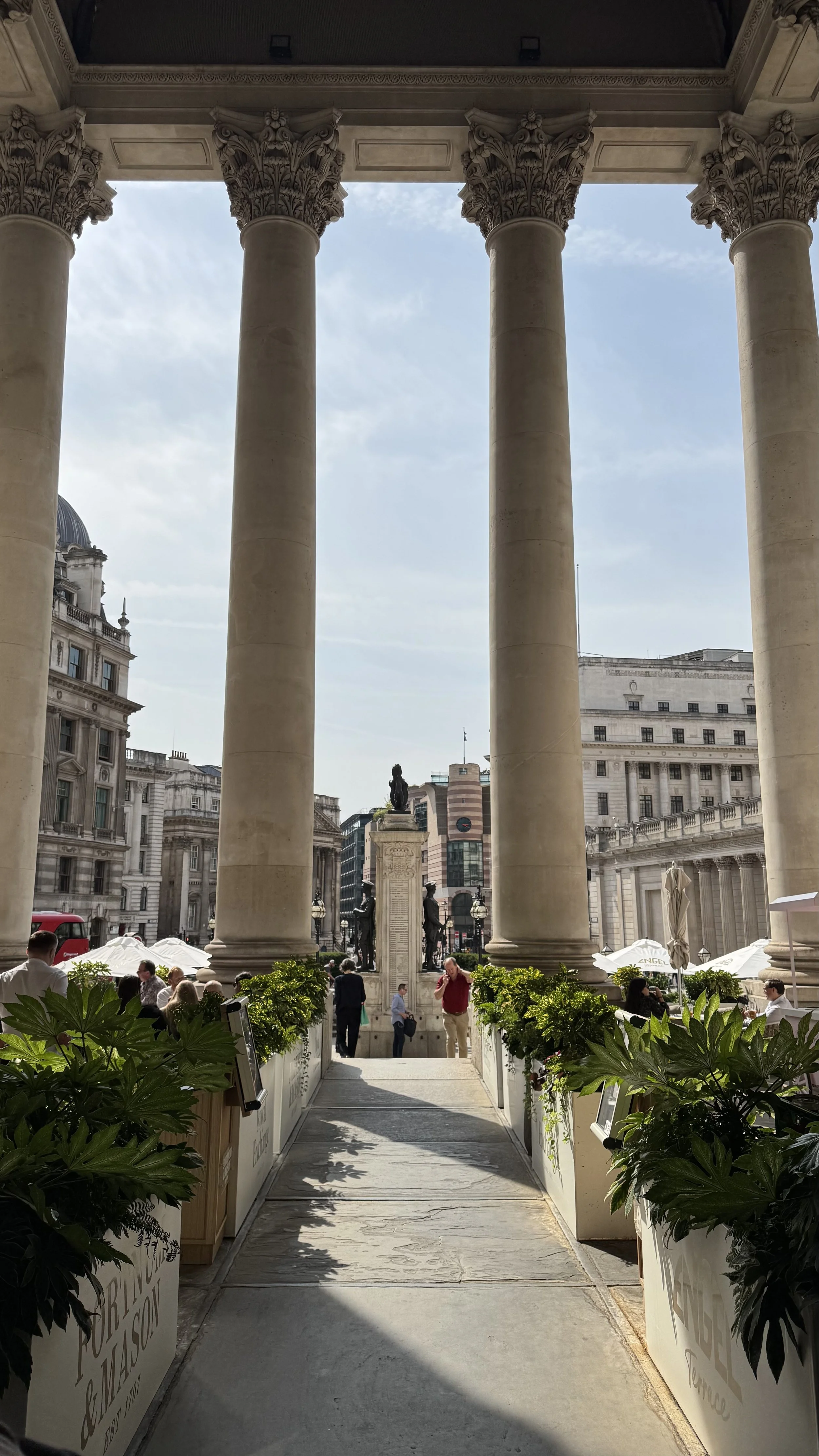
Most people think London is one city.
And technically, they're right.
But hidden within modern London is something many visitors—and even many Londoners—don't fully realise exists.
A tiny historic city with its own government.
Its own Lord Mayor.
Its own police force.
Its own centuries-old traditions.
And a history that stretches all the way back to Roman Britain.
It's called The City of London, and despite being at the heart of the capital, it operates differently from the rest of London in ways that continue to surprise people today.
Often nicknamed "The Square Mile", this tiny area is one of the most influential places on Earth. It's home to some of Britain's most important financial institutions, ancient landmarks and traditions that have survived for centuries.
So how can a city exist inside another city?
And why does it still matter today?
Let's explore one of London's most fascinating hidden stories.
Wait... Isn't London Already a City?
This is where things get confusing.
When most people say "London," they're referring to Greater London, the huge metropolitan area that stretches across 32 boroughs and covers more than 600 square miles.
That includes places such as:
Camden
Westminster
Kensington
Greenwich
Hackney
Richmond
and many more.
The City of London is something different.
It's a tiny historic area right in the middle of Greater London.
In fact, it covers just over one square mile, which is why it's commonly known as The Square Mile.
Despite its small size, it remains one of the most important financial centres in the world.
Where London Began
To understand the City of London, you need to go back nearly 2,000 years.
Around AD 47, the Romans established a settlement called Londinium on the banks of the River Thames.
This settlement grew into one of the most important towns in Roman Britain.
Over time, walls were built around the city for protection.
Many centuries later, the area inside those ancient boundaries evolved into what we now know as the City of London.
In other words:
The City of London isn't just part of London's history.
It is where London's story began.
Even today, traces of Roman London can still be found throughout the Square Mile.
Why Is It Called The Square Mile?
The nickname comes from its size.
The City of London covers approximately 1.12 square miles (about 2.9 square kilometres).
Compared with Greater London, it's tiny.
You could walk across much of it in less than 30 minutes.
Yet despite its small footprint, the City has an enormous influence on global finance, business and commerce.
It's a reminder that size isn't everything.
It Has Its Own Government
One of the most unusual things about the City of London is that it has its own local governing body.
Known as the City of London Corporation, it is one of the oldest continuously operating municipal institutions in the world.
The Corporation is responsible for services, planning, public spaces and many aspects of life within the Square Mile.
Its history stretches back centuries and predates many modern forms of local government.
This unique system is one reason the City of London feels distinct from the rest of the capital.
It Has a Lord Mayor But Not That One
Here's another detail that often confuses visitors.
London has two different mayors.
The first is the Mayor of London, who oversees Greater London.
The second is the Lord Mayor of the City of London, whose role relates specifically to the Square Mile.
The Lord Mayor's position dates back hundreds of years and is one of Britain's oldest civic offices.
The role focuses heavily on representing the City of London, particularly in relation to financial and business interests.
So when you hear about the Lord Mayor's Show, you're hearing about the City of London—not Greater London.
The City Even Has Its Own Police Force
Most of London is policed by the Metropolitan Police Service.
But the City of London has its own separate police force.
The City of London Police is responsible for policing the Square Mile.
Although much smaller than the Metropolitan Police, it plays an important role, particularly given the concentration of financial institutions within the area.
It's another example of how the City operates differently from the rest of London.
Few People Live There
This is perhaps the most surprising fact of all.
Despite being one of the busiest parts of London during the day, very few people actually live there.
The resident population is only around 8,000 to 10,000 people, depending on the latest estimates.
Yet on a typical weekday, hundreds of thousands of workers commute into the City.
The contrast is remarkable.
At night, many parts of the Square Mile become noticeably quieter.
By morning, the streets fill with workers once again.
One of the World's Financial Capitals
The City of London is famous for finance.
It's home to institutions such as:
The Bank of England
The London Stock Exchange
Lloyd's of London
Numerous international banks
Global financial firms
Together, these organisations help make the Square Mile one of the most influential financial districts in the world.
People often compare its importance to places such as Wall Street in New York.
Its decisions and activities can affect markets far beyond Britain.
Historic Landmarks Hidden Among Skyscrapers
One of the most fascinating aspects of the City is the contrast between old and new.
Modern skyscrapers stand alongside buildings that are centuries old.
Walk through the area and you'll encounter landmarks such as:
St Paul's Cathedral
Sir Christopher Wren's masterpiece remains one of London's most recognisable buildings.
The Monument
Built to commemorate the Great Fire of London in 1666.
Guildhall
The historic ceremonial and administrative centre of the City.
Roman Wall Remains
Fragments of Roman London can still be seen in several locations.
The City feels like a place where history and modernity coexist side by side.
Ancient Traditions Still Survive
One reason people find the City so fascinating is that many traditions have survived for centuries.
Events such as:
The Lord Mayor's Show
Ancient civic ceremonies
Historic guild traditions
continue to take place today.
The City of London often feels connected to a much older version of Britain.
These traditions help give the Square Mile its distinctive identity.
Why Most Visitors Don't Realise It Exists
The surprising thing is that many tourists walk through the City without realising they're somewhere unique.
They visit St Paul's Cathedral.
They photograph skyscrapers like the Gherkin.
They pass the Bank of England.
But they don't necessarily know they're inside a separate historic city with its own government and traditions.
The boundaries are subtle.
There's no giant sign announcing your arrival.
Yet once you understand the City's history, you start noticing its unique character everywhere.
Is It Really a City Inside a City?
In many ways, yes.
The City of London isn't independent.
It's still part of Greater London and the United Kingdom.
But it retains unique institutions, traditions and administrative structures that make it unlike anywhere else in the country.
That's why people often describe it as a city within a city.
It's a phrase that captures both its distinct identity and its extraordinary history.
Final Thoughts
London is full of hidden stories.
Few are more surprising than the existence of the City of London.
Covering just over a square mile, this tiny area sits at the heart of the capital while maintaining traditions and institutions that date back centuries.
It's where Roman London began.
It's one of the world's most important financial centres.
And it's a place where ancient history and modern skyscrapers stand side by side.
So next time you're exploring London, remember:
You might already be walking through a city hidden inside another city.
And chances are, most people around you don't even realise it.