The Hidden World of London's Canal Boats
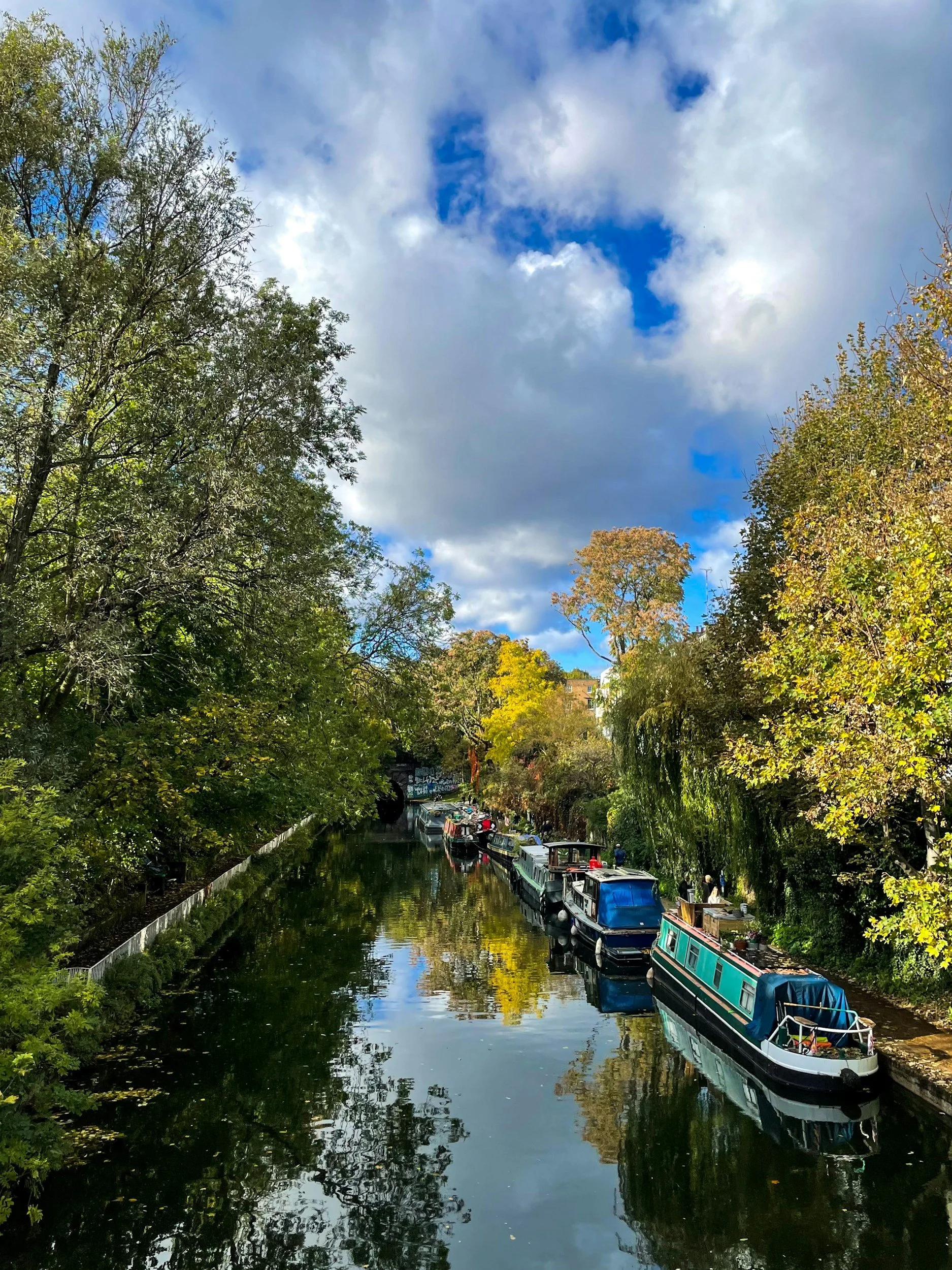
Walk along Regent's Canal on a sunny afternoon and you'll quickly notice them.
Colourful narrowboats moored beside the towpath.
Tiny floating gardens.
Bicycles tied to roofs.
Wood-burning stove chimneys.
People drinking coffee on their decks while central London rushes past only a few metres away.
For many visitors, London's canal boats are one of the city's biggest mysteries.
Do people actually live on them?
Can tourists ride one?
Can you stay overnight?
Can you rent one yourself?
Do the canals flood when it rains?
And what is life really like on the water in one of the world's busiest cities?
The answer is far more fascinating than most people realise.
Why Does London Have Canals?
Long before railways and motorways, canals were one of Britain's most important transport networks.
They carried:
Coal
Timber
Food
Building materials
Manufactured goods
across the country.
London's most famous canal, Regent's Canal, opened in 1820 and connected the Grand Junction Canal with the River Thames.
At the time, it was a working transport route.
Today, many of the warehouses that once lined the canal have become apartments, cafés, restaurants and creative workspaces.
The boats remain.
But the role of the waterways has changed dramatically.
What Are London's Canal Boats?
Most boats you'll see in London are known as narrowboats.
They were specifically designed to fit Britain's narrow canal locks, which is why they are long and relatively slim.
A typical narrowboat can include:
A bedroom
A kitchen
A bathroom
A living area
Storage space
A stove for heating
From the towpath they may look small.
Step inside and many feel more like compact cottages than boats.
Do People Really Live on Them?
Yes.
And that's often the biggest surprise for visitors.
Thousands of people live on boats across London's waterways.
Some have permanent moorings.
Others are known as continuous cruisers, meaning they move regularly around the canal network in accordance with navigation rules.
For many residents, boat life offers something increasingly rare in London:
A slower pace of life.
You'll find boat communities near:
Little Venice
King's Cross
Victoria Park
Broadway Market
Hackney
Many people know their neighbours far better than they would in a typical apartment building.
Why Are So Many Boats Covered in Plants?
One thing that surprises first-time visitors is how personal many boats look.
Some have rooftop gardens.
Others have flower boxes, herbs, small trees or colourful decorations.
Partly, it's practical.
Partly, it's personal expression.
But it's also become part of canal culture.
Walk along London's waterways and you'll see boats transformed into floating homes with their own unique character.
No two seem exactly alike.
Why Do People Choose Boat Life?
The reasons vary.
Some people love the sense of community.
Others enjoy living close to nature while remaining in the middle of London.
Many appreciate waking up beside water rather than traffic.
The lifestyle isn't for everyone.
But for those who enjoy it, it's difficult to imagine living any other way.
Is Living on a Canal Boat Actually Cheaper?
Many visitors assume that living on a narrowboat must be a cheap alternative to renting or buying property in London.
The reality is more complicated.
While some people do save money compared with traditional housing, boat ownership comes with costs including:
Licences
Insurance
Maintenance
Fuel
Repairs
Mooring fees (if you have a permanent mooring)
A narrowboat is both a home and a vehicle.
That means there are responsibilities that don't exist in a conventional flat.
For most boat owners, the appeal is the lifestyle rather than the savings.
Can Tourists Ride a Canal Boat?
Absolutely.
And it's one of London's most underrated experiences.
Several operators run trips along Regent's Canal.
Popular routes include:
Little Venice to Camden
Camden to Little Venice
Along the way you'll pass:
Regent's Park
London Zoo
Waterside neighbourhoods
Historic canal infrastructure
It's a side of London that many visitors never see.
Can You Rent a Canal Boat?
Yes.
There are two main options.
Canal Cruises
Perfect if you simply want to experience the waterways for an hour or two.
Self-Hire Narrowboats
Available for longer trips.
After basic instruction, visitors can navigate certain waterways themselves.
Many people hire boats for:
Weekend escapes
Family holidays
Short breaks
It's one of the most unusual ways to explore England.
Can You Stay Overnight on One?
You can.
And it's becoming increasingly popular.
Several companies offer canal boat accommodation in London and elsewhere on the network.
Some boats are traditional and simple.
Others are surprisingly luxurious.
For visitors looking for something different from a hotel room, spending a night on the water can be one of the most memorable experiences in the city.
Can You Buy a Canal Boat?
Yes.
People buy narrowboats for many reasons:
Full-time living
Weekend retreats
Holiday use
Retirement plans
Prices vary enormously depending on size, age, condition and location.
But buying the boat is only the beginning.
Owners must also consider ongoing running costs and maintenance.
For many, it's less like buying a house and more like adopting a lifestyle.
What Happens When It Rains?
One of the most common questions visitors ask is:
"Do the canals flood?"
Generally, London's canals are carefully managed and don't usually flood in the way rivers can.
Water levels are controlled through locks, weirs and other infrastructure managed by the Canal & River Trust.
However, periods of extreme weather can occasionally lead to:
Towpath flooding
Temporary navigation restrictions
Short-term closures
For most of the year, though, the waterways remain remarkably stable.
How Do Canal Boats Get Water and Electricity?
Unlike houses, boats don't remain permanently connected to utilities.
Depending on the setup, owners may use:
Water points along the canal network
Batteries
Solar panels
Generators
Shore power connections at some moorings
Boat life often involves a little more planning than conventional city living.
Where Are the Best Places to See Canal Boats?
Little Venice
Probably London's most famous canal neighbourhood.
Beautiful waterways, waterside cafés and plenty of narrowboats.
Camden Lock
One of the most lively stretches of Regent's Canal.
A fantastic place to watch boats passing through locks.
King's Cross
The waterways around Coal Drops Yard have been transformed in recent years and are now among London's most attractive canal-side areas.
Victoria Park
Popular with walkers, cyclists and boat dwellers alike.
Broadway Market
One of East London's favourite weekend destinations where cafés, markets and canal life come together.
What Most Visitors Don't Realise
The remarkable thing about London's canals is how disconnected they can feel from the city around them.
Walk along a towpath and you'll often hear birds rather than traffic.
You can spend half an hour beside the water and completely forget you're in one of the world's busiest capitals.
Then suddenly you'll emerge beside King's Cross, Camden or another busy part of London.
That contrast is part of what makes the canals so special.
Is Canal Life Really As Relaxing As It Looks?
Sometimes.
But not always.
Boat owners will quickly tell you that life on the water comes with challenges.
There are repairs.
Weather.
Limited space.
Maintenance.
And practical tasks that people living in houses rarely think about.
Yet many residents wouldn't swap it for anything.
The combination of community, independence and waterside living continues to attract people to London's canals year after year.
Final Thoughts
London's canal boats are much more than a picturesque backdrop for photographs.
They're homes.
Holiday accommodation.
Communities.
And a living reminder of the waterways that helped build the city.
Whether you're taking a boat trip from Little Venice to Camden, staying overnight on a narrowboat or simply enjoying a walk along Regent's Canal, you'll discover a side of London that feels very different from the landmarks and crowds.
And that's exactly what makes it worth exploring.
Because hidden beside some of London's busiest streets is an entirely different world—one that moves at the pace of the water.