The Difference Between the Tube, Elizabeth Line, Overground and DLR: A Simple Guide for Anyone Visiting London
You've just landed in London.
You open Google Maps, type in your destination and suddenly you're faced with four different train options.
Tube.
Elizabeth line.
London Overground.
DLR.
At first glance, they all seem to do the same thing. They all appear on the Tube map, they all accept contactless payment and Oyster cards, and they all take you across London.
So... what's the difference?
It's one of the most common questions first-time visitors ask, and honestly, even some Londoners occasionally mix them up. The good news is that understanding the basics takes only a few minutes and once you do, getting around London becomes much easier.
Whether you're visiting for a weekend or planning a longer stay, here's everything you need to know about the Tube, the Elizabeth line, the London Overground and the DLR.
Why London Has So Many Different Train Networks
Unlike many cities that built one transport system, London's railway network has developed over more than 160 years.
Different lines were built at different times, by different companies, and for different purposes. Over the years, many of these systems became part of Transport for London (TfL), which is why they now appear together on the famous Tube map.
Although they work together as one transport network, each system has its own purpose, trains and style of travel.
Once you understand what each one is designed for, choosing the right option becomes surprisingly simple.
The London Underground (The Tube)
When people say they're "getting the Tube," they're talking about the London Underground.
It's London's oldest and most famous transport system and the oldest underground railway in the world, dating back to 1863.
Today, the Tube has 11 lines connecting central London with suburbs across Greater London. It's usually the quickest way to travel between major tourist attractions, business districts and shopping areas.
You'll probably use the Tube if you're visiting places like:
Buckingham Palace
Westminster
Covent Garden
Oxford Circus
Camden Town
South Kensington
Notting Hill
King's Cross
The Tube is recognised by its iconic roundel logo and colourful network map.
Best for:
Sightseeing
Central London journeys
Fast city travel
Reaching major attractions
Things to know
During rush hour, trains can become extremely busy.
Some older stations have lots of stairs and long corridors.
Not every station has lifts, so travellers with heavy luggage may sometimes prefer another option.
The Elizabeth Line
The Elizabeth line is London's newest railway and has transformed how people travel across the city.
Although many visitors think it's simply another Tube line, it actually isn't part of the Underground.
Instead, it's a modern high-capacity railway that runs through central London before continuing far beyond it.
The trains are noticeably larger than Tube trains, air-conditioned, quieter and designed for longer journeys.
One reason visitors love the Elizabeth line is how quickly it connects central London with Heathrow Airport, Paddington, Bond Street, Tottenham Court Road, Farringdon, Liverpool Street and Canary Wharf.
If you're flying into Heathrow, this is often one of the easiest ways to reach central London without changing trains multiple times.
Best for:
Heathrow Airport
Fast cross-London journeys
Travelling with luggage
Comfortable longer trips
Many travellers are surprised by how spacious the trains feel compared with the Underground, making them a great choice if you have suitcases or simply want a more comfortable journey.
London Overground
The London Overground is exactly what its name suggests.
Unlike the Underground, most of its routes run above ground and mainly connect outer areas of London rather than travelling directly through the city centre.
Think of it as the network that links different neighbourhoods together.
Instead of heading into central London and back out again, the Overground often allows you to travel around the capital more efficiently.
It's particularly useful for visiting places such as:
Richmond
Hampstead Heath
Highbury & Islington
Shoreditch High Street
Gospel Oak
Stratford
Many locals rely on the Overground every day, but visitors often overlook it simply because they're unfamiliar with it.
If Google Maps recommends the Overground, don't ignore it it may actually be the quickest route.
Best for:
Exploring neighbourhoods
Travelling around outer London
Avoiding central London interchanges
Docklands Light Railway (DLR)
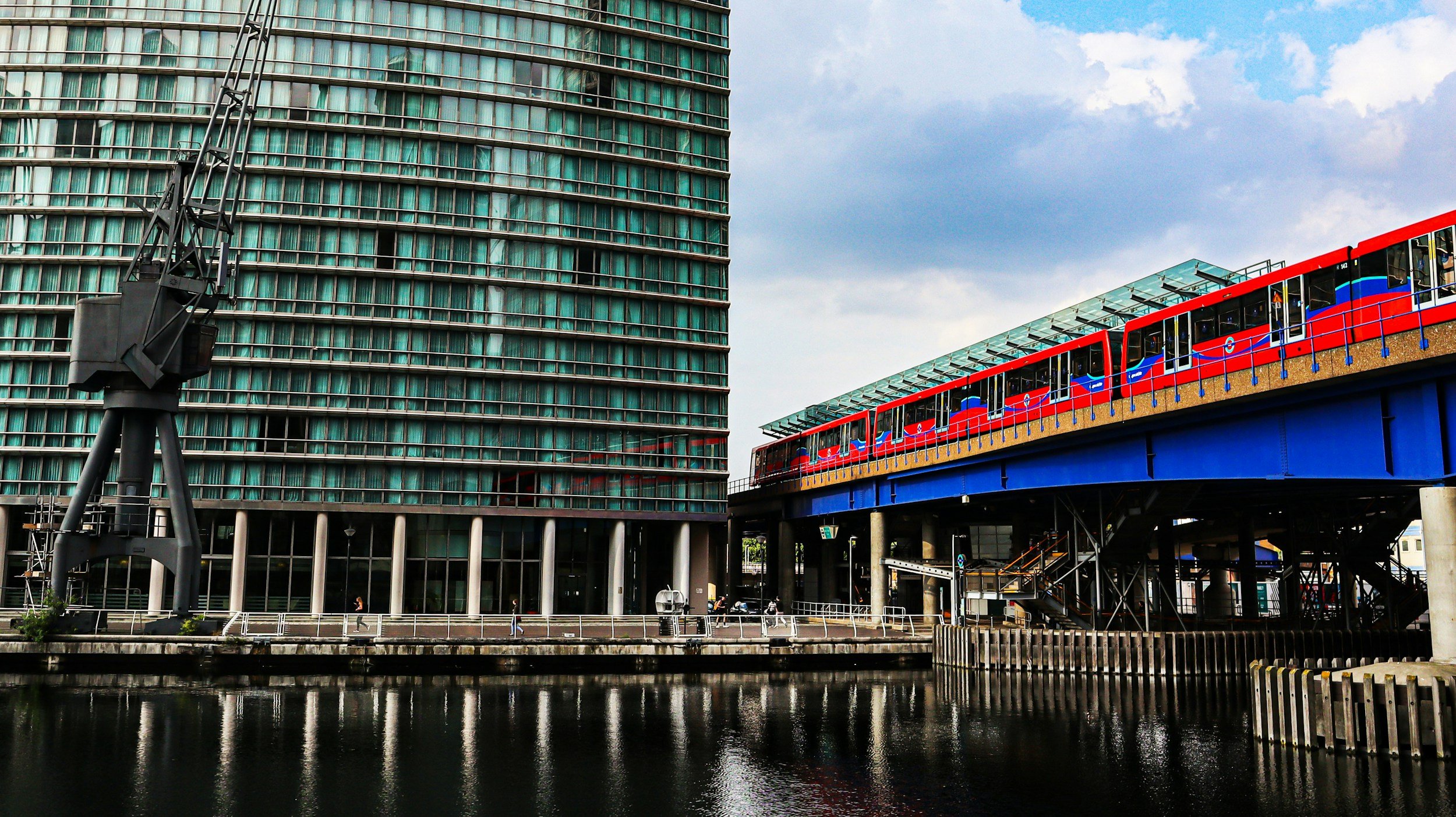
The DLR is probably London's most unique railway.
Unlike the other networks, the trains are fully automated.
That means there isn't a driver sitting at the front.
One of the best experiences is sitting in the very front seat and watching the tracks stretch out ahead. It's especially popular with children, but plenty of adults enjoy it too.
The DLR mainly serves East London, including:
Canary Wharf
Greenwich
Royal Docks
London City Airport
Stratford
ExCeL London
If you're visiting Greenwich to see the Royal Observatory or heading to Canary Wharf, there's a good chance you'll use the DLR.
The trains are generally smaller than those on the Elizabeth line but feel bright and modern.
Best for:
Greenwich
Canary Wharf
London City Airport
East London attractions
Which One Is Fastest?
There's no single winner because each network is designed for different journeys.
The Tube is often the fastest for travelling around central London because stations are close together.
The Elizabeth line is usually the quickest for longer journeys, particularly between Heathrow and central London or when crossing the city from west to east.
The Overground is ideal for travelling between neighbourhoods without passing through Zone 1.
The DLR is perfect for destinations in East London.
Instead of choosing based on the name, it's usually best to follow the route suggested by TfL's journey planner or Google Maps.
Do They All Accept Oyster Cards and Contactless Payment?
Yes.
This is one of the easiest parts of travelling in London.
You can use:
Contactless bank cards
Apple Pay
Google Pay
Oyster cards
Across the Tube, Elizabeth line (within the London fare zones), Overground and DLR, simply tap in at the start of your journey and tap out at the end where required.
TfL automatically calculates the correct fare and daily fare caps, so there's no need to buy separate tickets for most journeys.
Which One Should Tourists Use Most?
If you're spending a few days exploring London's biggest attractions, you'll probably use the Tube the most.
However, don't be surprised if your hotel is close to an Elizabeth line station or an Overground station instead.
In many cases, these services can be quicker, less crowded and more comfortable than taking the Underground.
For example:
Heathrow to Paddington? Take the Elizabeth line.
Westminster to Covent Garden? The Tube is usually easiest.
Canary Wharf to Greenwich? The DLR is often the best option.
Shoreditch to Hampstead Heath? The Overground can save time.
The best transport choice depends entirely on where you're going.
A Few Tips Before You Travel
Download the TfL Go app or use Google Maps to plan your journeys in real time.
Avoid rush hour (roughly 7:30–9:30 am and 5:00–7:00 pm on weekdays) if you can, especially if you're carrying luggage.
Stand on the right-hand side of escalators and let people walk past on the left a small piece of London etiquette that locals appreciate.
If you're travelling with large suitcases, check whether the Elizabeth line is an option. The trains are generally more spacious than most Tube services.
Finally, don't worry if your route includes more than one network. It's completely normal to switch between the Tube, Elizabeth line, Overground and DLR during a single journey, and the transfers are designed to be as seamless as possible.
Final Thoughts
London's transport network can look intimidating when you first see that colourful map.
But once you understand the role of each system, it all starts to make sense.
The Tube is the city's classic workhorse, taking millions of people across London every day.
The Elizabeth line offers fast, modern journeys across the capital and to Heathrow.
The London Overground connects neighbourhoods that the Underground doesn't always reach efficiently.
And the DLR quietly keeps East London moving with its driverless trains and fantastic views.
Rather than wondering which one is "better," think of them as different tools for different journeys. Together, they make London one of the easiest major cities in the world to explore without a car.
The next time Google Maps gives you a choice between the Tube, the Elizabeth line, the Overground or the DLR, you'll know exactly why and you'll feel a little more like a Londoner navigating the city with confidence.
Planning to Explore London?
Understanding the transport network is one of the best ways to save time, avoid unnecessary stress and see more of the city. For more practical London travel guides, local tips and hidden gems, keep exploring LondonYaar.com and follow @rohan.londonyaar for more London inspiration.