Leadenhall Market: The Beautiful Victorian Market Hidden Between London’s Skyscrapers
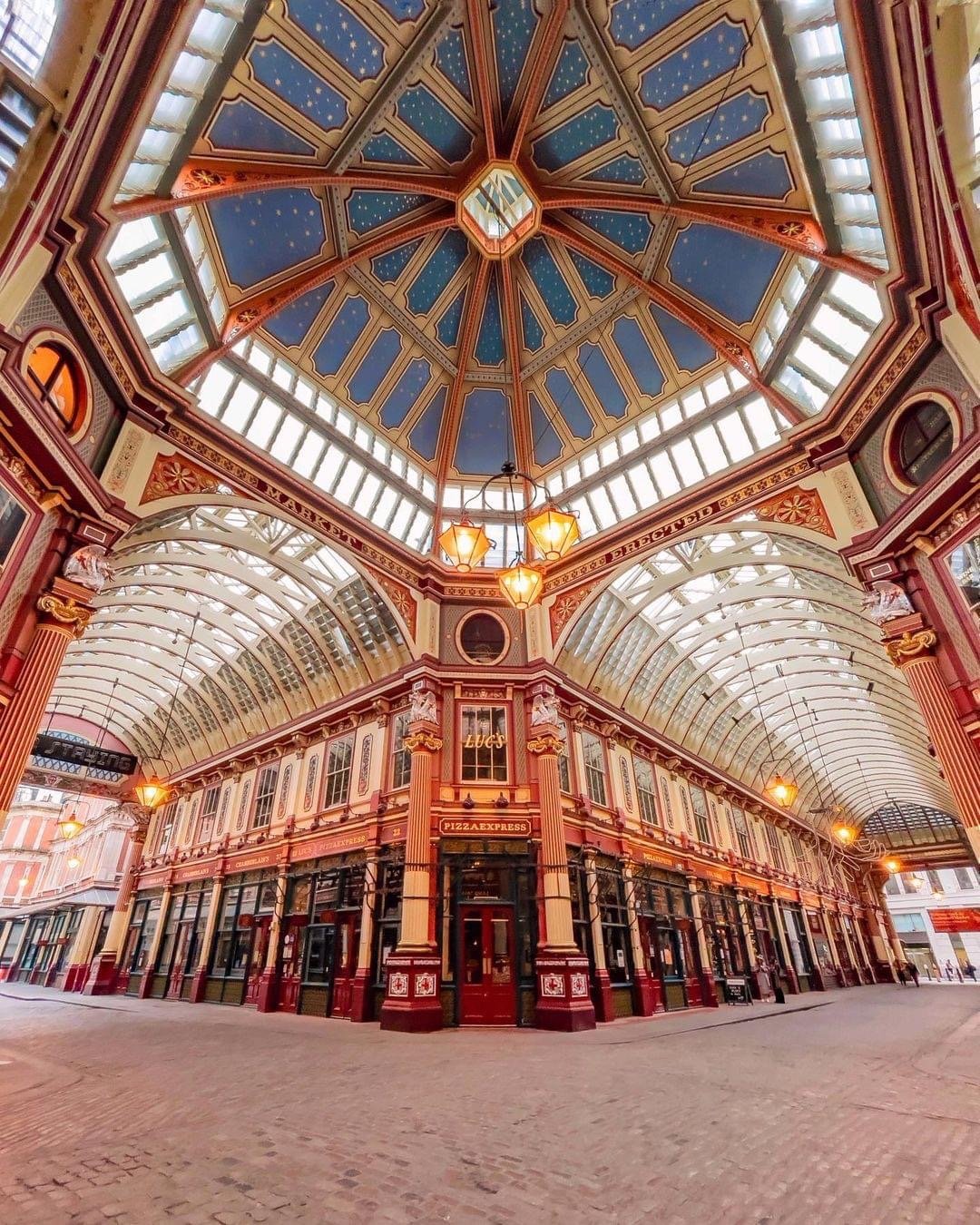
There are parts of London that feel like the city never fully moved on from the past.
Leadenhall Market is one of them.
Walk through the City of London surrounded by:
glass skyscrapers
suited office workers
financial buildings
modern corporate towers
and suddenly, hidden between them, you find:
ornate Victorian roofs
cobbled walkways
painted ceilings
old pubs
boutique shops
and one of the most atmospheric covered markets in the entire city.
And honestly?
The contrast feels surreal.
Because Leadenhall Market somehow survives inside one of the most modern financial districts in the world while still feeling deeply connected to medieval London.
But the story of the market goes much further back than most people realise.
Long before:
skyscrapers
stock traders
or modern London existed
this area was already a place of trade nearly 2,000 years ago.
What Is Leadenhall Market?
Leadenhall Market is a historic covered market located in:
📍 the City of London
near:
Bank
Monument
and Lime Street.
Today, the market is known for:
restaurants
pubs
cafés
boutique shops
architecture
and filming locations.
But historically, it was one of London’s major marketplaces for centuries.
And unlike many modern shopping spaces, Leadenhall Market still feels genuinely atmospheric rather than manufactured.
The Area Was Used by the Romans Nearly 2,000 Years Ago
This is the part many visitors completely miss.
The site around Leadenhall Market has been connected to commerce since Roman Londinium.
Archaeological discoveries in the area uncovered evidence of:
Roman buildings
roads
and market activity.
Because the City of London itself developed from Roman settlement patterns, this area naturally became an important trading point very early in London’s history.
Meaning:
people were buying and selling goods here long before medieval London even existed.
Medieval Leadenhall Was One of London’s Main Food Markets
By the medieval period, Leadenhall had become one of the city’s most important market areas.
Historically, the market specialised in:
meat
poultry
cheese
leather
wool
and other essential goods.
For centuries, Londoners came here for trade and supplies.
And because the City of London was rapidly growing through medieval commerce, Leadenhall became deeply connected to the economic life of the city itself.
Back then, markets weren’t:
tourist attractions.
They were essential infrastructure.
The Great Fire of London Changed the Area Too
Like huge parts of the City of London, the Leadenhall area was affected by:
The Great Fire of London in 1666.
Although parts of the market survived historically in various forms, the surrounding area changed dramatically during London’s rebuilding periods.
Over time, older medieval structures slowly disappeared or evolved as London modernised.
But the market’s importance remained.
The Famous Victorian Market You See Today Was Built in the 19th Century
The version of Leadenhall Market most people recognise today was redesigned in:
1881
by architect: Sir Horace Jones
And interestingly:
Horace Jones was also connected to the design of Tower Bridge.
The Victorian redesign transformed the market into the ornate covered structure people know today.
Features include:
painted roof structures
decorative arches
cobbled flooring
glass roofing
intricate metalwork
And honestly?
This is one of the reasons the market feels so cinematic.
Unlike modern shopping centres, Leadenhall Market was built during a time when even commercial spaces were designed with beauty and craftsmanship in mind.
Why Leadenhall Market Feels So Unique Today
Part of the magic comes from its location.
The market sits directly inside London’s financial district.
So outside the market you’ll find:
glass towers
insurance companies
office workers
modern architecture
But the second you enter:
the atmosphere changes completely.
It suddenly feels:
quieter
warmer
older
more intimate
And that contrast creates one of the strangest visual experiences in London.
Especially at:
early morning
golden hour
or rainy evenings
when the lights reflect across the cobbled walkways.
Leadenhall Market Has Become One of London’s Best After-Work Spots
Although tourists visit during the day, evenings are when the market feels most alive.
Especially on weekdays.
After office hours, the pubs and bars fill with people working around the City of London.
And because cars don’t dominate the central walkways, the atmosphere feels surprisingly social.
You’ll see:
outdoor drinks
conversations spilling into the alleys
people standing beneath Victorian arches
restaurants glowing at night.
It becomes one of the most atmospheric places in central London for evening drinks.
Harry Potter Fans Know It As Diagon Alley
One reason Leadenhall Market became internationally famous is because it appeared in:
Harry Potter and the Philosopher’s Stone.
The market was used as part of the filming inspiration/location for:
Diagon Alley.
Specifically:
Bull’s Head Passage
nearby storefront areas
were used during filming.
And honestly?
Once you know this, it becomes impossible not to see the resemblance.
The narrow passages, old architecture, and hidden feel genuinely look magical.
Why Leadenhall Market Is One of London’s Most Photographed Spots
The market photographs beautifully because of:
symmetry
lighting
colour
architecture
perspective lines
Especially:
early morning before crowds
Christmas season
rainy weather reflections
nighttime lighting.
Unlike many tourist spots, it still manages to feel atmospheric even after becoming famous online.
Christmas at Leadenhall Market Feels Completely Different
During Christmas, the market becomes one of the most visually beautiful places in London.
Expect:
giant decorations
festive lights
wreaths
Christmas trees
warm pub atmosphere
And because the Victorian architecture already feels theatrical, the decorations somehow suit the space perfectly.
This is one of the reasons Leadenhall becomes extremely popular during winter.
How To Visit Leadenhall Market
The easiest stations nearby are:
Bank
Monument
Liverpool Street
And honestly?
The best way to experience the market is simply by walking into it unexpectedly while exploring the City of London.
That surprise factor makes it even better.
Things Visitors Should Know
❗ Weekends Are Much Quieter
Because the City of London empties out compared to weekdays.
❗ Evenings Have Better Atmosphere
Especially after office hours.
❗ It’s Smaller Than Many People Expect
Leadenhall Market is atmospheric rather than enormous.
FINAL ANSWER
Leadenhall Market is much more than just a pretty London market.
It’s one of the rare places where:
Roman history
medieval trade
Victorian architecture
modern finance
and pop culture
all exist in the same space.
And honestly?
That layered feeling is what makes it unforgettable.
Because few places in London capture the city’s strange mix of:
old and new better than Leadenhall Market does.
A lot of London landmarks feel heavily tourist-focused now.
Leadenhall Market still feels lived in.
People still:
work nearby
drink there after office hours
pass through it daily
and use it as part of normal London life.
Which means it never feels completely frozen in time.
It feels like history still functioning inside a modern city.