15 Major London Attractions to See on Your First Trip: A Simple Beginner's Itinerary
If it is your first time in London, there is a very specific problem you will discover within about five minutes of opening Google Maps.
Everything looks close.
Big Ben is here.
The London Eye is there.
Buckingham Palace looks like it is just around the corner.
Tower Bridge doesn't seem that far away.
Then you actually start walking.
And suddenly your “quick walk” has turned into 40 minutes, you've crossed the Thames twice, your feet hurt and you're wondering why you booked three attractions on opposite sides of London for the same afternoon.
London is a big city, but fortunately, many of its most famous sights are concentrated in central areas.
That means you don't need to spend your first trip zig-zagging across the city.
You can group the major landmarks together, see plenty of them from the outside for free, and spend your money only on the attractions you genuinely want to enter.
This guide is designed around exactly that.
Here are 15 major London attractions and landmarks to see on your first visit, followed by a simple way to turn them into a realistic itinerary.
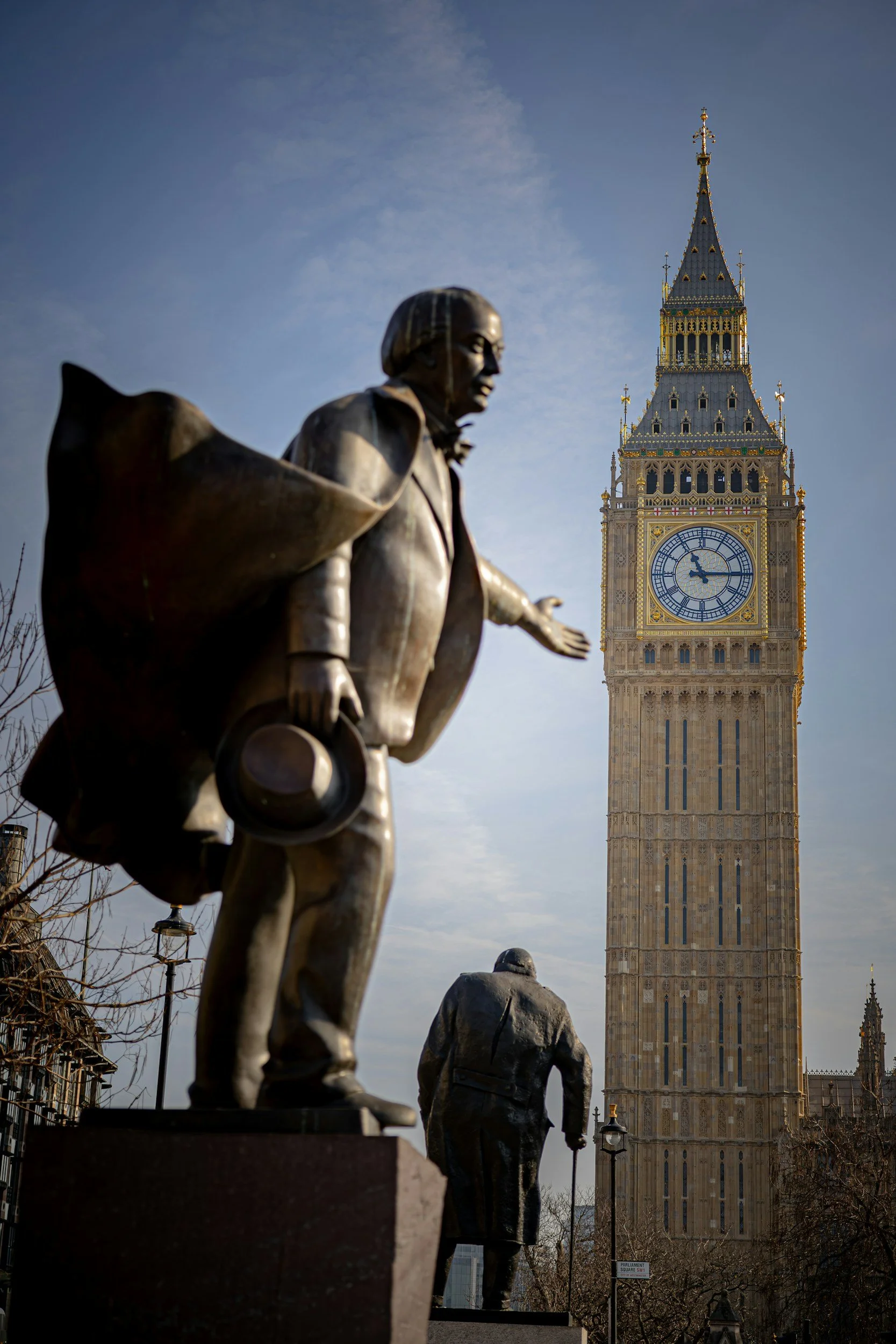
1. Big Ben and the Houses of Parliament
Start with the sight most people probably picture when they think of London.
Big Ben stands beside the Palace of Westminster on the north bank of the River Thames.
Technically, Big Ben is the name of the great bell inside the Elizabeth Tower, rather than the entire tower itself.
But for a first-time visitor, the important thing is simple:
You have to see it.
Walk across Westminster Bridge and you'll get one of the classic London views, with Big Ben and the Houses of Parliament rising directly beside the Thames.
You don't necessarily need to pay to appreciate this part of London.
Some of the best photographs are from the outside.
If you want to go inside, guided tours of Parliament and visits to Big Ben are available on selected dates, so check availability before building your itinerary around an interior visit. Visit London's current sightseeing route specifically recommends Westminster Bridge, Big Ben and the Houses of Parliament as part of a first-time London route.
Allow: 30–60 minutes from outside.
2. Westminster Abbey
From Big Ben, you are only a short walk from Westminster Abbey.
This is where the experience changes from “I've seen the famous building” to “I've stepped into London's history.”
Westminster Abbey has been the setting for coronations since 1066 and contains the tombs and memorials of numerous important figures from British history.
If you're interested in history, architecture or the British monarchy, this is one of the major attractions where paying for entry can make sense.
If you're trying to keep your trip inexpensive, however, you can simply admire the exterior and continue exploring Westminster.
Allow: 30 minutes outside or around 1.5–2 hours inside.
3. The London Eye
Now cross Westminster Bridge towards the South Bank.
You'll quickly see London Eye rising above the Thames.
This is one of those attractions where the experience isn't really about the structure itself.
It's about the view.
The London Eye reaches around 135 metres and gives you a slow panoramic view across central London. From the capsules, you can see landmarks including Big Ben, the Houses of Parliament, Buckingham Palace and The Shard. Current Visit London guidance says the actual rotation takes around 30 minutes, with the overall experience taking longer because of queues and boarding.
For a first visit, this can be a particularly useful attraction because you get to see London from above before exploring it on foot.
If you're watching your budget, though, you don't have to ride it.
The view from the South Bank itself is free.
Allow: Around 30 minutes for the ride, plus queueing.
4. Walk the South Bank
This isn't a ticketed attraction.
And that's exactly why it belongs in the itinerary.
After the London Eye, don't immediately jump on the Tube.
Walk.
The South Bank gives you one of the easiest introductions to central London, with the Thames on one side and a long sequence of restaurants, cultural venues, bridges and landmarks around you.
You can see Westminster, the London Eye, Millennium Bridge and parts of the City skyline from different points along the river.
It's also a useful place to stop for lunch.
Allow: 45 minutes to 1.5 hours depending on how slowly you walk.
5. Buckingham Palace
From Westminster, walk through St James's Park towards Buckingham Palace.
The palace is one of London's most recognisable royal landmarks and the official London residence of the King.
For many first-time visitors, the main experience is simply standing outside the gates and seeing the famous façade.
You can also check whether the Changing the Guard ceremony is taking place during your visit.
If you want to go inside, remember that Buckingham Palace's State Rooms are not open to visitors throughout the year.
For 2026, the summer opening runs from 9 July to 27 September, according to current Visit London information.
So don't automatically build an interior palace visit into your itinerary unless your dates match.
Allow: 30–45 minutes outside.
6. St James's Park
Don't treat St James's Park as something you need to rush through on the way to Buckingham Palace.
Take a proper walk.
The park gives you one of the easiest transitions between Buckingham Palace and Westminster, and it is also one of those places where you can slow down after several major attractions.
You don't need a ticket.
You don't need a booking.
And you don't need to spend an hour there.
Just walk through, take photographs and enjoy the fact that one of London's most famous royal landmarks is surrounded by a beautiful public park.
Allow: 20–40 minutes.
7. Trafalgar Square
From St James's Park, continue towards Trafalgar Square.
You'll recognise Nelson's Column almost immediately.
Trafalgar Square is more than just a photograph stop. It sits at the centre of several important parts of central London, with the National Gallery directly overlooking the square and Leicester Square, Covent Garden and Soho all within walking distance.
If you're building a first-time itinerary, this is a useful place to pause because you can easily change direction from here.
Allow: 20–30 minutes.
8. The National Gallery
If you're going to pay for only a few attractions on a budget-conscious first trip, consider whether a major free museum or gallery can replace another expensive ticket.
The National Gallery is one of the best examples.
Its permanent collection is free to visit, although special exhibitions may require a ticket.
You can therefore walk into one of London's most important art institutions without paying an admission fee for the permanent collection.
And if art isn't really your thing?
You don't have to spend three hours there.
Give yourself 45 minutes or an hour, see a few works you actually want to see, and continue.
Allow: 45–90 minutes.
9. Piccadilly Circus
From Trafalgar Square, walk towards Piccadilly Circus.
This is the London you have probably seen in films, photographs and social media.
Bright advertising screens.
Traffic.
Crowds.
The Shaftesbury Memorial Fountain.
And streets heading towards Soho, Leicester Square and Regent Street.
You don't need long here.
It's primarily a “see it and experience it” stop.
Take the photograph, look around and keep moving.
Allow: 15–20 minutes.
10. St Paul's Cathedral
Now move east towards the City of London.
St Paul's Cathedral changes the feel of the trip completely.
The dome dominates the skyline, and the cathedral itself is one of Sir Christopher Wren's most famous works.
If you decide to enter, allow around two hours. Current Visit London information includes the cathedral, crypt and dome galleries among the main parts of the experience.
The climb to the upper galleries is particularly worthwhile if you want another viewpoint over London.
And if you're trying to save money, you can still get an excellent view of St Paul's from outside.
Allow: 20–30 minutes outside or around 2 hours inside.
11. Millennium Bridge
From St Paul's, walk down to Millennium Bridge.
This is one of the easiest combinations in the whole itinerary.
You get St Paul's Cathedral behind you.
The River Thames underneath you.
And Tate Modern directly ahead.
The pedestrian bridge connects the City with the South Bank and provides excellent views in both directions.
This is another place where you don't need to spend money.
Just walk across.
Allow: 15–30 minutes.
12. Tower Bridge
Continue east along the Thames and eventually you'll reach one of London's most recognisable structures.
Tower Bridge.
This is where the London skyline starts to feel very different.
You can simply walk across the bridge for free.
Or you can pay to enter the Tower Bridge exhibition, where you can walk along the high-level walkways and see the glass-floor sections.
Current Visit London information says the exhibition takes around 60–90 minutes and includes the high-level walkways and Victorian Engine Rooms.
If you're trying to save money, I'd make the outside view the priority.
If you're fascinated by engineering, architecture or London history, the interior is more worthwhile.
Allow: 20–30 minutes outside or 60–90 minutes inside.
13. The Tower of London
And then, just beside Tower Bridge, you have another major attraction.
The Tower of London.
This isn't just another historic building.
It is a fortress, former royal palace and prison with more than 900 years of history, and it houses the Crown Jewels. Current Visit London guidance recommends allowing roughly two to three hours for the attraction.
This is one attraction where I wouldn't recommend trying to squeeze in a rushed 30-minute visit.
If you want to go inside, give it a proper part of your day.
If you're short on time or money, see it from outside and continue along the Thames.
Allow: 2–3 hours inside.
14. The Shard
If you still want one more view of London, The Shard gives you a completely different perspective.
Instead of looking at London from the river, you're looking down on it from one of the city's tallest buildings.
The View from The Shard is a paid attraction, so this is where I would make a decision.
Do you really need both the London Eye and The Shard?
Probably not.
For many first-time visitors, choosing one paid viewpoint is enough.
The London Eye gives you the classic Westminster/Thames experience.
The Shard gives you a much higher City skyline perspective.
Choose whichever sounds more like your kind of experience.
Visit London's current sightseeing route includes The View from The Shard alongside St Paul's, Tower Bridge and the Tower of London as part of its major central-London route.
Allow: Around 1–1.5 hours.
15. Tower Hill and the City of London
Before you finish your major-landmarks day, take a little time to walk around the City.
This is where you begin to see another side of London.
Historic churches sit between modern skyscrapers.
Old streets disappear underneath glass towers.
The Tower of London sits only minutes from some of the most modern architecture in the country.
You don't need a particular attraction here.
Just walk.
That's one of the easiest ways to understand why London feels so old and new at the same time.
Allow: 30–60 minutes.
So, how do you actually fit all of this into an itinerary?
Here's the important part.
Don't try to enter every attraction.
That is the easiest way to make your first London trip exhausting.
Instead, think of the landmarks in clusters.
A 1-Day London Major Attractions Itinerary
If you only have one day, don't try to see everything on the list.
8:30am - Westminster
Start around Westminster.
See:
Big Ben
Houses of Parliament
Westminster Abbey
Walk around the area and take your photographs.
9:30am - St James's Park
Walk through the park towards Buckingham Palace.
10:00am - Buckingham Palace
See the palace from outside.
If Changing the Guard fits your particular day's schedule, you can plan around it, but don't build the entire itinerary around waiting for a ceremony.
11:00am - Trafalgar Square
Walk through St James's Park towards Trafalgar Square.
Stop at the National Gallery if you want some indoor time.
12:30pm - Piccadilly Circus
Walk through Piccadilly Circus and towards Soho.
Have lunch somewhere around Soho, Chinatown or Covent Garden.
2:00pm - London Eye
Head towards the South Bank.
If you've decided to ride the London Eye, this is your paid attraction.
If you're saving money, simply enjoy the South Bank and Thames views.
3:00pm - South Bank
Walk east along the Thames.
4:00pm - Millennium Bridge
Cross Millennium Bridge and see St Paul's from the river.
5:00pm - Tower Bridge
Continue towards Tower Bridge.
Take your time with the views.
5:30pm - Tower of London
If you've booked entry and have enough time, visit the Tower.
Otherwise, photograph it from the outside.
Evening - Dinner around Tower Bridge or London Bridge
Finish the day around London Bridge, Borough Market or the riverside.
That gives you an enormous amount of London in one day without constantly jumping between Tube stations.
A Better 2-Day Major London Itinerary
If you have two days, don't simply make Day 1 twice as long.
Split the city.
Day 1 - Westminster & Central London
Morning
Big Ben → Houses of Parliament → Westminster Abbey → St James's Park → Buckingham Palace
Afternoon
Trafalgar Square → National Gallery → Piccadilly Circus → Soho
Evening
Covent Garden → West End
This gives you the royal and classic central London experience.
Day 2 - Thames & Tower of London
Morning
London Eye → South Bank
Late morning
Walk along the Thames → Millennium Bridge
Lunch
Borough Market or the surrounding London Bridge area
Afternoon
Tower Bridge → Tower of London
Late afternoon
St Paul's Cathedral
Evening
London Bridge → The Shard or a riverside dinner
This second day is less about ticking off individual buildings and more about following the Thames through the city.
Which attractions should you actually pay for?
This is where a beginner can save a surprising amount of money.
You can see the outside of:
Big Ben
Houses of Parliament
Buckingham Palace
St James's Park
Trafalgar Square
Piccadilly Circus
Millennium Bridge
Tower Bridge
Tower of London
without buying an attraction ticket.
But some experiences are different once you're inside.
Pay for it if you really want the experience
London Eye
Worth considering if you want the classic panoramic view.
Tower of London
Worth considering if you love history and want to see the Crown Jewels.
Westminster Abbey
Worth considering if royal history, architecture and historic figures interest you.
St Paul's Cathedral
Worth considering if you want the interior and dome views.
Tower Bridge Exhibition
Worth considering if you like engineering and unusual viewpoints.
The Shard
Worth considering if a high-altitude London skyline is one of your main priorities.
Buckingham Palace
Worth considering if you're visiting during its seasonal State Rooms opening.
The key is not to buy everything.
The London Eye or The Shard?
This is probably one of the easiest decisions to overthink.
You don't need both.
Choose the London Eye if you want:
Big Ben views
Westminster views
A Thames-focused experience
A classic first-time London attraction
Choose The Shard if you want:
A much higher viewpoint
City skyline views
Tower Bridge and the Thames from above
A more dramatic skyscraper experience
And if neither sounds worth the ticket price?
Skip both.
London has plenty of excellent free views.
Don't make the biggest first-time London mistake
The biggest mistake isn't missing one attraction.
It's trying to see everything.
London is not a city where you need to prove that you've completed a checklist.
If you spend your entire day rushing from Big Ben to Buckingham Palace to Tower Bridge to St Paul's and then back across the river, you'll technically have seen London.
But you won't have experienced much of it.
Instead, group attractions together.
Walk when places are close.
Use the Tube when they aren't.
Stop for coffee.
Sit in a park.
Look down a side street.
Take photographs.
And leave some space in the itinerary for the city itself.
Visit London's current first-time itinerary guidance similarly notes that many of London's iconic sights are concentrated in central London and are accessible on foot or by public transport.
The simple first-time London formula
If you're completely overwhelmed by planning your first trip, remember this:
Westminster → Buckingham Palace → Trafalgar Square → South Bank → St Paul's → Tower Bridge → Tower of London
That one sequence will give you a very good introduction to London's most recognisable landmarks.
Then add the attractions you actually want to enter.
You don't need to visit every building.
You don't need to buy every ticket.
And you definitely don't need to cross London ten times in one day.
The best first London itinerary is the one that lets you go home thinking:
“I saw the London I came here to see and I still want to come back.”
Planning your next London day out? Discover more neighbourhood guides, hidden gems, food spots and things to do on LondonYaar.com.
Follow @rohan.londonyaar for more London inspiration, recommendations and things to discover around the city.