13 Beautiful Old-World Restaurants in London That Feel Like Another Era
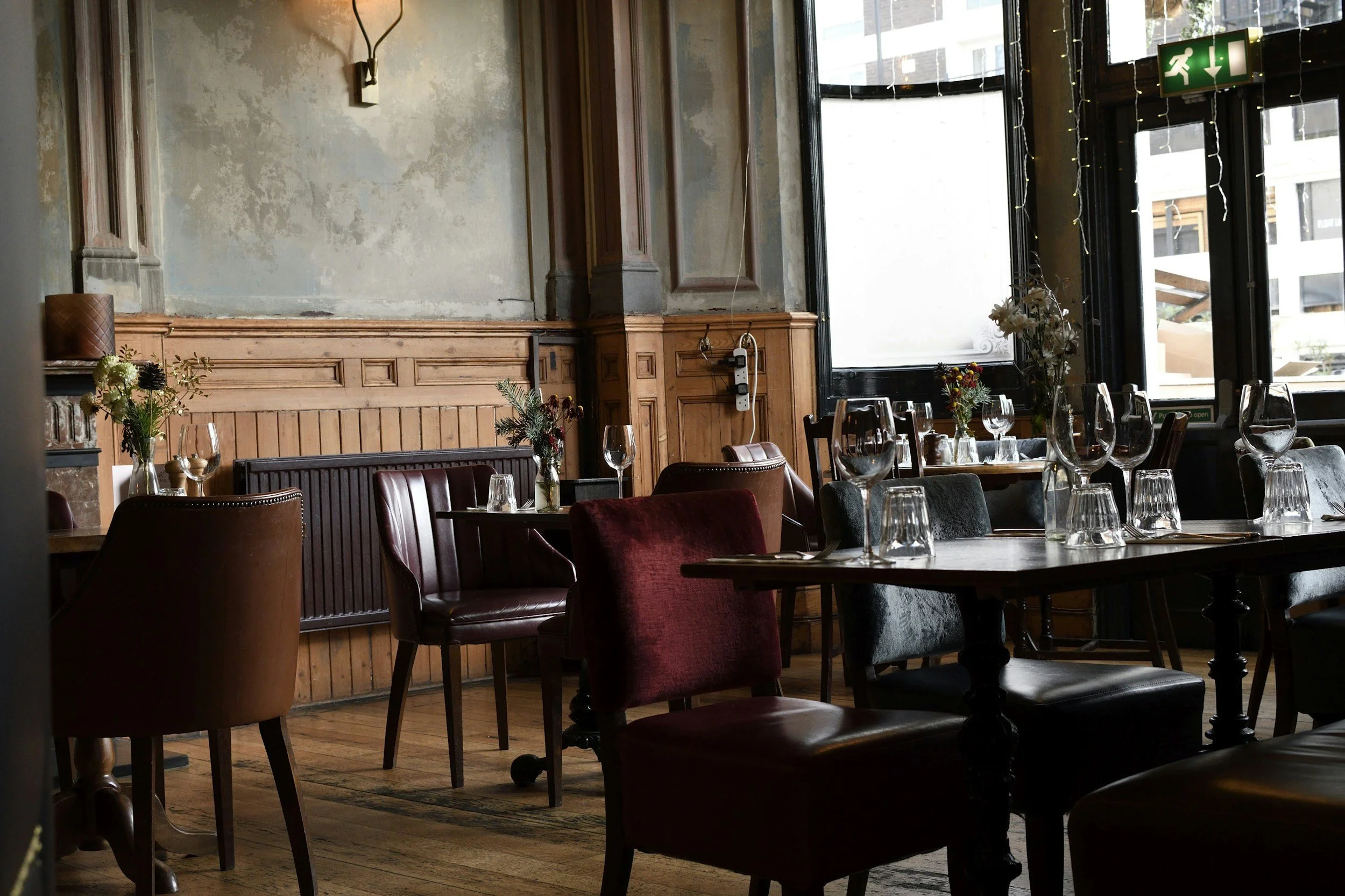
There are expensive restaurants.
And then there are restaurants that look expensive before you've even opened the menu.
You walk through the door and London suddenly feels different.
Dark wood.
Velvet.
Old paintings.
Crystal chandeliers.
White tablecloths.
Art Deco details.
Silver serving trolleys.
Rooms that seem to have existed long before Instagram decided what a “beautiful restaurant” was supposed to look like.
And that's the thing about London.
The city has restaurants that don't just serve dinner they give you the feeling that you've stepped into another version of London.
Some date back more than 200 years.
Others became famous during the glamorous restaurant culture of the 1970s, 80s and 90s.
Some are grand and formal.
Others are faded, eccentric and wonderfully imperfect.
So this isn't simply a list of London's most expensive restaurants.
It's about something much more specific:
beautiful interiors, history, character, old-money atmosphere and that feeling of dining somewhere that has stories behind it.
If that's the kind of restaurant you're looking for, these 13 London dining rooms deserve a place on your list.
1. Rules - Covent Garden
Rules
📍 35 Maiden Lane, Covent Garden
Vibe: Georgian London, dark wood, portraits, red velvet and old-school British elegance
Let's start with the restaurant that almost feels like it was built for this article.
Rules was established in 1798, making it London's oldest restaurant. It specialises in traditional British cooking, particularly game.
But the number isn't what makes Rules special.
Walk inside and you'll find yourself surrounded by historic paintings, portraits, dark wood, rich colours and generations of London dining history.
It doesn't feel like a restaurant that's been decorated to look old.
It feels old because it is old.
That's a very different thing.
There is something wonderfully theatrical about sitting here. You can imagine writers, actors and politicians occupying the same tables over the decades.
And the food follows the setting.
This is the place for traditional British dishes rather than experimental plates designed for Instagram.
If you want the closest thing to:
“What would dinner in old London actually feel like?”
start here.
Best for: History, traditional British food and proper old-London atmosphere.
Old-world score: ★★★★★
2. Wiltons - St James's
Wiltons Restaurant
📍 55 Jermyn Street, St James's
Vibe: Quiet wealth, polished silver, oysters and old St James's
If Rules is theatrical old London, Wiltons is quieter.
Much quieter.
This is the restaurant for the person who doesn't need a giant chandelier to prove that the restaurant is expensive.
Wiltons traces its history back to 1742, when George William Wilton opened a shellfish business near Haymarket. More than 280 years later, the institution remains at 55 Jermyn Street.
Its speciality is seafood and game, with oysters and traditional British dining at the centre of the experience.
And then there's the service.
The oyster bar.
The carving trolley.
The formal atmosphere.
Even the dress code reinforces the feeling that this is a restaurant from a different era. Wiltons currently asks gentlemen not to wear shorts, sportswear, graphic T-shirts, hooded tops and similar casual clothing.
This is old money without announcing itself.
If that's the aesthetic you're after, it's difficult to beat.
Best for: Quiet luxury and traditional St James's dining.
Old-world score: ★★★★★
3. Simpson's in the Strand - Strand
Simpson's in the Strand
📍 100 Strand
Vibe: Victorian London, chess, silver carving trolleys and grand English dining
This one deserves special attention because 2026 is a particularly interesting time to visit.
Simpson's first opened in 1828 and has been at 100 Strand since 1904. Its story began as a coffee and chess club, and its famous dining tradition developed around the idea of serving food without disturbing the chess players.
That led to one of its most recognisable traditions:
the silver carving trolley.
The restaurant has recently been revived, with restaurateur Jeremy King bringing the historic institution back into London's dining scene while retaining its heritage.
The Grand Divan is exactly the kind of room that belongs in this article.
It feels formal.
Grand.
A little theatrical.
And very, very British.
If you're fascinated by the idea of old London institutions being brought back to life, this may be the most interesting restaurant on the list.
Best for: History + grand interiors + classic British dining.
Old-world score: ★★★★★
4. The Ritz Restaurant - Mayfair
The Ritz Restaurant
📍 150 Piccadilly
Vibe: Belle Époque glamour, chandeliers, mirrors and palace-level grandeur
Sometimes you don't want understated.
You want ridiculously beautiful.
That's The Ritz.
The restaurant's current dining room features sparkling chandeliers, mirrors and a glass-roofed atrium, and The Ritz describes it as one of the world's most beautiful dining rooms.
And the food isn't simply relying on the room.
The Ritz Restaurant currently holds two Michelin stars, awarded in the 2025 Michelin Guide.
There's also an element of theatre to the experience, including traditional tableside service and live entertainment on Friday and Saturday evenings.
This is the restaurant to choose when you want:
the dress-up dinner.
the anniversary dinner.
the “let's make tonight special” dinner.
You won't accidentally forget you're in one of London's grandest hotels.
And that's the point.
Best for: Maximum glamour.
Old-world score: ★★★★★
5. The Wolseley - Piccadilly
The Wolseley Piccadilly
📍 160 Piccadilly
Vibe: Art Deco, European grand café, marble and old Mayfair
The Wolseley is perhaps the perfect example of what you're describing when you say:
“I want somewhere beautiful and rich-looking, but not necessarily a super-formal luxury restaurant.”
The restaurant occupies a building designed in 1921 as a prestigious Wolseley Motors showroom. It later became a Barclays bank before being transformed into the restaurant that opened in 2003.
And the original architecture is a huge part of its appeal.
Marble pillars.
Archways.
Geometric marble flooring.
Italianate influences.
Japanese lacquered details.
Byzantine-inspired lighting.
It is a spectacular combination of 1920s architectural ideas.
The restaurant itself describes its current identity as combining British heritage with European grandeur and Art Deco design details.
This is less “old restaurant” and more:
old building + timeless restaurant culture.
And visually, it is one of the strongest choices on the list.
Best for: Beautiful interiors without ultra-formal fine dining.
Old-world score: ★★★★★
6. Scott's - Mayfair
Scott's
📍 20 Mount Street
Vibe: Glamorous Mayfair, seafood, martinis and old-school celebrity energy
Scott's has been part of London's restaurant history since 1851, when it began as an oyster warehouse founded by fishmonger John Scott.
Eventually, it evolved into one of Mayfair's most recognisable restaurants.
Today, the atmosphere is much more polished than its oyster-warehouse beginnings.
Think:
burgundy leather
seafood
martinis
Mayfair
beautifully dressed diners
and that unmistakable feeling that you're somewhere people have been coming for decades to celebrate important occasions.
Its long history is part of the appeal, but the present-day restaurant also has a glamorous, highly polished interior.
This is less “museum-like old London” and more:
“What if old London became incredibly glamorous?”
Best for: Seafood, cocktails and Mayfair glamour.
Old-world score: ★★★★½
7. The Goring Dining Room - Belgravia
The Goring Dining Room
📍 15 Beeston Place, Belgravia
Vibe: Edwardian high society with a slightly eccentric British twist
The Goring has been serving guests since 1910, and the hotel remains family-owned across four generations.
The Dining Room has something that many luxury restaurants don't:
personality.
The current dining room combines rich red and green interiors, hand-crafted wall coverings, oil paintings and its famous mischievous monkey artwork.
It is Michelin-starred, with Michelin describing the restaurant as an example of British style and understated elegance.
And the dress expectation fits the atmosphere. The Goring asks guests to look smart, with sportswear, athletic trainers, shorts and ripped jeans excluded.
This is old-school British luxury, but with enough eccentricity to stop it becoming stuffy.
Best for: Traditional luxury with personality.
Old-world score: ★★★★★
8. L'Escargot - Soho
L'Escargot Restaurant
4.5•French restaurant•Closed
Reserve•Website•Directions
📍 48 Greek Street, Soho
Vibe: Georgian townhouse, French glamour, chandeliers and wonderfully faded elegance
If you want something that feels like you've discovered a secret old restaurant hidden inside a Soho townhouse, this is it.
L'Escargot traces its story to 1896, when Georges Gaudin established a restaurant called Le Bienvenue. It moved to its current 48 Greek Street location in 1927.
And the building itself is much older.
The Georgian townhouse dates from 1741.
Inside, you get:
chandeliers
ornate mirrors
velvet
paintings
old photographs
and a wonderfully eccentric collection of art spread across several floors.
L'Escargot itself describes the restaurant as a historic landmark and a destination for romantic French dining.
This is not polished minimalism.
It's not supposed to be.
It's beautifully maximalist and slightly faded, which is precisely what makes it interesting.
Best for: Romantic dinners and old Soho atmosphere.
Old-world score: ★★★★★
9. Langan's Brasserie - Mayfair
Langan's Brasserie
📍 Stratton Street, Mayfair
Vibe: 1970s–90s celebrity London, glamorous brasserie, art and late nights
Now we're getting closer to the 90s/retro glamour you mentioned.
Langan's isn't centuries old.
It opened in 1976 as a joint venture involving Peter Langan, Michael Caine and chef Richard Shepherd.
But historically, that's actually what makes it interesting.
Langan's became one of the defining celebrity restaurants of late-20th-century London, attracting people including Elizabeth Taylor, Elton John, Princess Margaret and Mick Jagger.
This is the place on the list where the aesthetic feels closest to:
old celebrity London.
It has art.
Rich interiors.
A brasserie atmosphere.
Cocktails.
And a history connected to the city's entertainment world.
If what you're really imagining is:
“Where would rich and famous people have gone for dinner in 1985?”
Langan's is one of the strongest answers.
Best for: Retro glamour and Mayfair nightlife.
Old-world score: ★★★★½
10. Quo Vadis - Soho
Quo Vadis
📍 26–29 Dean Street, Soho
Vibe: Historic Soho, clubby, eccentric and quietly sophisticated
Quo Vadis has been part of Soho since 1926.
The building itself has an even more colourful history: it once housed a notorious Soho brothel, and Karl Marx lived in one of the upstairs rooms.
The restaurant's later history became intertwined with London's actors, artists and creative crowd.
Today, it combines seasonal British cooking with an atmosphere that feels more like an old private club than a modern restaurant.
Pressed linen.
Flowers.
Art.
Dark, intimate spaces.
And plenty of Soho history.
It's not the place I'd choose if I wanted enormous chandeliers.
I'd choose it if I wanted somewhere that felt like it had a story in every room.
Best for: Historic Soho and understated sophistication.
Old-world score: ★★★★½
11. The Original Ivy - Covent Garden
The Ivy West Street
📍 West Street, Covent Garden
Vibe: Theatreland glamour, classic British restaurant and celebrity history
The Original Ivy has been part of London's West End since 1917.
It began as a small Italian café before becoming one of London's most famous restaurants and a long-standing favourite of the theatre and arts crowd.
That's important to the aesthetic.
The Ivy isn't simply “old.”
It is show-business old.
The kind of restaurant where you can imagine actors, directors, writers and celebrities disappearing into a corner table after a West End performance.
The current restaurant describes its identity around timeless elegance, vibrant interiors and British classics, while maintaining its connection to the original Ivy's history.
If you're going to the theatre, this is one of the most fitting restaurants you can choose.
Dinner.
West End show.
Late-night London.
It all fits.
Best for: Theatre nights and classic London dining.
Old-world score: ★★★★½
12. Boisdale of Belgravia - Belgravia
Boisdale of Belgravia
📍 15 Eccleston Street, Belgravia
Vibe: Gentleman's club meets 1940s jazz bar
This one is slightly different again.
Boisdale of Belgravia opened in 1989, so it isn't ancient.
But aesthetically?
It fits the brief beautifully.
The restaurant combines leather chairs, plush tartan carpets, original artwork, whisky and live music, with the interior drawing on the atmosphere of a classic gentleman's club and 1940s jazz bar.
And it is still very much a live venue today, with music programmed throughout the week.
This is therefore one of the best options if your interpretation of “old aesthetic” is closer to:
1980s/90s wealthy London
rather than Victorian London.
You can have Scottish-inspired food, whisky, cocktails and live jazz in a setting that feels like an old private club.
Best for: Jazz, whisky and retro gentleman's-club atmosphere.
Old-world score: ★★★★½
13. Holborn Dining Room - Holborn
Holborn Dining Room
📍 252 High Holborn
Vibe: Grand British brasserie, dark wood and antique mirrors
Holborn Dining Room isn't an ancient restaurant.
But again, that's not the point.
Its interior was deliberately built around the feeling we're looking for.
The restaurant describes itself as a grand British brasserie, combining:
reclaimed oak
antique mirrors
red leather banquettes
tweed detailing
and antique copper-topped bars.
It looks like the kind of grand London dining room that could have been there for generations.
But you don't have to pretend it's 1890.
The atmosphere is relaxed enough for a casual meal, while still giving you that rich, traditional British visual style.
And if you want something particularly indulgent, its Pie Room turns the humble British pie into a more luxurious dining experience.
Best for: Grand interiors without ultra-formal dining.
Old-world score: ★★★★½
So which ones actually have the strongest old-money aesthetic?
This is where I'd divide the list.
Because “old-world” doesn't mean the same thing everywhere.
Proper old-money London
If you want the closest thing to traditional British establishment culture:
Wiltons
Rules
The Goring
Simpson's in the Strand
These are the places where the history and etiquette are part of the experience.
Maximum luxury and grandeur
If you want the restaurant to look expensive from the moment you walk in:
The Ritz Restaurant
The Goring
The Wolseley
The Ritz is easily the most extravagant.
1970s–90s rich-and-famous London
This is probably the category closest to what you meant when you mentioned 90s vibes.
Go for:
Langan's
Boisdale
Scott's
The Ivy
These aren't necessarily “Victorian old.”
They're more:
“This feels like somewhere London's wealthy and famous have been eating for decades.”
And honestly, that's a fantastic aesthetic in its own right.
Beautiful but slightly faded / romantic
If you don't want polished five-star luxury and instead want somewhere with character:
L'Escargot
Quo Vadis
Rules
These are the places where the imperfections are part of the charm.
Best interiors
If you're primarily choosing based on how impressive the room is:
The Ritz
The Wolseley
The Goring
L'Escargot
Holborn Dining Room
Are these actually luxury restaurants?
Not all of them.
And that's intentional.
This isn't:
“13 most expensive restaurants in London.”
It's:
“13 restaurants where the atmosphere makes the experience feel special.”
There is a difference.
You can spend hundreds of pounds in a restaurant with a minimalist white interior.
Or you can sit in a beautiful room surrounded by decades of history and feel like you've been transported somewhere else.
That's what we're chasing here.
The best thing about London's old restaurants
The city is constantly changing.
New restaurants open.
New interiors become trendy.
A particular colour or style becomes fashionable.
Then, a year later, everyone is doing something else.
But these places operate differently.
Rules has been here since 1798.
Wiltons traces its history to 1742.
Simpson's began in 1828.
Scott's began in 1851.
The Ivy has been part of West End life since 1917.
Quo Vadis dates to 1926.
And then you have places like Langan's, which captured a completely different era — the glamorous, celebrity-filled London of the late 20th century.
That's what makes this style of restaurant so interesting.
You're not just choosing somewhere to eat.
You're choosing which version of London you want to spend an evening in.
Georgian London.
Victorian London.
Edwardian London.
1920s London.
1970s London.
Or the glamorous London of the 80s and 90s.
And perhaps that's the best reason to visit them.
Because sometimes the most beautiful restaurant in London isn't the newest one.
It's the one that makes you forget what year it is.
Discover more beautiful restaurants, historic London places and unforgettable experiences on LondonYaar.com.
Follow @rohan.londonyaar for more London restaurants, beautiful places and things to do.