10 Hidden Places in London Most Londoners Still Haven't Seen
One of the biggest myths about London is that once you've seen the landmarks, you've seen the city.
Spend enough time here and you'll realise the opposite is true.
The real magic of London isn't found in the places everyone already knows. It's found behind ordinary doors, down quiet side streets and inside buildings that thousands of people pass every day without a second glance.
That's what makes London different from so many other cities.
You can live here for years, think you know it well, and then stumble across a place that makes you wonder how you never discovered it before.
Some of these places are hidden in plain sight. Others require a little curiosity to find. All of them reveal a side of London that most visitors—and plenty of Londoners—never get to experience.
If you're ready to look beyond the usual landmarks, start here.
1. Leighton House, Kensington
From the outside, Leighton House blends into the elegant streets of Kensington.
Inside, it's one of the most extraordinary interiors in London.
This was once the home and studio of Frederic Leighton, one of Britain's most celebrated Victorian artists. Rather than creating a conventional house, he transformed it into a work of art.
The highlight is the breathtaking Arab Hall. Inspired by Middle Eastern architecture, it features intricate tiles, golden mosaics, carved details and a fountain that instantly transports visitors somewhere far beyond West London.
What makes Leighton House so memorable is the element of surprise. Few people expect to find such an elaborate and beautiful space hidden behind an ordinary London façade.
It's a reminder that some of London's greatest treasures aren't castles, palaces or landmarks. Sometimes they're simply houses with extraordinary stories.
2. Postman's Park, City of London
The City of London is full of hidden corners, but few are as moving as Postman's Park.
Tucked between busy streets and office buildings, this small green space contains the Memorial to Heroic Self-Sacrifice.
The memorial consists of ceramic plaques dedicated to ordinary people who lost their lives while saving others.
Each plaque tells a brief story.
Some are heartbreaking.
Others are inspiring.
All of them are deeply human.
In a city filled with grand monuments celebrating kings, queens and military victories, Postman's Park does something different. It remembers everyday acts of courage that might otherwise have been forgotten.
Most visitors arrive expecting a quick stop.
Many end up staying much longer than planned.
3. St Dunstan in the East, City of London
Standing inside St Dunstan in the East feels almost surreal.
Originally built in the medieval period and later rebuilt after the Great Fire of London, the church suffered severe damage during the Blitz in the Second World War.
Instead of rebuilding it completely, the ruins were transformed into a public garden.
Today, ivy climbs the ancient stone walls while trees grow where the roof once stood.
The contrast is remarkable.
Around you stands the modern City of London, filled with glass towers and busy streets. Yet inside the ruins, everything feels calm and strangely timeless.
It's one of the best examples of London's ability to preserve fragments of its past while continuing to evolve around them.
4. Dennis Severs' House, Spitalfields
Most historic houses tell visitors what life was like centuries ago.
Dennis Severs' House asks you to imagine it for yourself.
Located in Spitalfields, this unique house has been carefully arranged to create the illusion that its occupants have only just stepped out.
A candle flickers.
A meal sits half-finished on a table.
Clothes are draped across furniture.
The rooms feel lived in rather than displayed.
There are no large information boards explaining every detail.
Instead, visitors move quietly through the house, observing clues and piecing together stories on their own.
It's less like visiting a museum and more like stepping into another time period.
Few places in London offer an experience quite like it.
5. The Charterhouse, Clerkenwell
A short walk from Farringdon Station sits one of London's most overlooked historic sites.
The Charterhouse has witnessed more than six centuries of London history.
Founded in the 14th century, it has served as a monastery, a Tudor mansion, a school and an almshouse.
Walking through its courtyards feels like discovering a hidden village tucked inside the city.
The pace slows.
The crowds disappear.
And suddenly London's modern skyline feels very far away.
The Charterhouse isn't usually included on typical London itineraries, which is exactly why it deserves more attention.
For history lovers, it's one of the capital's most rewarding hidden discoveries.
6. The London Mithraeum, City of London
Beneath Bloomberg's modern European headquarters lies something most people never expect to find.
A Roman temple.
The London Mithraeum is the reconstructed site of a temple dedicated to Mithras, a deity worshipped by Roman soldiers nearly 2,000 years ago.
When the remains were discovered during post-war redevelopment, they attracted enormous public interest.
Today, visitors can explore the site below street level and learn about a period of London's history that predates almost everything visible above ground.
What makes the Mithraeum fascinating isn't just its age.
It's the location.
Thousands of commuters and office workers pass through the area every day without realising that an ancient Roman temple lies beneath their feet.
In a city obsessed with the future, it's a powerful reminder of just how far London's history stretches back.
7. Wilton's Music Hall, Whitechapel
London's theatre scene is famous worldwide.
Yet many people have never visited Wilton's Music Hall.
That's surprising because it is widely recognised as the world's oldest surviving grand music hall.
Unlike many restored historic venues, Wilton's has retained much of its original character.
The exposed brickwork, weathered walls and atmospheric interiors give it a sense of authenticity that's difficult to replicate.
Walking inside feels like stepping into Victorian London.
Today, the venue hosts theatre productions, concerts, comedy events and community programmes.
It's proof that historic buildings don't need to become museums to survive.
Sometimes they continue telling their stories by remaining active parts of city life.
8. Eel Pie Island, Twickenham
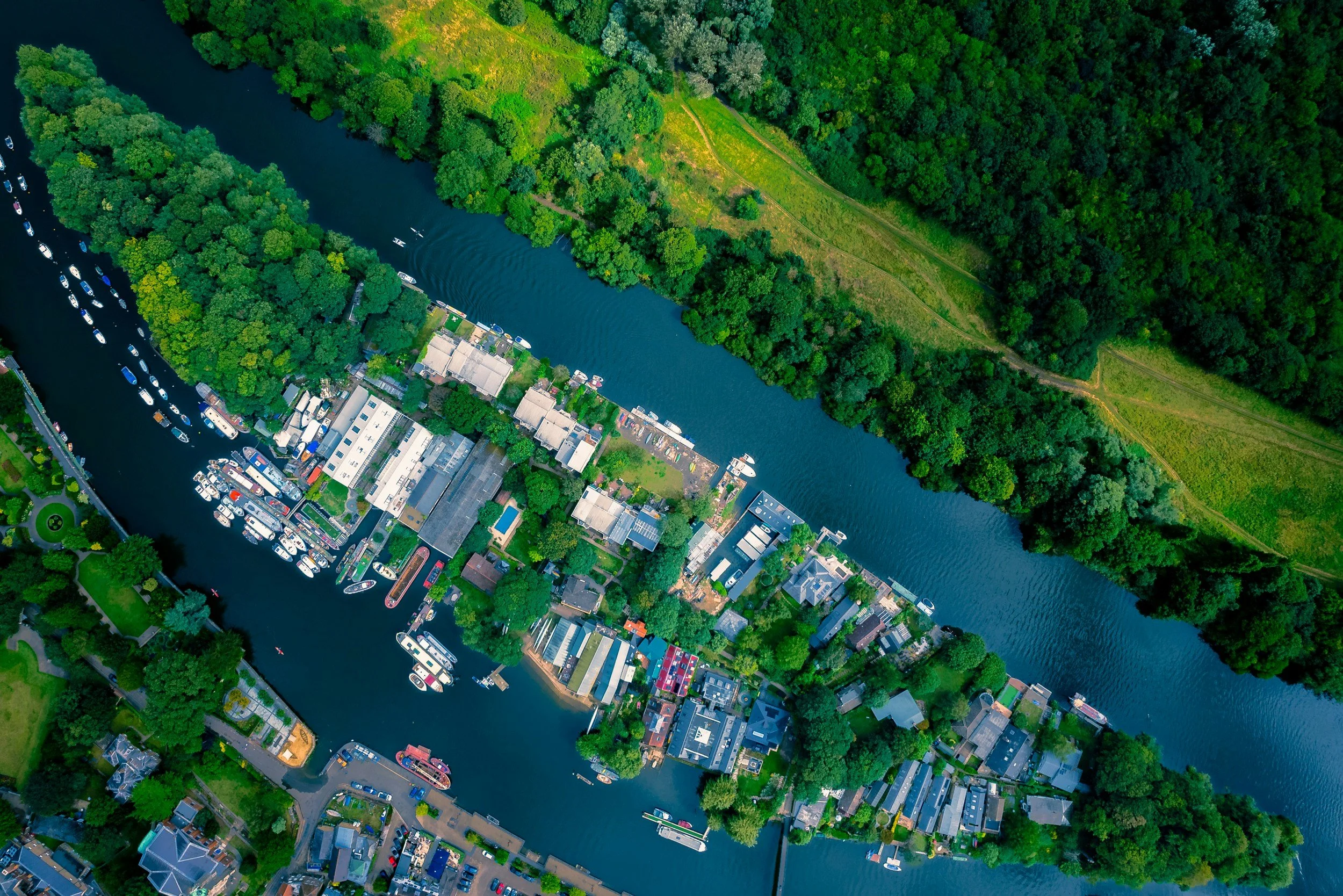
Hidden in the Thames near Twickenham, Eel Pie Island has one of the most fascinating stories in London.
Today, it appears peaceful and largely residential.
In the 1960s, however, it became one of Britain's most important music venues.
Artists including The Rolling Stones, The Who and Pink Floyd all performed there during its heyday.
The island remains privately owned, and public access is limited to specific open days and special events.
That exclusivity only adds to its appeal.
Even from the riverside, there's something intriguing about a place that played such an important role in British music history while remaining relatively unknown to many Londoners.
9. Crossness Pumping Station, Abbey Wood
At first glance, a Victorian sewage pumping station doesn't sound particularly exciting.
Crossness quickly proves otherwise.
Built in the 19th century as part of Sir Joseph Bazalgette's revolutionary sewer system, it helped transform public health in London.
What surprises visitors is the beauty of the building.
The enormous ironwork, colourful decorative details and impressive engineering make it feel more like a cathedral than an industrial facility.
It's often described as one of London's greatest industrial heritage sites, and once you step inside, it's easy to understand why.
Few attractions reveal so much about how London actually functions as a city.
10. The Brunel Museum, Rotherhithe
Most people cross the Thames without giving much thought to the engineering beneath them.
The Brunel Museum tells the story of one of London's greatest engineering achievements.
The museum explores the creation of the Thames Tunnel, built by Marc Brunel and his son Isambard Kingdom Brunel.
Completed in the 19th century, it became the world's first tunnel successfully constructed beneath a navigable river.
The challenges involved were extraordinary.
Flooding, financial problems and dangerous working conditions repeatedly threatened the project.
Yet the tunnel changed engineering history.
Today, the museum brings that remarkable story to life while highlighting a chapter of London history that many people know surprisingly little about.
It's a hidden gem that deserves far more attention than it receives.
Why These Places Matter
The best thing about London isn't that it has famous landmarks.
It's that entire worlds are hiding behind ordinary doors.
A Victorian artist's dream home.
A Roman temple beneath a modern office building.
A forgotten music hall.
A ruined church transformed into a garden.
A hidden memorial dedicated to everyday heroes.
These places reveal something important about London.
The city isn't defined by a handful of attractions.
It's defined by layers.
Every century has left something behind. Every neighbourhood has stories waiting to be discovered. And no matter how long you've lived here, there is always another corner of the city waiting to surprise you.
That's why London never gets old.
Not because there is always something new.
But because there is always something you haven't found yet.